

October 12, 2026
Firecrawl pricing · 1 credit a page, until you ask for JSON
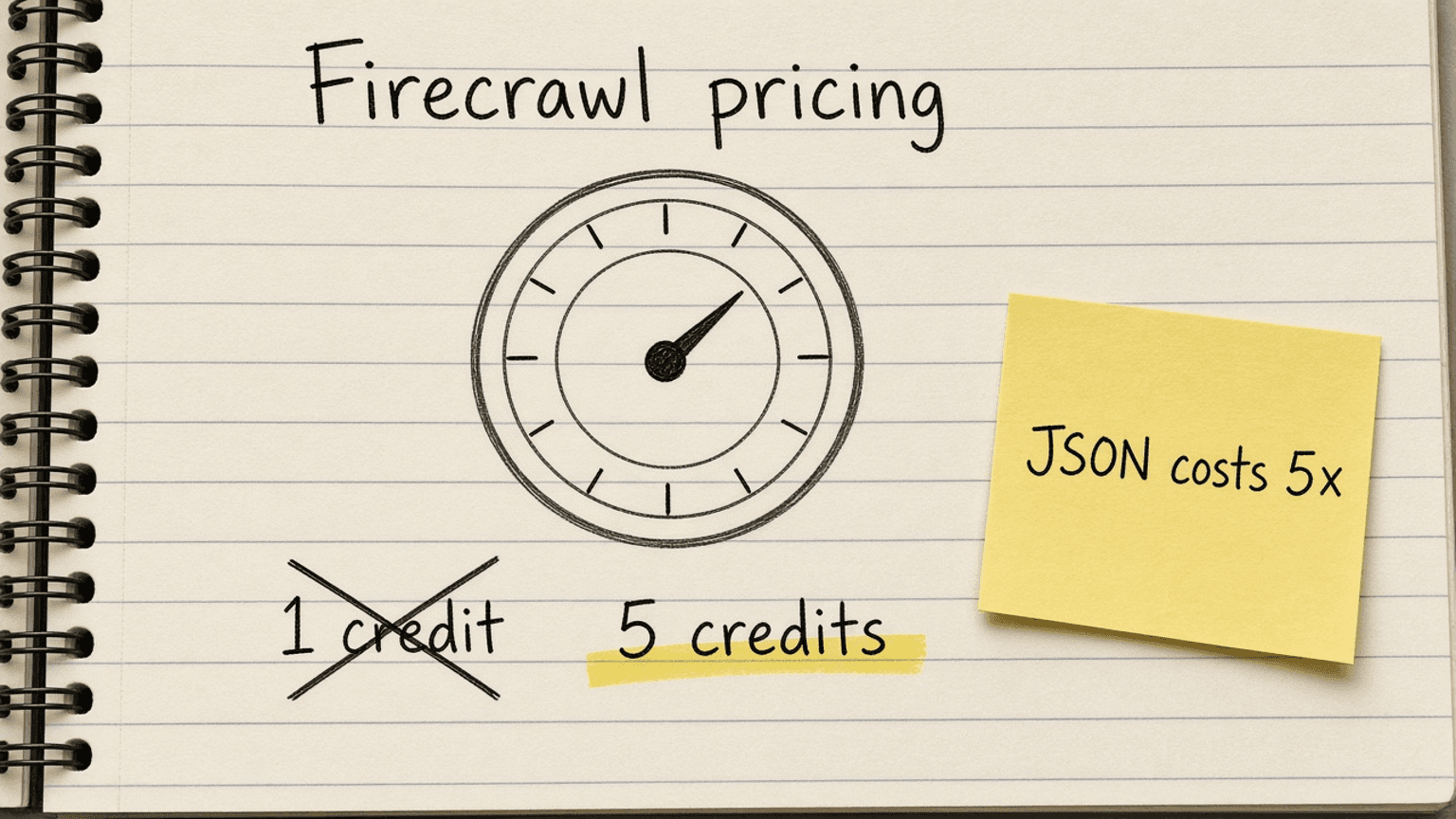
Firecrawl charges 1 credit per plain page and 5 per JSON page. Standard, $83 a month billed yearly, covers 100,000 plain pages.
The short answer
If you read up to about 20,000 pages a month as JSON, or up to 100,000 as plain text, use Firecrawl Standard. It is $83 a month, billed yearly. If you only need Google results and not the pages behind them, use SearchApi instead.
Firecrawl is a tool that reads web pages for your code. You give it a web address, and it sends back the page as clean text. Teams use it to read company websites and fill in details like headcount or where a company is based.
Firecrawl charges in credits. A credit is the unit it counts each job in. The catch is that the number of credits a page costs depends on what you ask for.
What one credit buys
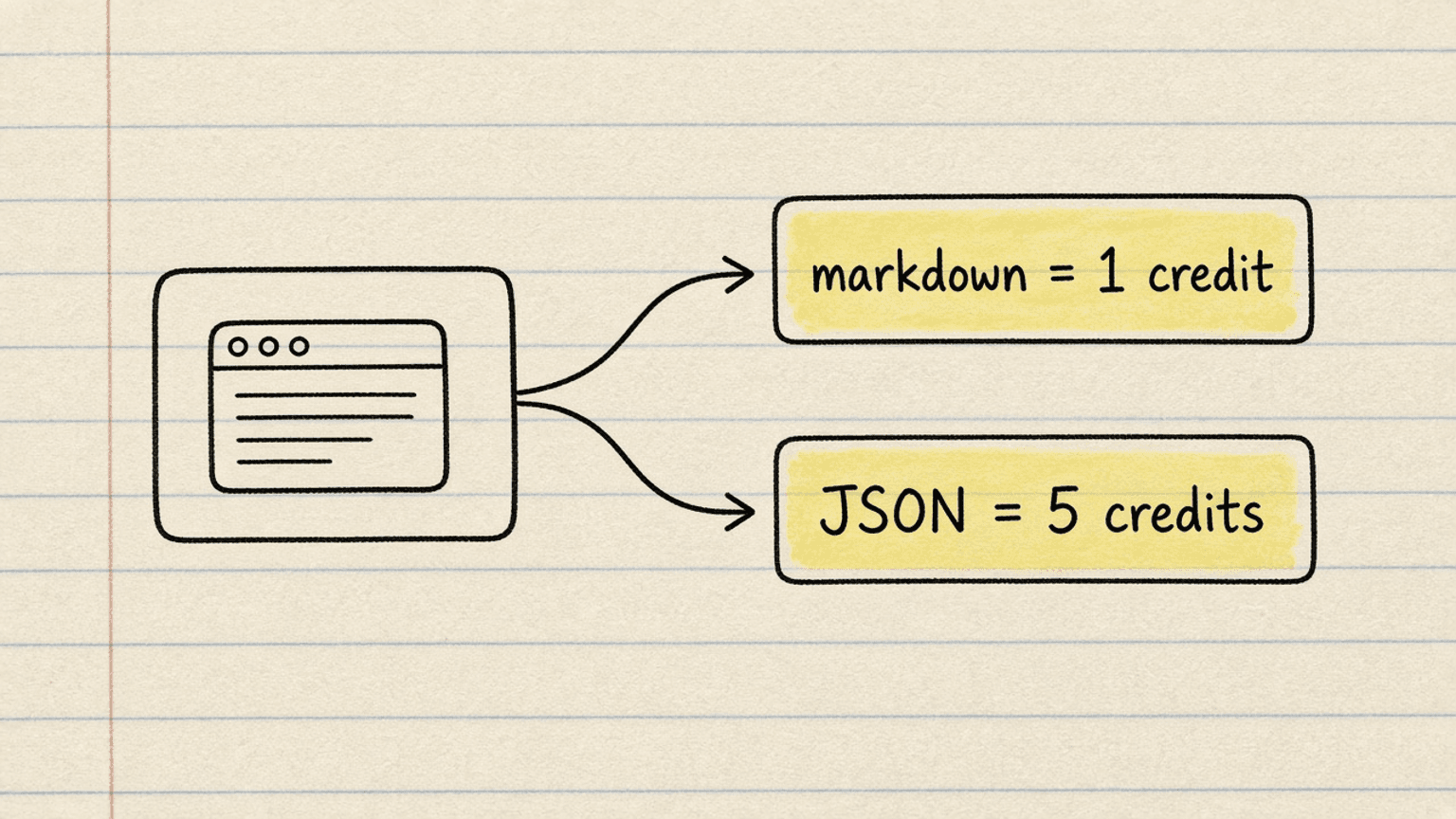
One credit reads one page as plain text. Firecrawl calls this a scrape. A crawl, which follows links across a whole site, also costs 1 credit per page. So does a map, which lists the pages on a site.
A search costs 2 credits for every 10 results.
Here are the plans, billed yearly:
- Free is $0 for 1,000 credits a month.
- Hobby is $16 a month for 5,000 credits. Paid monthly, it is $19.
- Standard is $83 a month for 100,000 credits.
- Growth is $333 a month for 500,000 credits.
- Scale is $599 a month for 1,000,000 credits.
The math, price per 1,000 plain pages: Hobby is $16 ÷ 5 = $3.20. Standard is $83 ÷ 100 = $0.83. Growth is $333 ÷ 500 = about $0.67. Scale is $599 ÷ 1,000 = about $0.60.
JSON costs five credits a page
JSON is a format your code can read field by field, like "headcount: 250." If you want Firecrawl to pull set fields out of a page, you ask for JSON.
Asking for JSON adds 4 credits to the page. So a JSON page costs 5 credits. The same goes for the Question and Highlight formats.
The math: Standard has 100,000 credits. As plain pages, that is 100,000 pages. As JSON, it is 100,000 ÷ 5 = 20,000 pages.
A worked example: 5,000 company websites a month
Say your team wants to read the homepage and about page of 5,000 companies a month.
The math, plain text: 5,000 companies × 2 pages = 10,000 credits. That fits Standard with 90,000 credits left. It works out to $83 × 10,000 ÷ 100,000 = $8.30 of the plan, or about $0.0017 per company. That is under 1 cent a company.
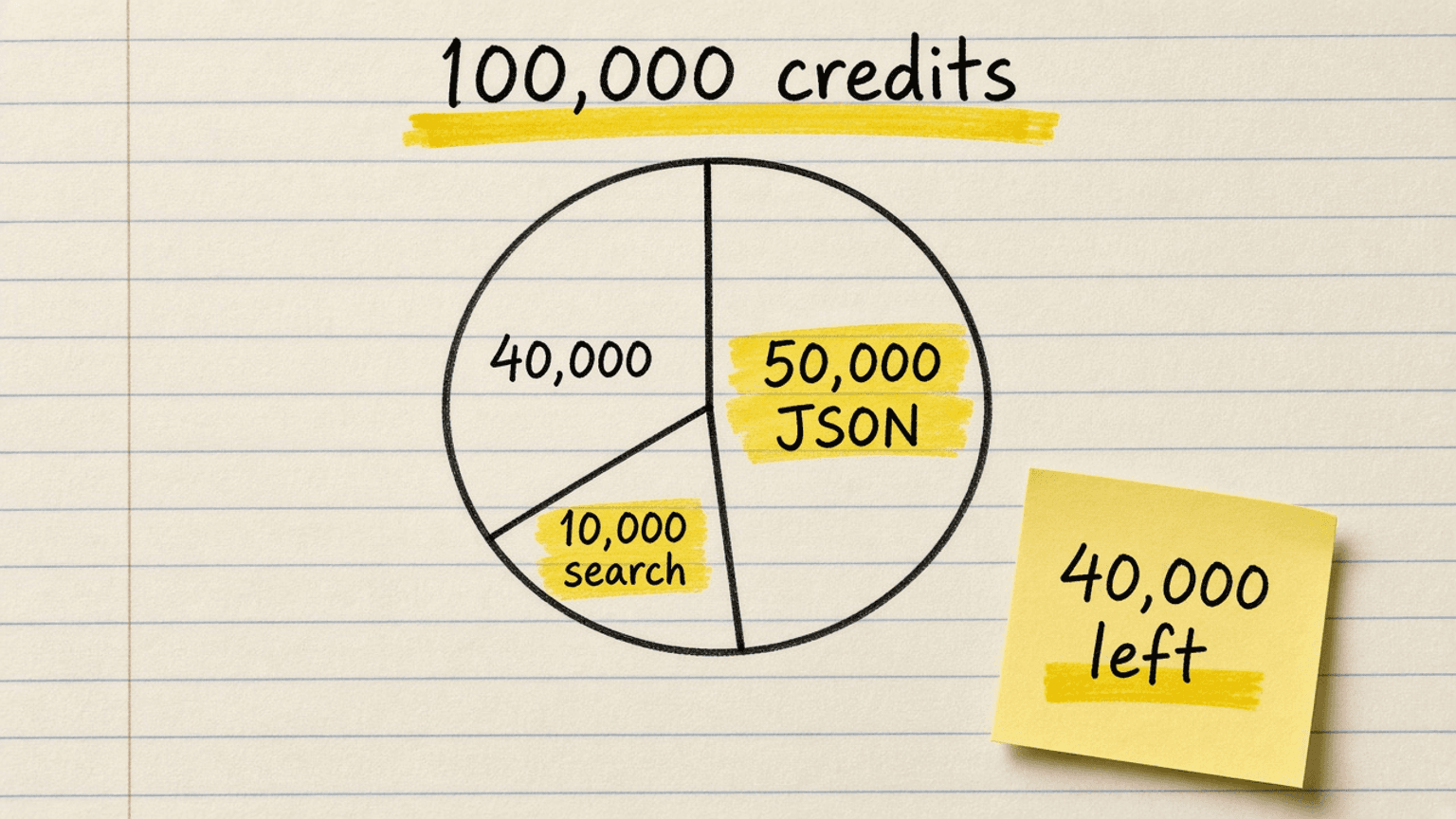
The math, as JSON: 5,000 × 2 pages × 5 credits = 50,000 credits. That is half of Standard. It works out to $41.50 of the plan, or about $0.0083 per company. That is five times the plain cost.
Now add a search step to find each company's website first. The math: 5,000 searches of up to 10 results × 2 credits = 10,000 more credits. The total is 60,000 credits a month, still inside Standard.
Broken pages still cost a credit
If Firecrawl tries a page and gets nothing back, you pay nothing.
A page that answers with an error is different. A 403 means the site blocked the request. A 404 means the page does not exist. Firecrawl still returns those pages, and each one costs 1 credit.
So clean your list of web addresses before you run it. Old links and dead company sites cost the same as good ones.
Unused credits vanish below Scale
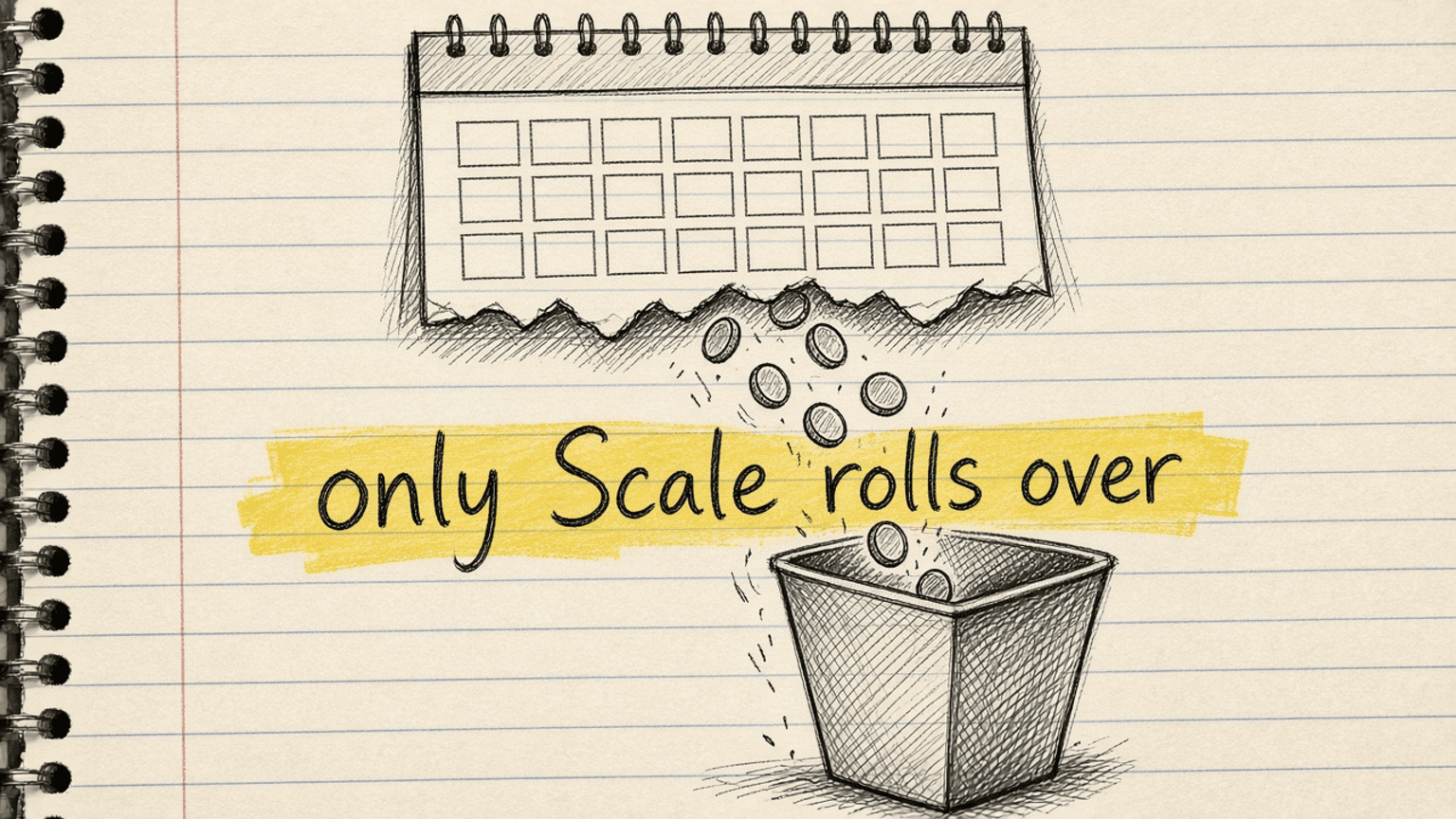
Rollover means unused credits carry into next month. On Firecrawl, plan credits roll over only on Scale, for one month, and on Enterprise.
On Hobby, Standard and Growth, credits you don't use are gone at the end of the month. So pick the plan for a normal month, and cover a busy month with extra credits.
You can also buy extra credits on top of a paid plan, pay as you go. Each $5 adds 1,000 credits on Hobby, 2,000 on Standard, 2,500 on Growth and 5,000 on Scale. Bought credits stay until you cancel, and then they expire.
The math on Standard: $5 for 2,000 credits is $2.50 per 1,000. Inside the plan, a credit costs $0.83 per 1,000. So a top-up costs about 3 times the plan rate.
Say your Standard team overshoots by 20,000 credits one month. The math: 20,000 ÷ 2,000 = 10 top-ups × $5 = $50. Set a pay-as-you-go limit in your account before a big run.
When SearchApi is the better buy
Sometimes you only need the Google results: the titles and links. You don't need the text of each page.
For that job, a search API is simpler. SearchApi's Production plan is $100 a month for 35,000 searches. It charges only for searches that work.
Firecrawl makes sense when you need both steps in one place: search for the company, then read its site. Both come out of the same credits.
What to do this week
Run 100 of your real web addresses on the free plan. Count the credits it used. Multiply by the number of pages you need in a month. Then pick the plan.
- If you need about 20,000 JSON pages or 100,000 plain pages a month, use Firecrawl Standard.
- If you need fewer than 5,000 plain pages a month, use Firecrawl Hobby.
- If you only need Google results, use SearchApi.
Start with Firecrawl's 1,000 free credits a month.
Next · SerpApi pricing compares search API prices · SerpApi alternatives lists more search tools.