

October 8, 2026
ZoomInfo pricing · the $15K myth and the 60-day renewal window
ZoomInfo's own FAQ says its price does not start at $15,000. Vendr's buyer data puts the median deal at $33,500 a year. Here's how exports burn credits and when the renewal window closes.
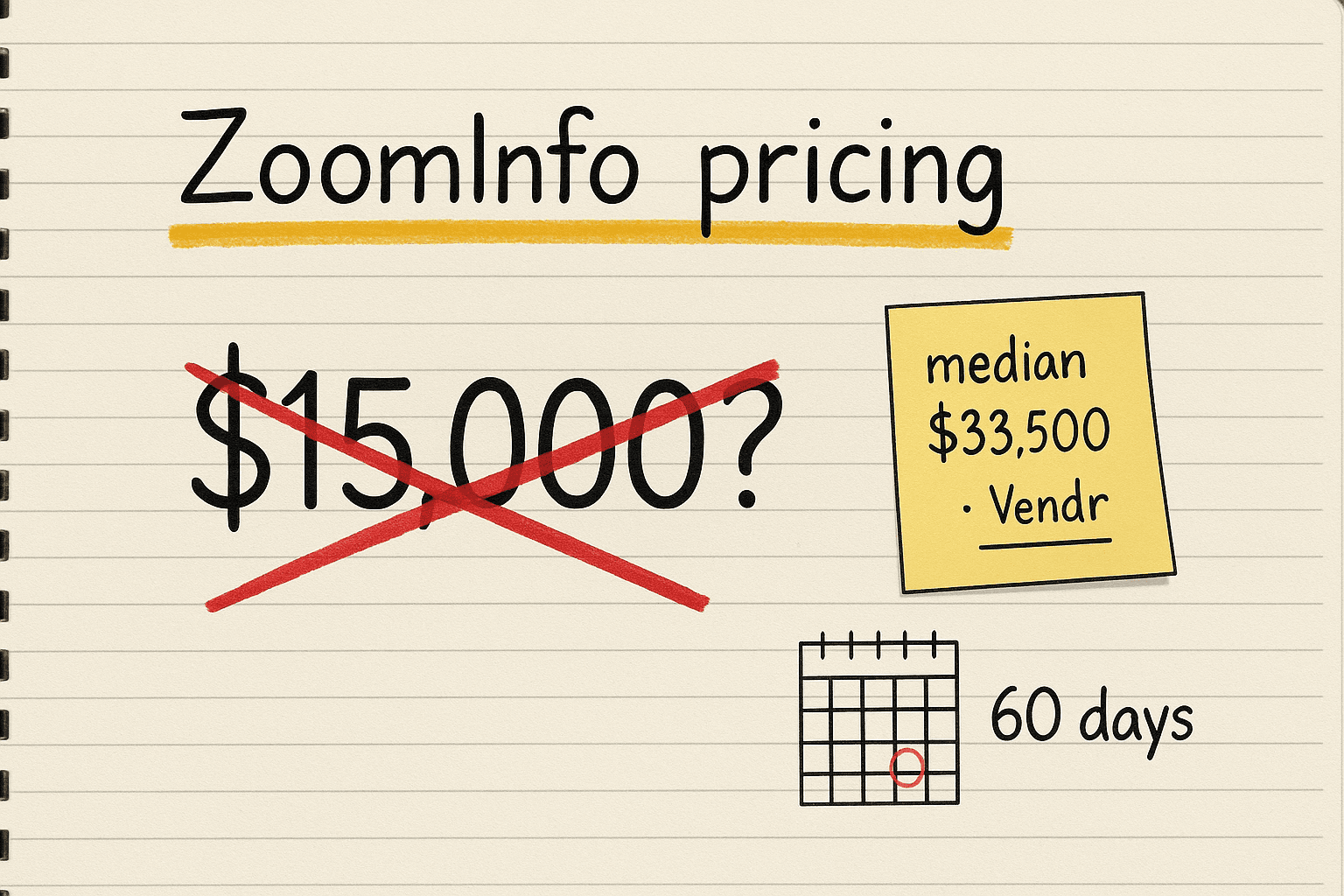
ZoomInfo's pricing FAQ takes on the most repeated number in sales tools. It asks if ZoomInfo's price starts at $15,000.
The answer is one word. "No."
ZoomInfo's own FAQ blames the $15K figure on rivals. It names Cognism, Demandbase, Lusha and Apollo.
That sounds like good news for your budget. Then you look at what buyers actually paid.
What buyers really pay
Vendr is a company that helps businesses buy software. It also tracks what buyers paid.
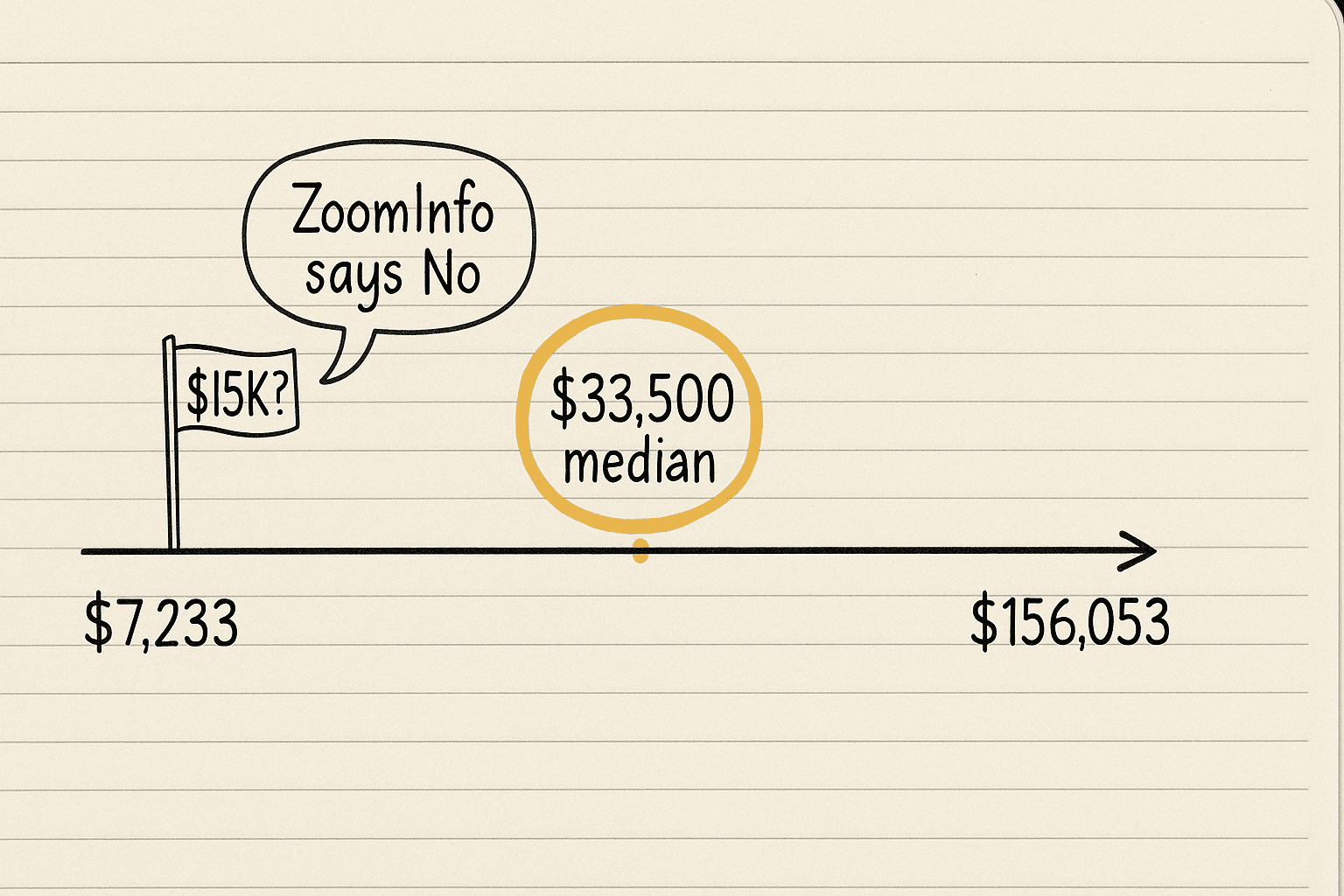
Vendr has data on 1,576 ZoomInfo purchases. The median is $33,500 a year. The smallest deal was $7,233. The biggest was $156,053.
So both things are true. Deals under $15K exist. The typical deal is more than twice the myth.
One ZoomInfo customer posted on Reddit in September 2026 that they paid about $22,000 for a year. They said the price was okay. The renewal rule bothered them more.
Only annual subscription, no monthly, and it auto renews unless you give 60 days out. So you're deciding whether to keep it two months before the year you actually paid for has finished.
Two things set your ZoomInfo bill. One is how many records leave the tool. The other is when you say no to the next year.
You pay when data leaves
ZoomInfo prints no dollar prices. Its FAQ says the price depends on how many seats you buy. A seat is one user login.
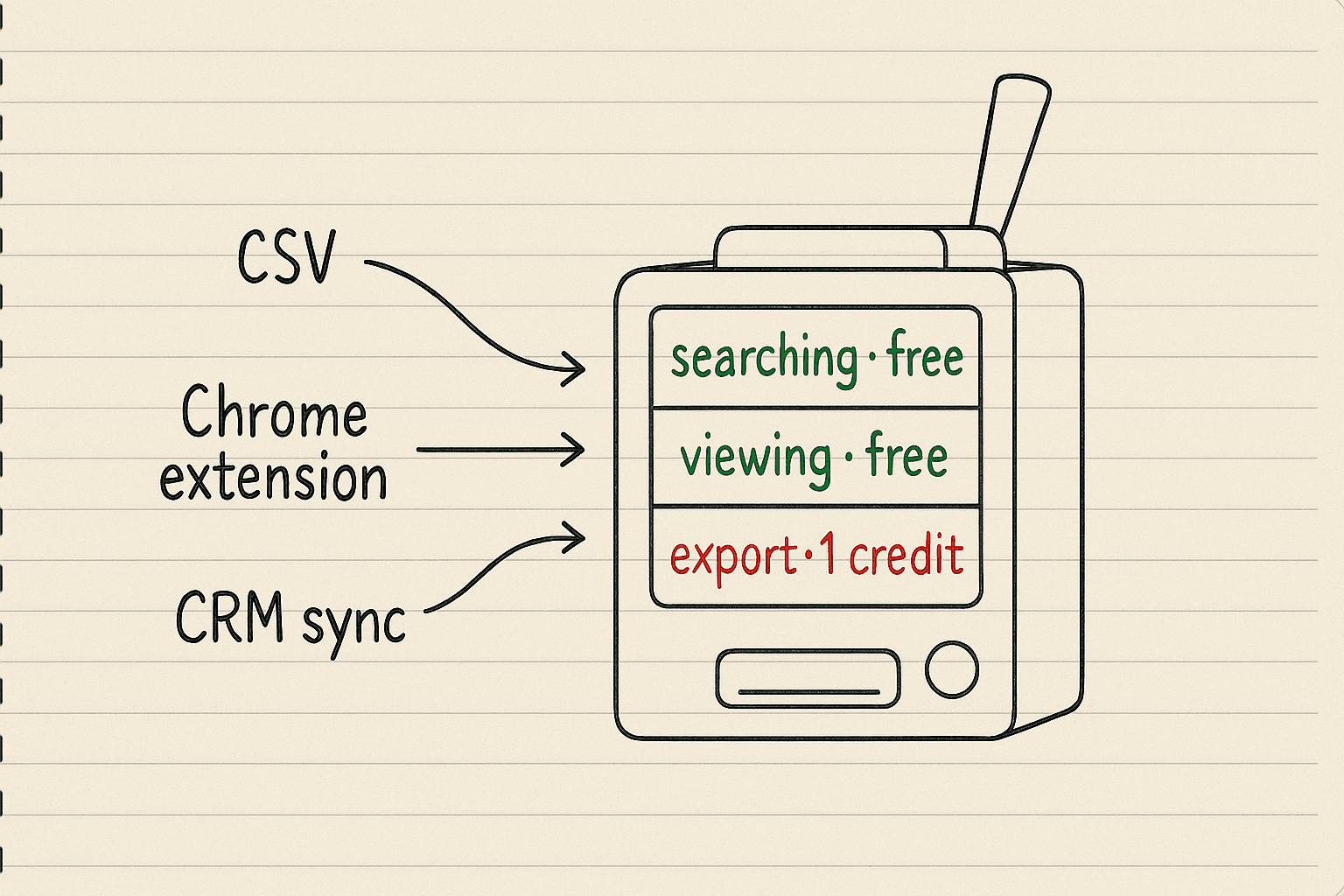
The price also depends on credits. A credit is the unit ZoomInfo counts usage in. ZoomInfo's pricing page says each export of one contact or company costs 1 credit.
Your plan comes with a set number of credits each month. That works as your export limit. An export limit is a cap on how many records you can pull out of the tool.
Searching and viewing profiles are free. The FAQ says the free trial usually includes unlimited searches and views. So the trial feels unlimited. The contract counts exports.
Here's the part teams miss. ZoomInfo's pricing page says an export can come from the main platform or the ReachOut Chrome extension. It also counts any API call, which is an automatic request from a connected app like your CRM. A CRM is the system where your team keeps customer records.
A CSV download costs credits. A CRM sync costs credits too, and a sync runs in the background. It can spend credits while no rep is clicking anything.
The same page says ready-made integrations usually carry a base cost to install. They also need a minimum purchase of bulk credits on day one.
So before you renew, pull your export count for the last 12 months. Split it by source. That number is your real usage.
The renewal window closes early
Vendr says auto-renew clauses are common in ZoomInfo contracts. Auto-renew means the contract rolls into a new year on its own unless you cancel in time.
The renewal window is the notice period before auto-renew. If you miss it, you're signed up for another year.
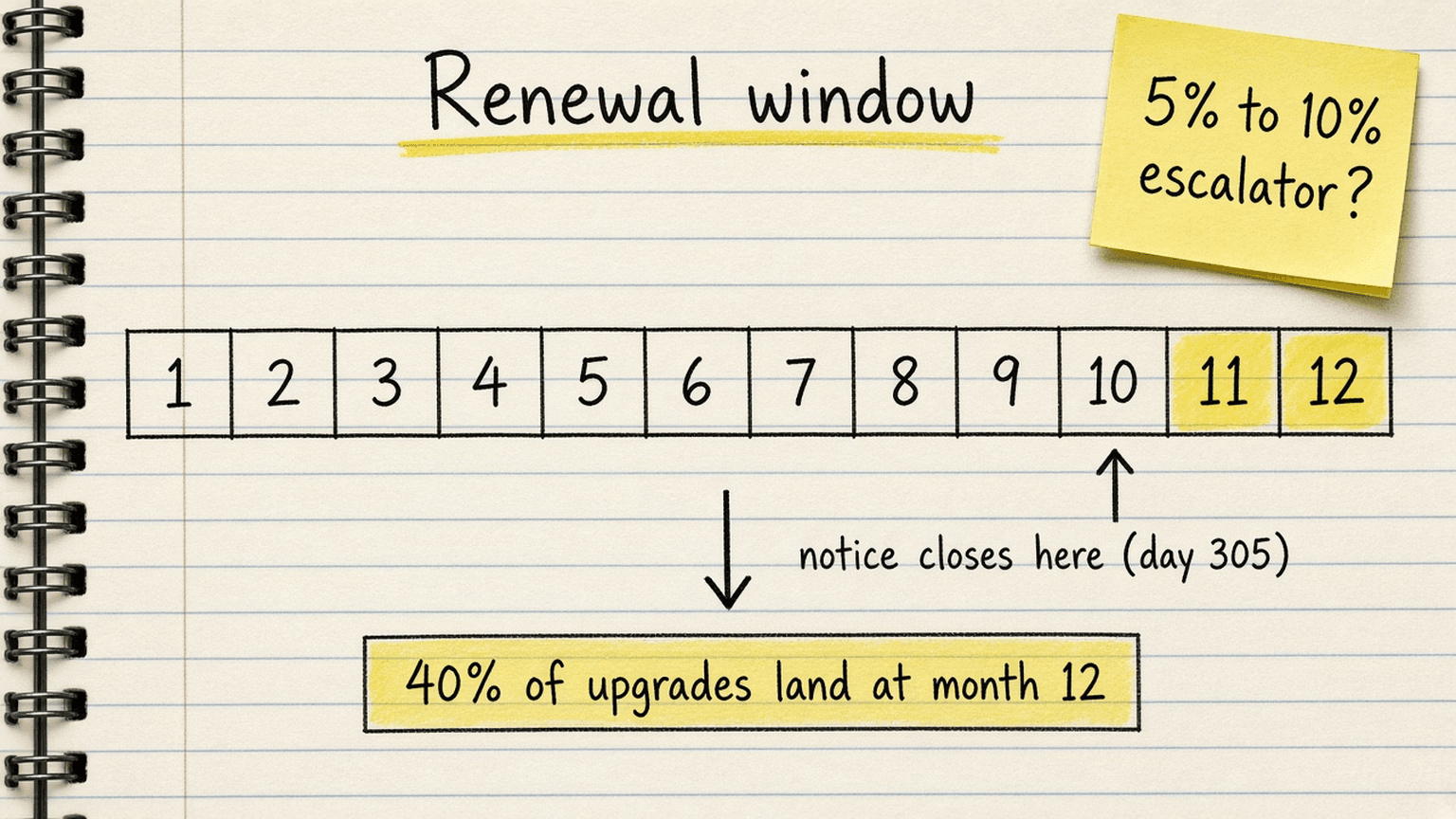
The customer above had 60 days' notice. On a 365-day contract, that window closes around day 305. You decide on year two before you've finished year one.
Vendr also says these contracts often include a yearly price increase, typically 5% to 10%. It tells buyers to start renewal talks 90 to 120 days before the renewal date.
Timing works against you here. ChartMogul tracks revenue for subscription companies. In its data, 40% of first-year plan upgrades land at month 12. Renewal is when sellers ask for more.
A buyer posted on Reddit in August 2026 about ZoomInfo's sales push during a budget review.
randomly offering discounts, threatening price increases if I don't sign by x dates
Vendr says ZoomInfo's fiscal quarters end in March, June, September and December. A deal near one of those months gives you more room to push back.
ZoomInfo told investors it wants usage deals
On its May 11, 2026 earnings call, ZoomInfo said it is moving toward pricing based on how much data customers use. It wants to lean less on seats.
Its target is a 50/50 split of contract value between seats and everything else within 18 months.
On the same call it reported net revenue retention of 90%. That means for every $100 its existing customers paid a year earlier, they now pay about $90.
That gives you room. If you renew this fall, ask for a deal sized to your real export count.
Price your phones on their own
Phones are where ZoomInfo earns its price. In a March 2026 test of 1,000 leads by Cleanlist, ZoomInfo found mobile numbers for about 67% of contacts. Apollo found about 41%.
If phones are why you pay, price the phone list by itself.
FullEnrich charges by credits too, with a different rule. You pay only when it finds and verifies a mobile. A mobile costs 10 credits.
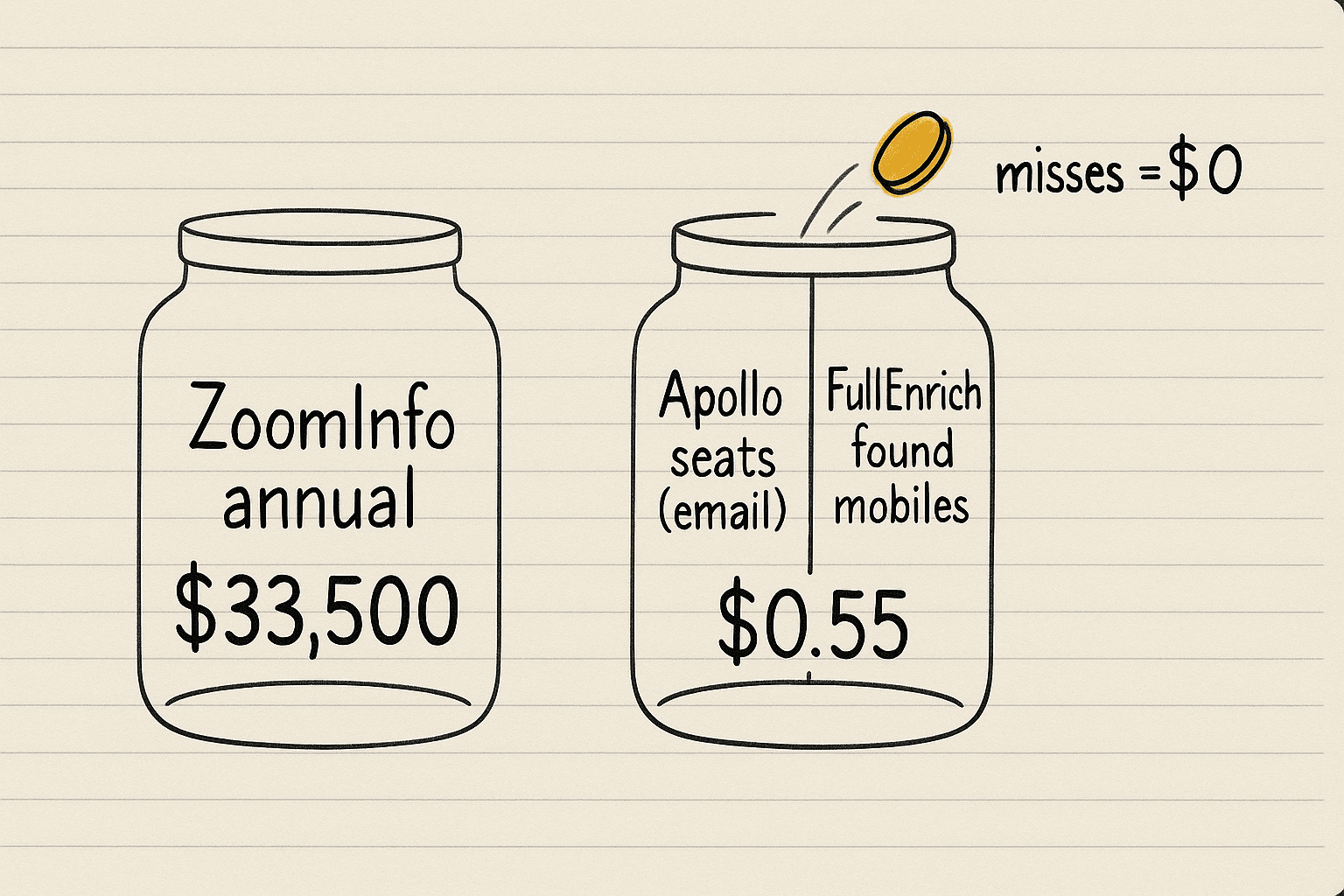
On FullEnrich's 1,000-credit plan, $55 a month, a credit costs about $0.055. So a found mobile costs about $0.55. A miss costs nothing. A landline comes back free.
FullEnrich runs a waterfall. A waterfall tries several data sources in order until one finds the number. FullEnrich uses more than 25. Every plan includes unlimited users, so there's no seat fee.
Here's the page's own math. Vendr's $33,500 median would buy about 60,900 found mobiles at $0.55. That's about 5,075 a month.
FullEnrich's 10,000-credit plan is $499 a month, or $5,988 a year. That covers up to 1,000 found mobiles a month.
Add 5 Apollo Basic seats for email at $49 per user a month on annual billing. That's $2,940 a year. The total is about $8,930 a year.
That setup skips ZoomInfo's intent data, which shows when a company is researching a purchase. It also skips account-based marketing tools. It's the honest bill for a team whose main reason to buy ZoomInfo is phones.
No public test has run FullEnrich and ZoomInfo on the same list. Try FullEnrich's 50 free credits on your own contacts first. That covers up to 5 found mobiles, so treat it as a quick check.
What to do before your renewal
Put day 305 of your contract in the calendar today. Pull 12 months of exports by source before that date.
Then pick by how your team sells.
- You mostly dial. Run your phone list through FullEnrich. About $0.55 per found mobile, and misses cost $0.
- You want a second try on phones. Send what FullEnrich misses to BetterContact. It charges only for the mobiles it scores most likely to connect.
- You mostly email. Use an Apollo seat for the email list.
- You live on intent and account-based marketing. Stay on ZoomInfo and negotiate near a quarter end.
Keep ZoomInfo if you live on intent and account-based marketing. If you mostly dial, split the bill.
Next · Apollo vs ZoomInfo puts the two side by side · Mobile enrichment tools adds mobiles to a list you already have · B2B phone number finders has more ways to find numbers.