

October 26, 2026
Catch-all emails · why they never bounce, and how to check them before you send
Visit BetterContactA catch-all domain accepts mail for any address, so a wrong address never bounces. In one outbound test, 1,484 of 1,666 catch-alls checked out as valid. BetterContact Pro is $49 a month billed monthly for 1,000 credits and charges nothing for catch-alls.
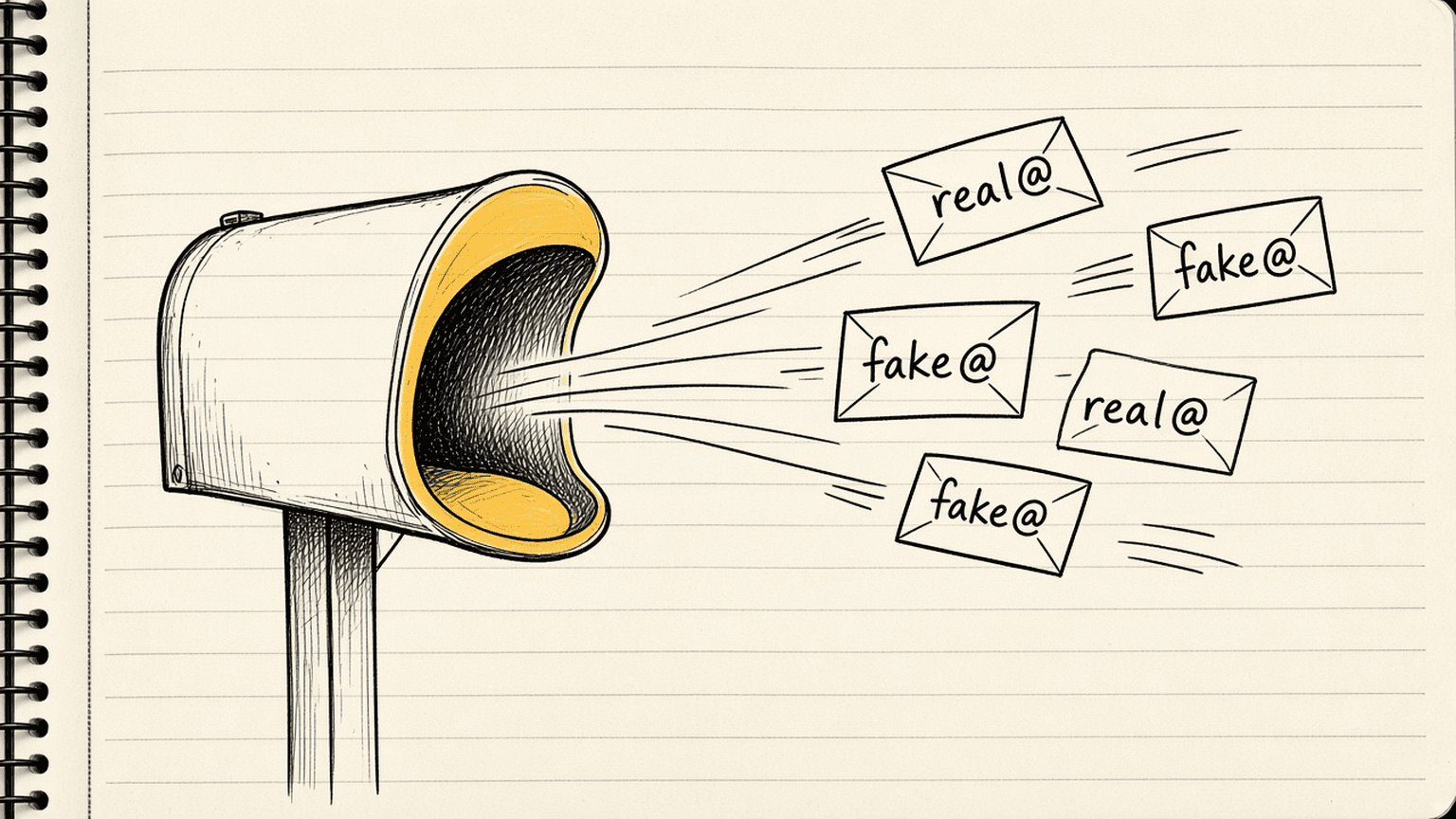
Your cold email didn’t bounce. A bounce is an email that comes back because the address doesn’t exist. No bounce feels like good news.
It isn’t always. Some company mail servers accept every address, real or fake. Those are catch-all domains, and a wrong address there never comes back.
The short answer
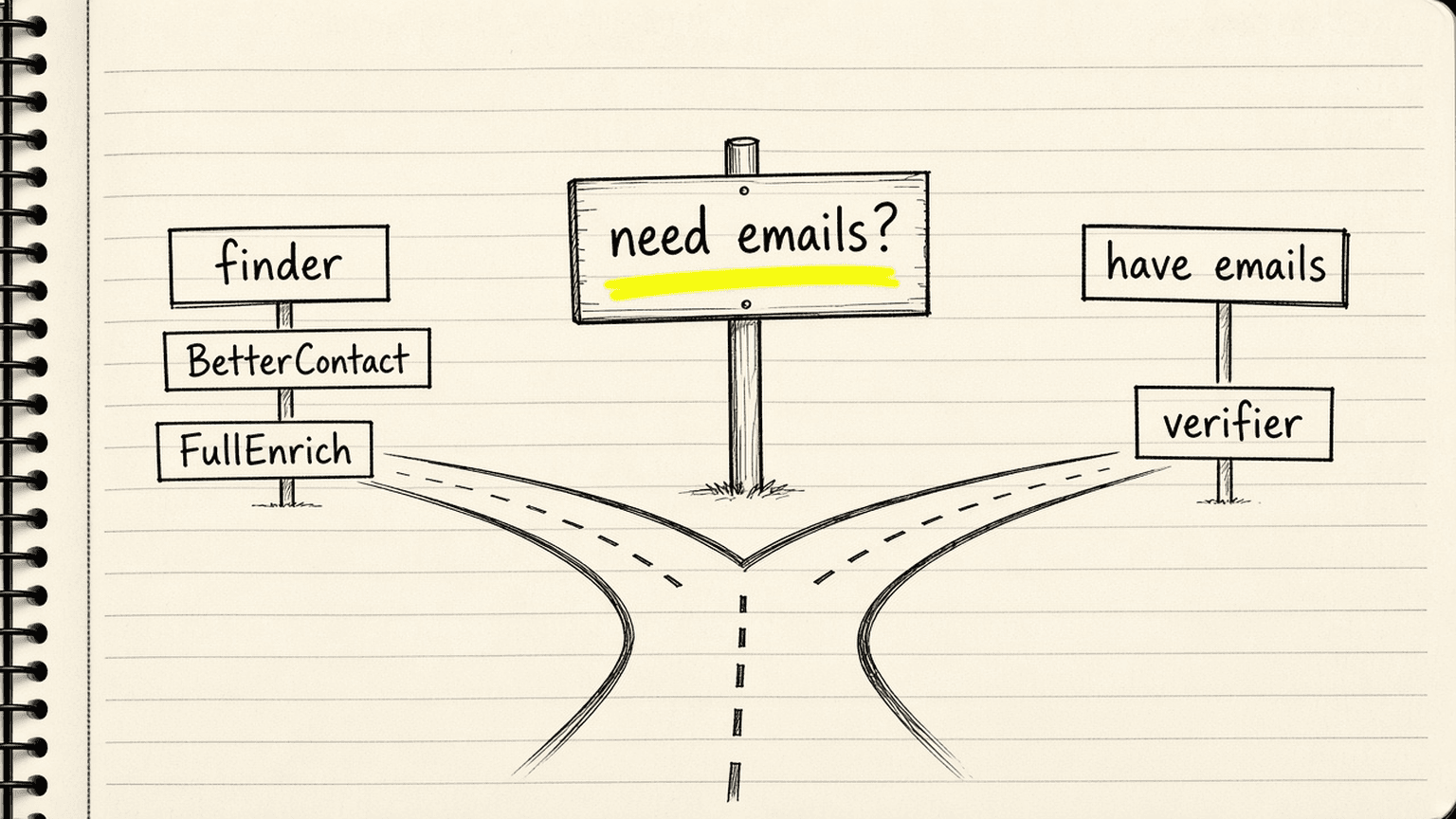
Use BetterContact Pro if you need to find new work emails and check them. It starts at $49 a month billed monthly for 1,000 credits, as of October 26, 2026. It charges nothing for catch-alls, and Pro includes catch-all checks.
Use FullEnrich if you want a finder that publishes a catch-all rate. It is about $55 a month for 1,000 credits at $0.055 a credit on October 26, 2026 prices, and FullEnrich says it verifies 80% of catch-alls.
Use a plain verifier if you already have the emails. A verifier asks the mail server whether a mailbox exists without sending an email. Jan Berning, who runs growth at the data company Databar.ai, wrote on October 22, 2026 that each check costs a fraction of a cent. His company sells data about people and companies, so read his view with that in mind.
Don’t send to unchecked catch-alls at volume. The failures stay silent, and you can’t see them in your bounce rate.
What a catch-all domain does with a wrong address
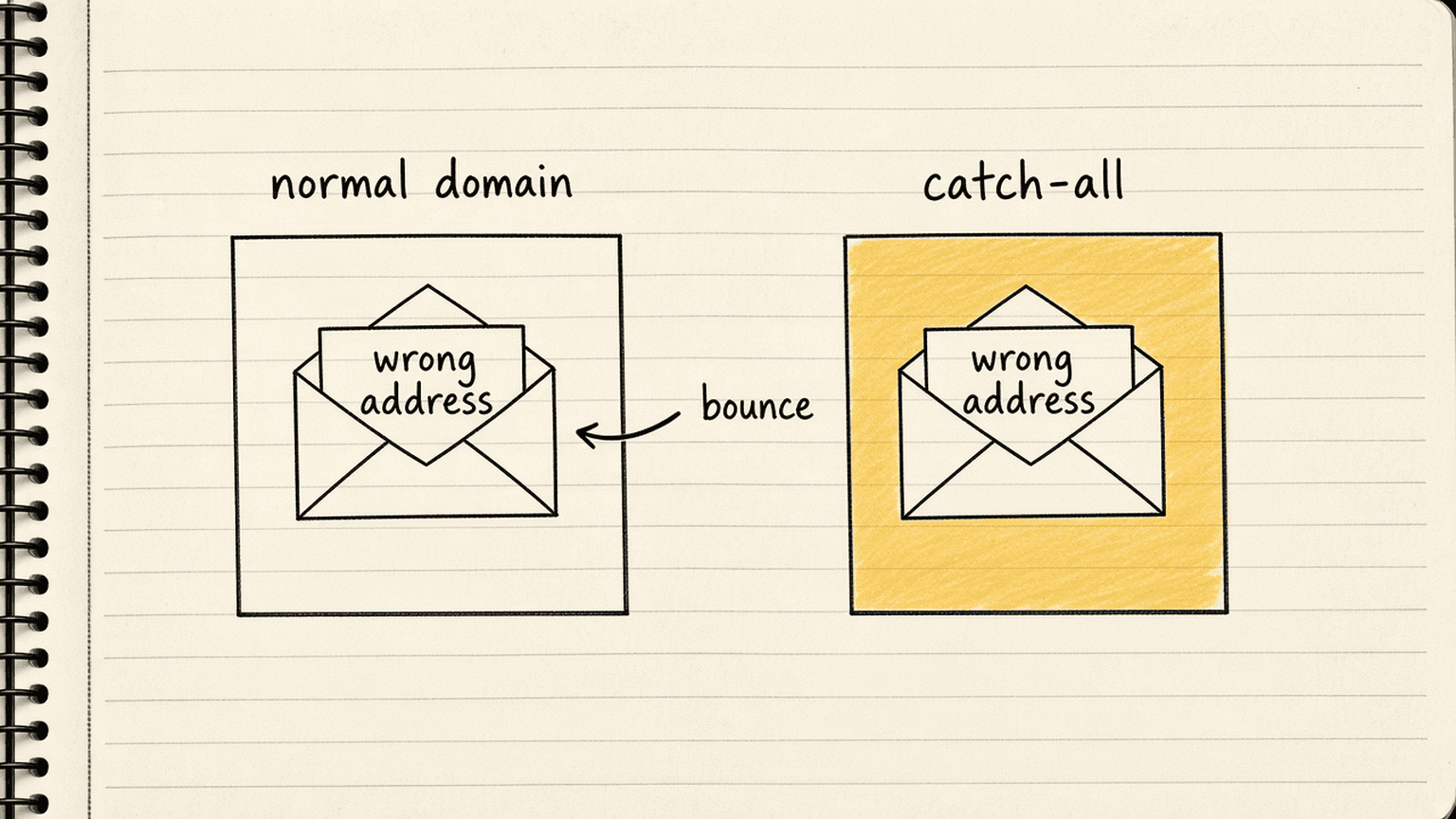
On a normal domain, mail to a wrong address bounces back. Your sending tool sees the bounce and drops the address.
On a catch-all domain, the server says yes to every address. Soren Lindbo, who runs the lead service Lyre Leads, put it in two lines on X.
A catch-all domain accepts every address you send to, real or fake. So a wrong address there never bounces. Soren Lindbo on X, October 12, 2026
A low bounce rate can hide a bad list
Lindbo’s point goes further. Cold email tools watch your bounce rate. A catch-all failure never shows up there, so a list can read 0% bounces while part of it reaches nobody.
The cost shows up as silence. You see fewer replies, blame the copy and rewrite a sequence that was fine.
The share of catch-alls that turn out real
Atishay, who posts on X as @atishayhyperke and runs outbound campaigns for clients, tested four contact data tools in September 2026. He posted the results on October 23, 2026.
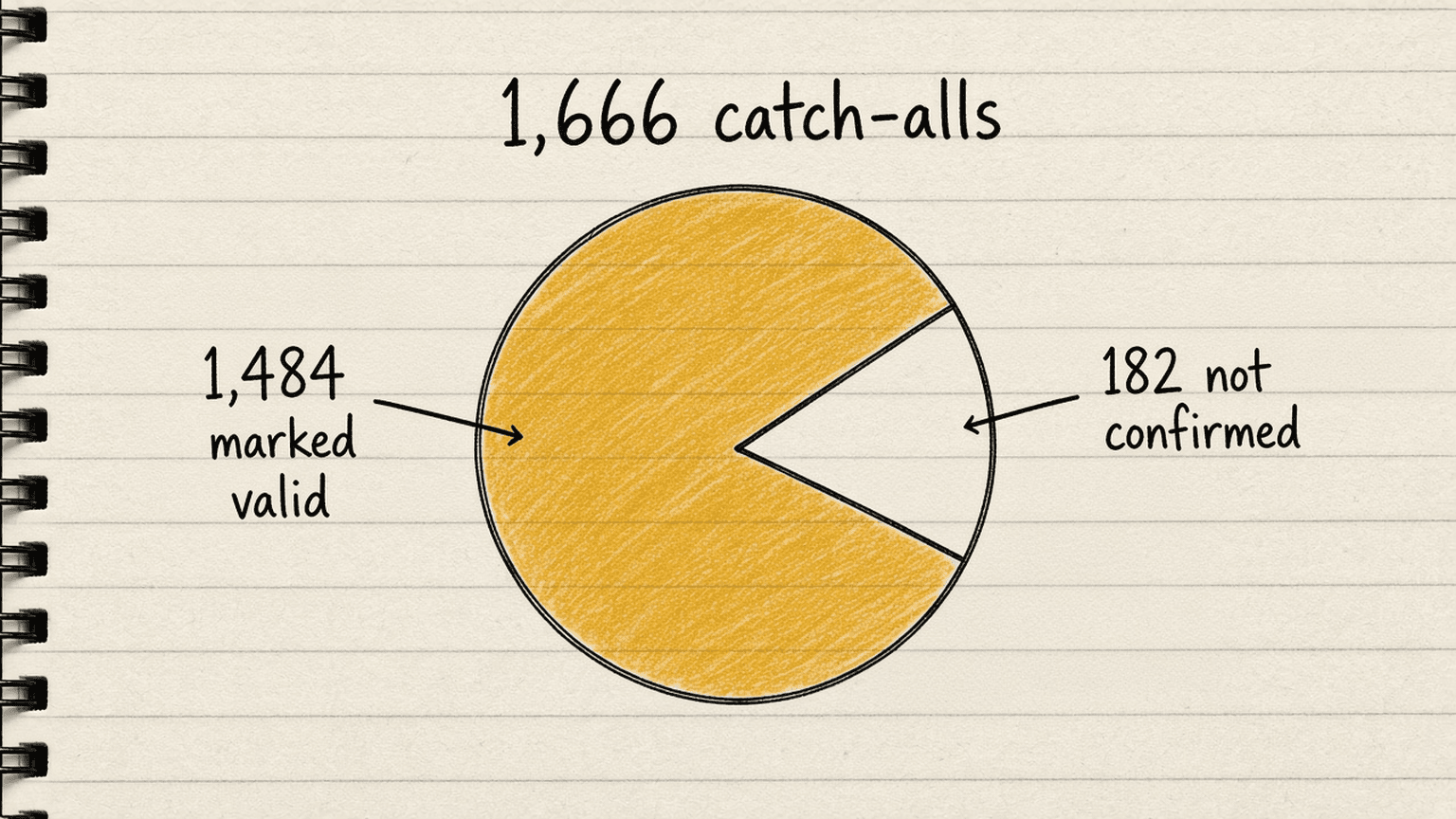
His run returned 5,464 unique emails. MillionVerifier, a verifier, could only call 1,666 of them catch-alls. WizLeads, a catch-all checker, then marked 1,484 of those 1,666 as valid. That is 89%.
His article carries referral links to two of the data tools he tested. Neither is a catch-all checker.
FullEnrich says it verifies 80% of catch-alls, as of October 26, 2026. The two numbers come from different tests, so don’t rank tools on them.
Sabo, who posts on X as @MrColdEmail and sells the email verifier EmailShield, argues the other side. His tool skips catch-alls by design, so read his view with that in mind.
A catch-all domain says “yes” to every email you send it. Sabo (@MrColdEmail) on X, October 16, 2026
In the same post he says the only sure test is a real send, watched for up to 48 hours.
A two-step check keeps the deep check small
Max Pidvalnyi, who runs an outbound lead business, posted his routine on X on October 11, 2026.
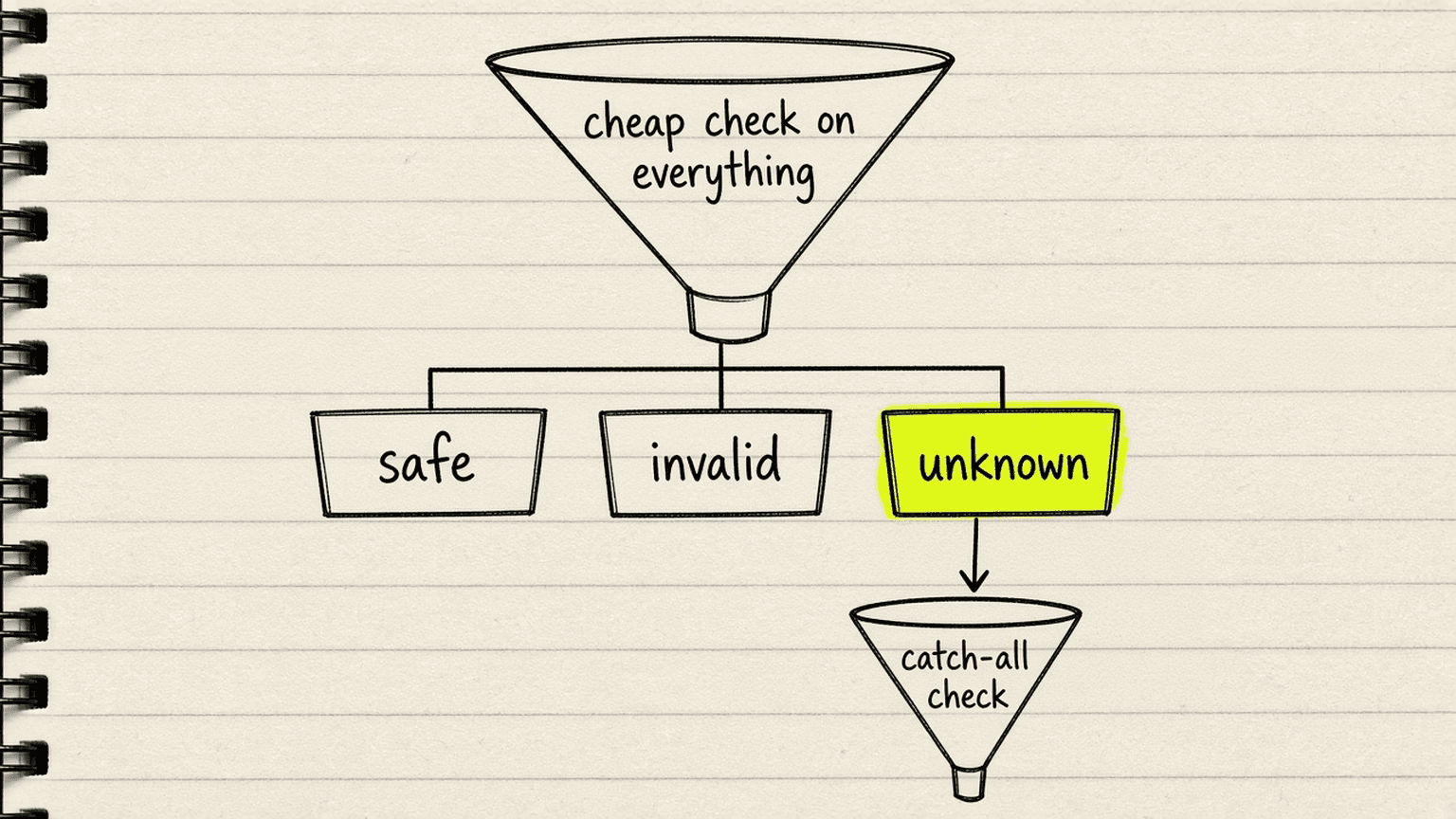
First, he runs every address through a cheap check of the mail server. Safe addresses go out. Invalid ones come off the list.
Second, only the unclear results go to a verifier built for catch-alls. That keeps the slower, deeper check to the slice that needs it.
Buy a finder or a verifier
A finder looks up a person’s email. A waterfall finder tries several data sources in order until one finds a match. BetterContact and FullEnrich both work this way.
A verifier only checks emails you already have. If you have the list, a finder is the wrong purchase.
What 1,000 contacts cost
The math: on October 26, 2026 prices.
- Find and check 1,000 work emails on BetterContact Pro. It starts at $49 a month billed monthly for 1,000 credits. An email costs 1 credit, a mobile costs 10, and catch-alls cost nothing.
- Find and check 1,000 work emails on FullEnrich. It is $0.055 a credit, about $55 a month for 1,000 credits. A work email costs 1 credit.
- Check 1,000 emails you already have. A verifier costs a fraction of a cent per check, per Jan Berning.
BetterContact Starter is $15 a month billed monthly for 200 credits. Its plan grid shows a dash for catch-all checks on Starter, while its FAQ says catch-all verification is included. Treat it as a Pro feature until BetterContact confirms.
BetterContact says each email it finds is checked by Bouncer, a separate verifier.
What to do this week
Pull your last campaign and count the addresses your verifier marked catch-all or unknown.
If you need new emails, test 50 of them on BetterContact with its 50 free credits. If you want a finder with a published catch-all rate, FullEnrich has a 50-credit free trial. If you already have the list, run the two-step check before your next send.
Try BetterContact · Try FullEnrich
Next · BetterContact tool page covers its plans · FullEnrich vs BetterContact compares the two finders · Email finders lists more finders.
Sources · BetterContact pricing, checked October 26, 2026 · FullEnrich pricing, checked October 26, 2026 · Atishay’s four-tool test on X, October 23, 2026 · Soren Lindbo on X, October 12, 2026 · Sabo on X, October 16, 2026 · Max Pidvalnyi on X, October 11, 2026 · Jan Berning’s list guide on X, October 22, 2026.