

September 14, 2026
Apollo vs Clay · credit waste, double verify, and the Action tax
Visit ApolloClay short-circuit math, hybrid double verify, Org's real floor, and Actions that still bill after BYOK. Costs that do not show on the pricing page.
Apollo and Clay look fine on a pricing page. Then you run a real list. The bill jumps.
A lot of that money is Clay. The waterfall keeps paying providers after it already has a good email. Or Clay verifies an address Apollo already marked clean. The Org floor and the Action ceiling matter too. They usually show up after those two leaks.
Stop the waterfall when you already have the email
Clay Launch is $185 a month, or $167 on annual. You get 2,500 Data Credits and 15,000 Actions. Growth is $495 a month, or $446 on annual. Every plan has unlimited seats. A failed enrichment costs 0.
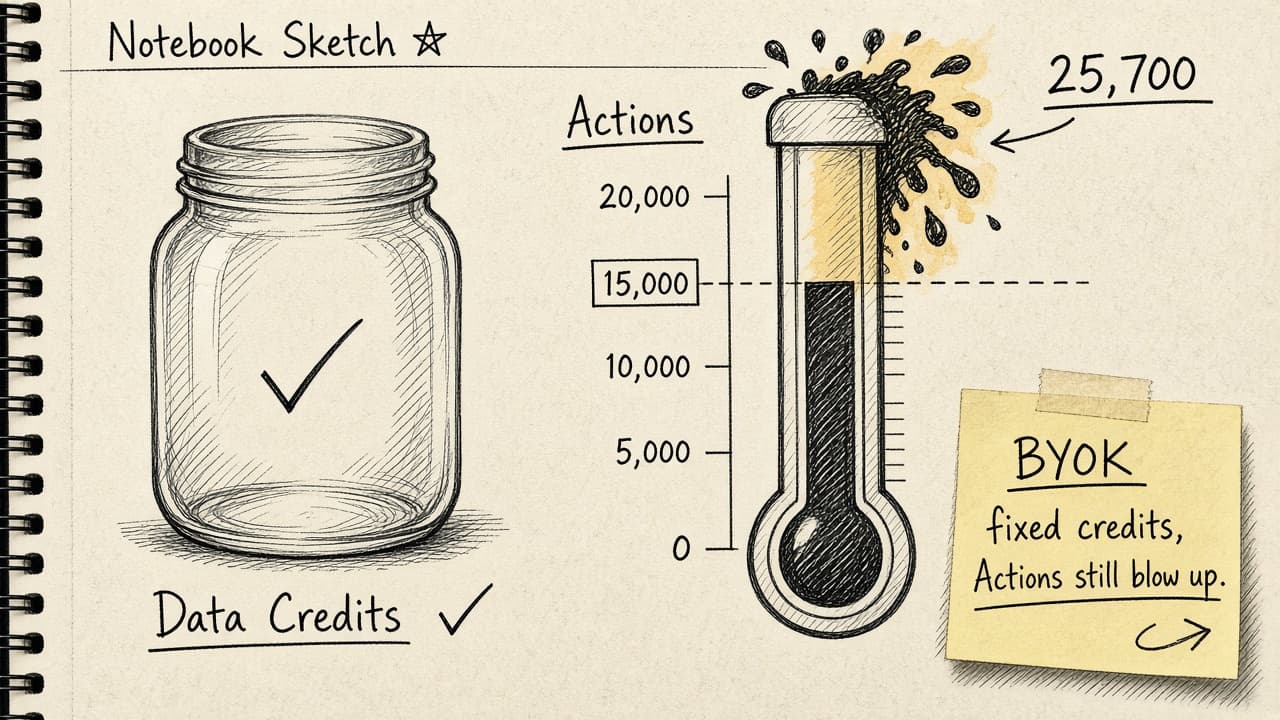
Data Credits are Clay's fee when you use Clay's own data providers. Actions are Clay's fee for each step that runs in a table. Bring your own API keys (BYOK) and you skip Data Credits on that step. You still pay 1 Action.
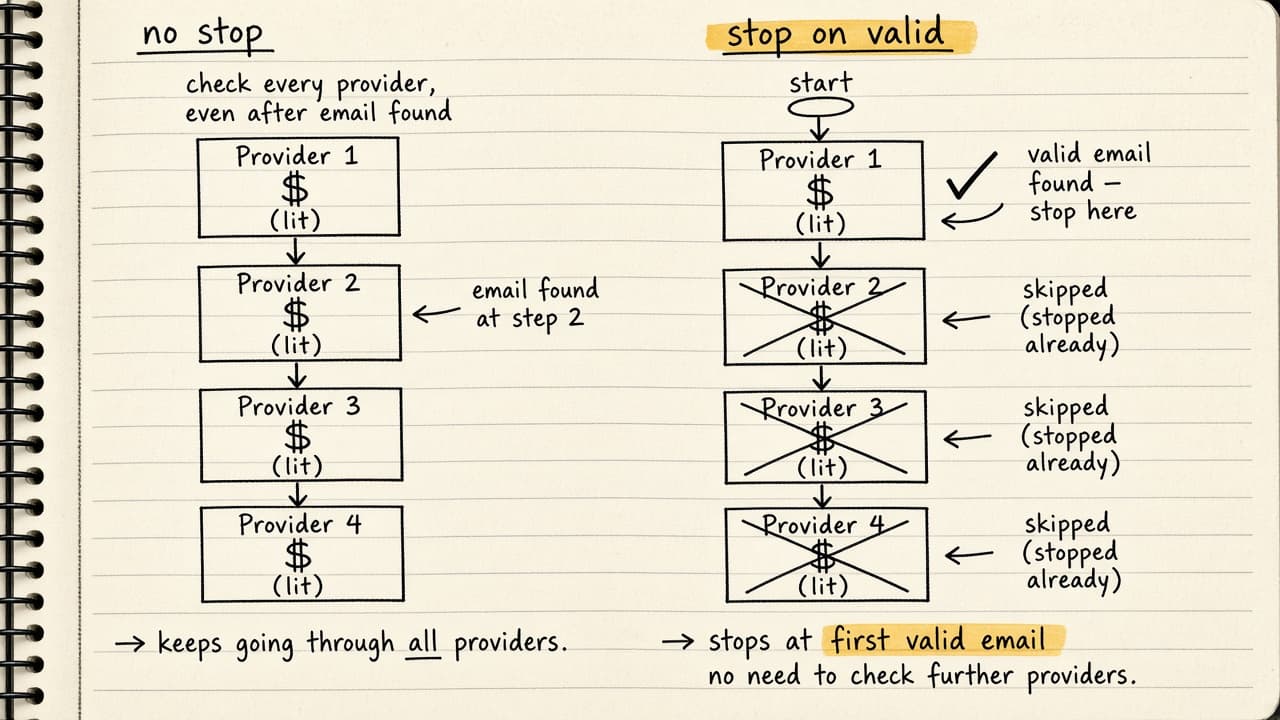
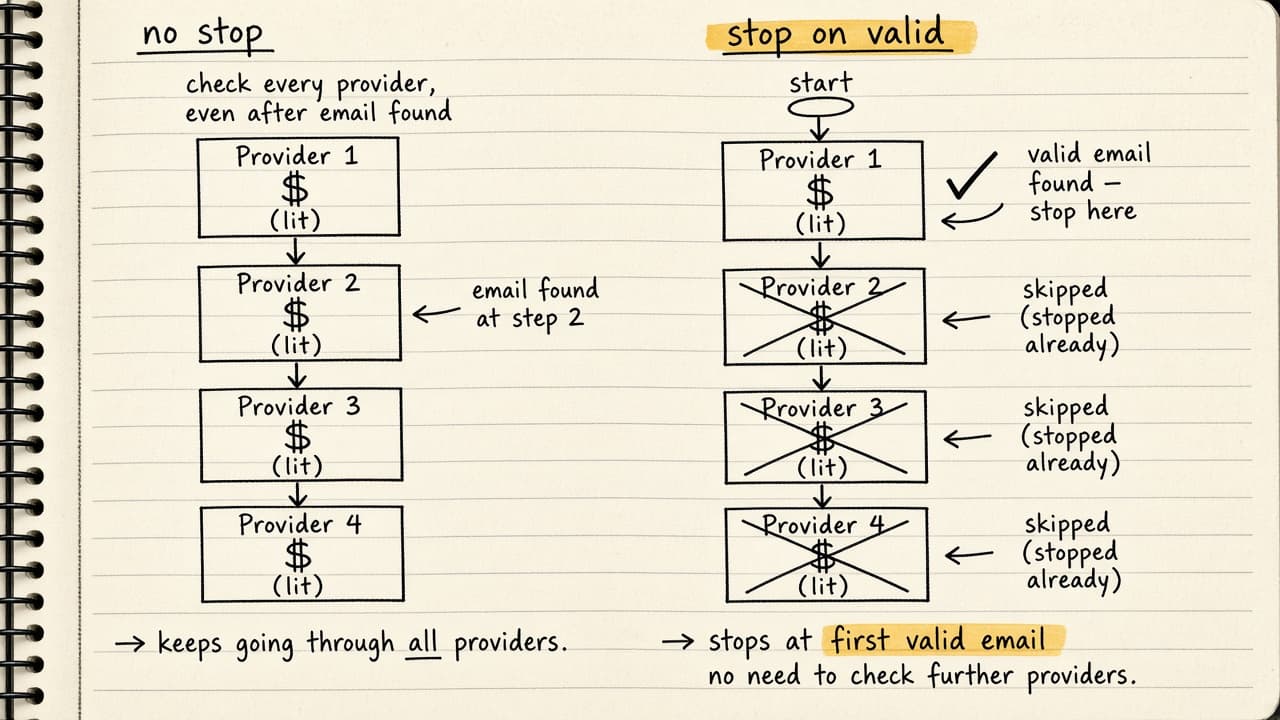
The big Clay waste is a waterfall that keeps calling providers after it already has a good email. Pricing pages sell more providers. They rarely show stop rules.
Zackrag wrote this up on DEV Community. He ran 500 enterprise records and 500 SMB records through a simple waterfall: PDL first, then Apollo, then Hunter.io. He burned about 3x the credits he needed. On SMB rows, Hunter found a valid email for 58% on the first try. He had already paid for PDL on more than 300 of those rows.
Then he added hard stop rules on a 4-provider waterfall (Hunter, then Apollo, then PDL, then RocketReach). He tested 1,000 rows. Average provider calls per record fell from 2.8 to 1.6. Same fill rate. About 43% fewer credits. That is Zackrag's test. It is not a law for every market. The lesson is the method: stop on a valid hit, and put the best provider for that persona first.
when I added proper short-circuit conditions to a 4-provider waterfall (Hunter → Apollo → PDL → RocketReach), average provider calls per record dropped from 2.8 to 1.6 on a 1,000-row test. That's roughly a 43% reduction in credit consumption for the same fill rate.
Don't verify the same email twice
Many teams pull a list from Apollo, then push it into Clay. That stack has a quiet second bill.
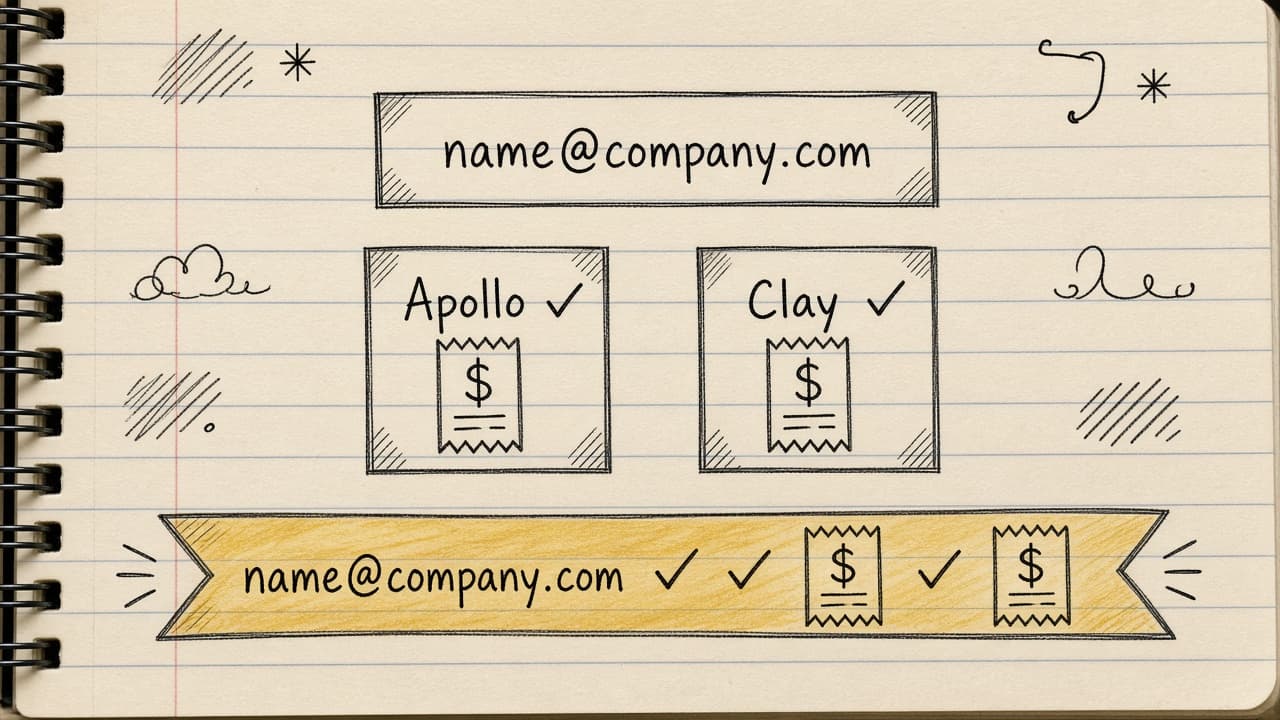
Apollo already marks many emails as verified with the seat. If Clay verifies those same rows again, you spend Data Credits on emails that were already clean. You feel it when the job runs every week.
Othmane Khadri at Yalc:
The Clay plus Apollo hybrid every ranking post recommends has a hidden double charge. Apollo returns verified emails as part of the seat, and reverifying those in Clay burns Data Credits on records that were already clean. Most operators never notice, because Clay just deducts. It is only when the same play runs weekly that the double bill becomes obvious.
Route Clay only at the records Apollo returned as low confidence or missing.
Simple rule: Apollo (or AI Ark) builds the list. Clay only touches misses and low-confidence rows. Send with Smartlead or Instantly. Clay does not own a big contact database of its own. Clay also does not send mail at volume by itself.
Organization does not start at $119
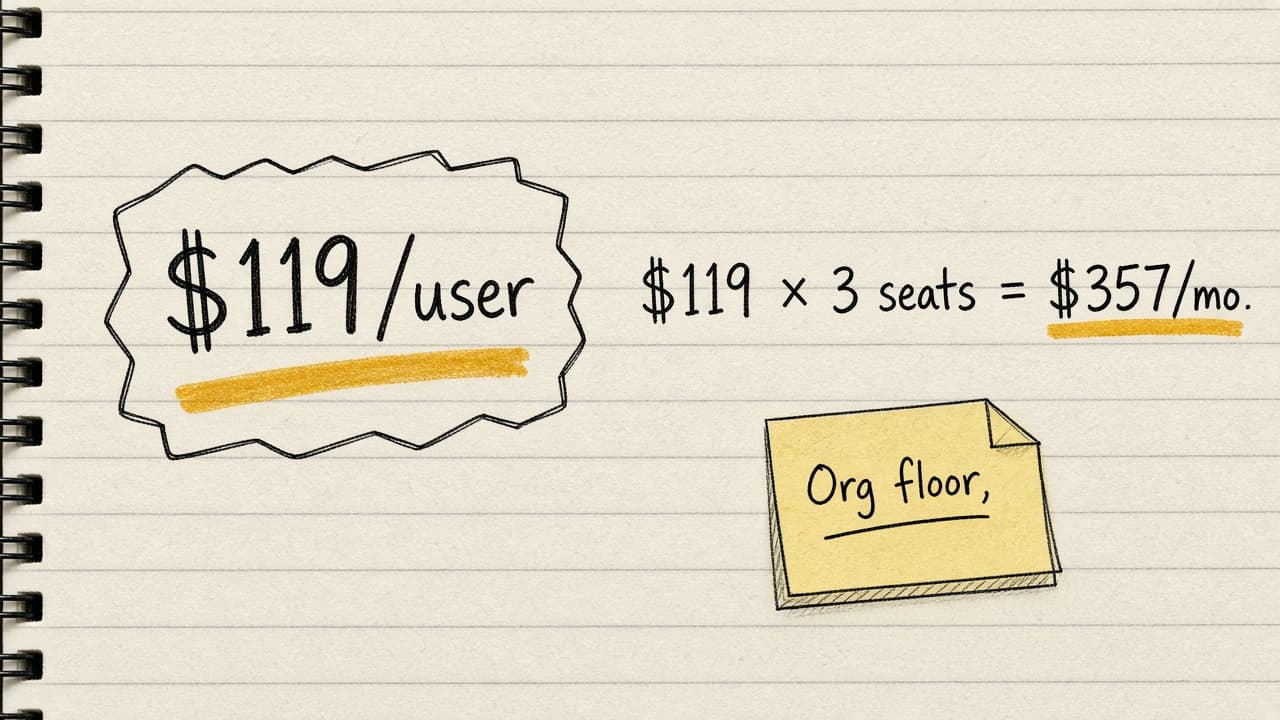
Apollo Organization lists at $119 per user per month on annual billing. The plan needs at least 3 users. So the real starting price is $357 a month. That is $4,284 a year, before you spend a credit.
Othmane Khadri at Yalc flagged the floor the same way:
The $119 headline is per user with a 3 seat floor, so the real starting price is $357 a month ($4,284 a year), whether your GTM headcount is 3 or 30.
If a sales deck shows $119, ask for the three-seat math. For context, Professional is $79 per user per month annual. Basic is $49 per user per month annual. Apollo's month-to-month Basic price is still unclear on the public page. Credits expire. A verified email costs 1 credit. A returned phone costs 8. Phone waterfall often lands between 8 and 25 credits.
Your own keys still burn Actions
BYOK means you plug in your own finder keys (LeadMagic, Prospeo, and the rest) and your own AI keys. Clay stops charging Data Credits for those steps. Jorge Macias at GTM Engineering puts the save at about 80 to 90 percent per row on common finders, and about 80 to 95 percent on AI keys. Those are his ranges. Not a bank statement. Actions still bill.
Here is the trap in plain words.
You fix Data Credits. The dashboard looks calm. Then a big table runs. Each step still costs 1 Action. Launch only includes 15,000 Actions a month.
LeadMagic's Clay cost guide shows how to estimate Actions before you run:
Expected Actions = number of rows × (chance step 1 runs + chance step 2 runs + chance step 3 runs + ...)
Their example:
10,000 rows × (1.00 + 0.35 + 0.82 + 0.40) = 25,700 Actions
25,700 is bigger than Launch's 15,000. So the table can force an upgrade even when Data Credits look fine.
Clay University says a failed enrichment costs 0 Actions and 0 Data Credits. Trust that over older blogs that say misses always bill. After March 2026, public writeups are clearer that BYOK data steps still use Actions.
What to change this week
Most of the wasted money sits in two places.
First, Clay. Add stop rules before you add another provider. Put the best provider for that persona first. On a 1,000-row sample, count how many providers fire per row, the way Zackrag did. Bring that number down without killing fill rate.
Second, the hybrid. If Apollo already verified the email, do not pay Clay to verify it again. Send Clay only the misses and the low-confidence rows, the way Othmane Khadri describes.
The Org floor and the Action ceiling still matter. They are easier to catch once those two leaks are closed.
Next · Clay vs Apollo shows which tool does which job · List building and lookalikes helps you choose where leads come from · Clay waterfall providers covers the order to run data tools in.