

October 26, 2026
Google Jobs API · Google’s jobs API searches your jobs, and a SERP API reads Google’s
Google Cloud Talent Solution searches jobs you upload to it. To read Google’s own job listings in code, you need a SERP API. On October 26, 2026 prices, 4,500 searches a month cost $40 a month billed monthly on SearchApi.
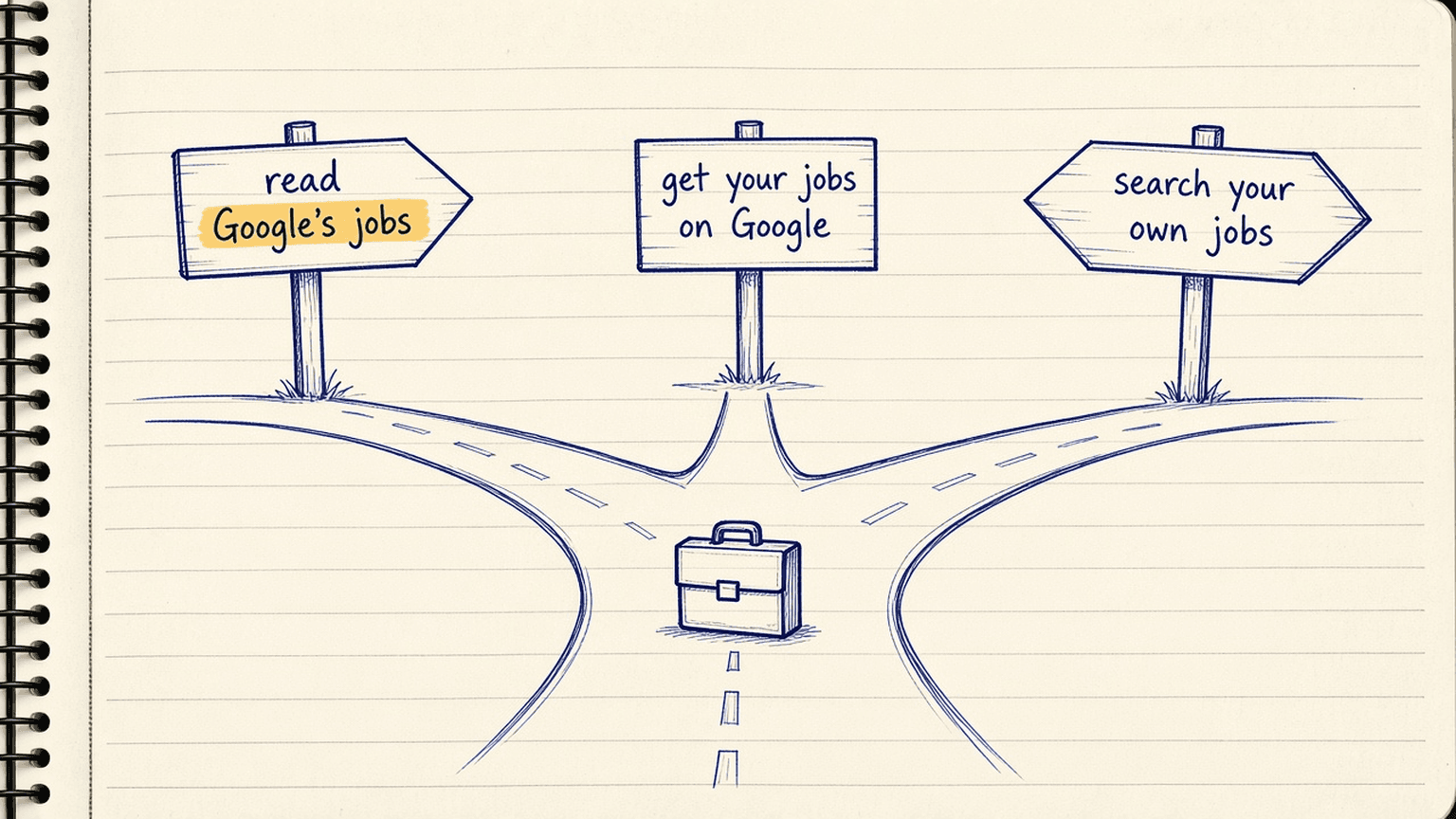
Google’s jobs API, Cloud Talent Solution, searches the jobs you upload to it. It returns no listings from the job results people see on Google.
The short answer
Pick SearchApi if you want Google’s job listings in your code at 1,000 or more searches a month. A SERP API is a service that runs a Google search for you and returns the results as data. SearchApi Developer is $40 a month, billed monthly, for 10,000 searches.
Pick SerpApi if you need fewer than 1,000 searches a month. Its Starter plan is $25 a month, billed month to month, and its Free plan gives 250 searches a month.
Pick structured data if you want your own jobs to show on Google. That needs markup on your job pages and no API purchase.
Pick Google Cloud Talent Solution if you want a search box over jobs you already own.
The three roads behind “Google jobs API”
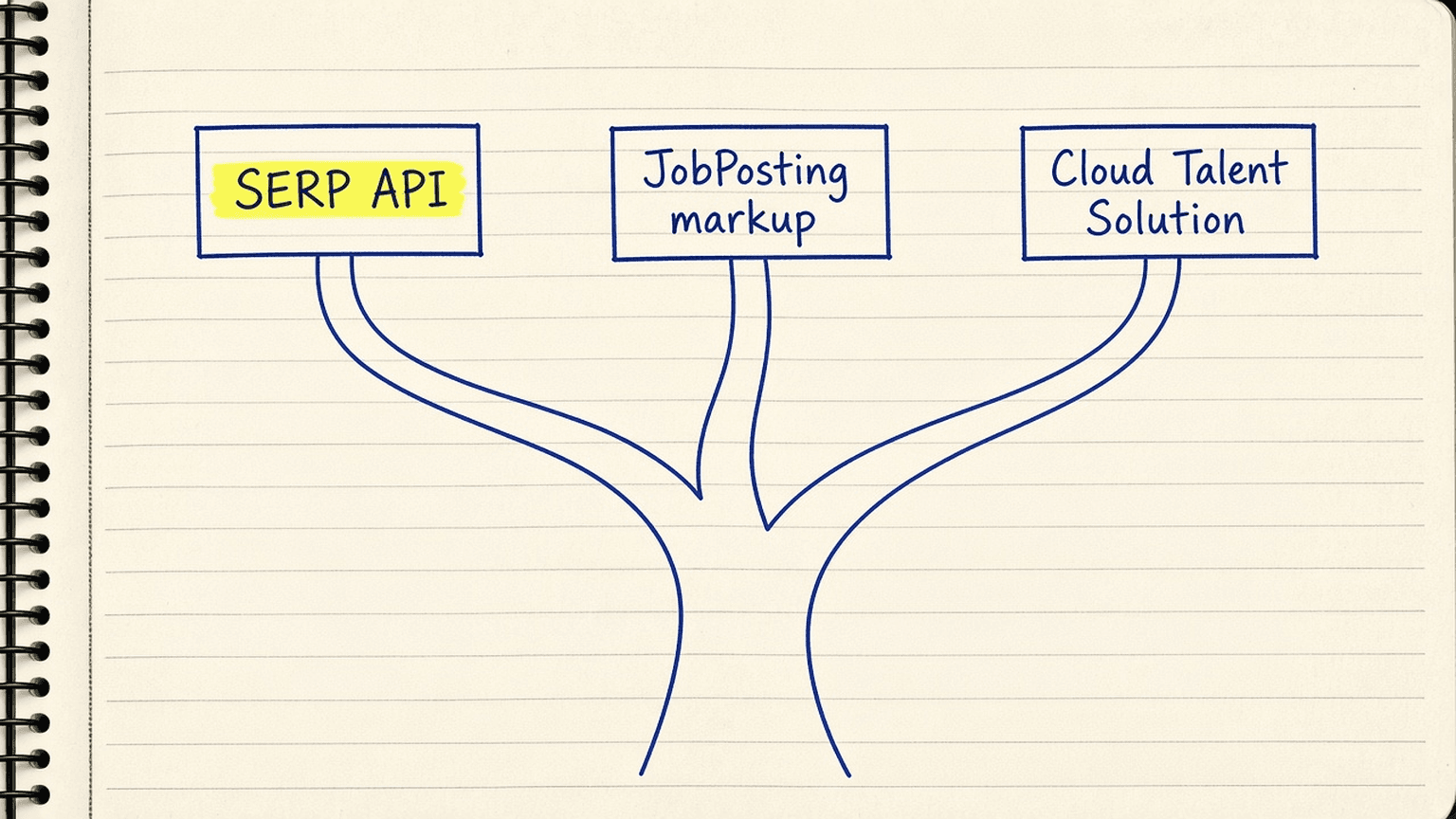
Road one is reading Google’s job results. Google sells no API for that, so a SERP API runs the search and hands you the listings.
Road two is getting your jobs onto Google. That uses structured data, code on a page that tells Google what the page holds. For jobs, the code type is JobPosting.
Road three is searching your own jobs. Google Cloud Talent Solution does that.
What Google Cloud Talent Solution does
Google’s Job search API basics page, last updated October 22, 2026, says: “You send a list of jobs and companies to the API, which stores them and indexes them into a searchable form.”
The results then show on your own company site. So the API searches the jobs you send it. Google’s job results stay out of reach.
The page shows no price. Check Google Cloud’s pricing before you build on it.
What a Google Jobs search returns through SearchApi
SearchApi runs Google Jobs searches with its google_jobs engine. You send a search term in q, and you can set a place with location or uule, an encoded location code Google uses.
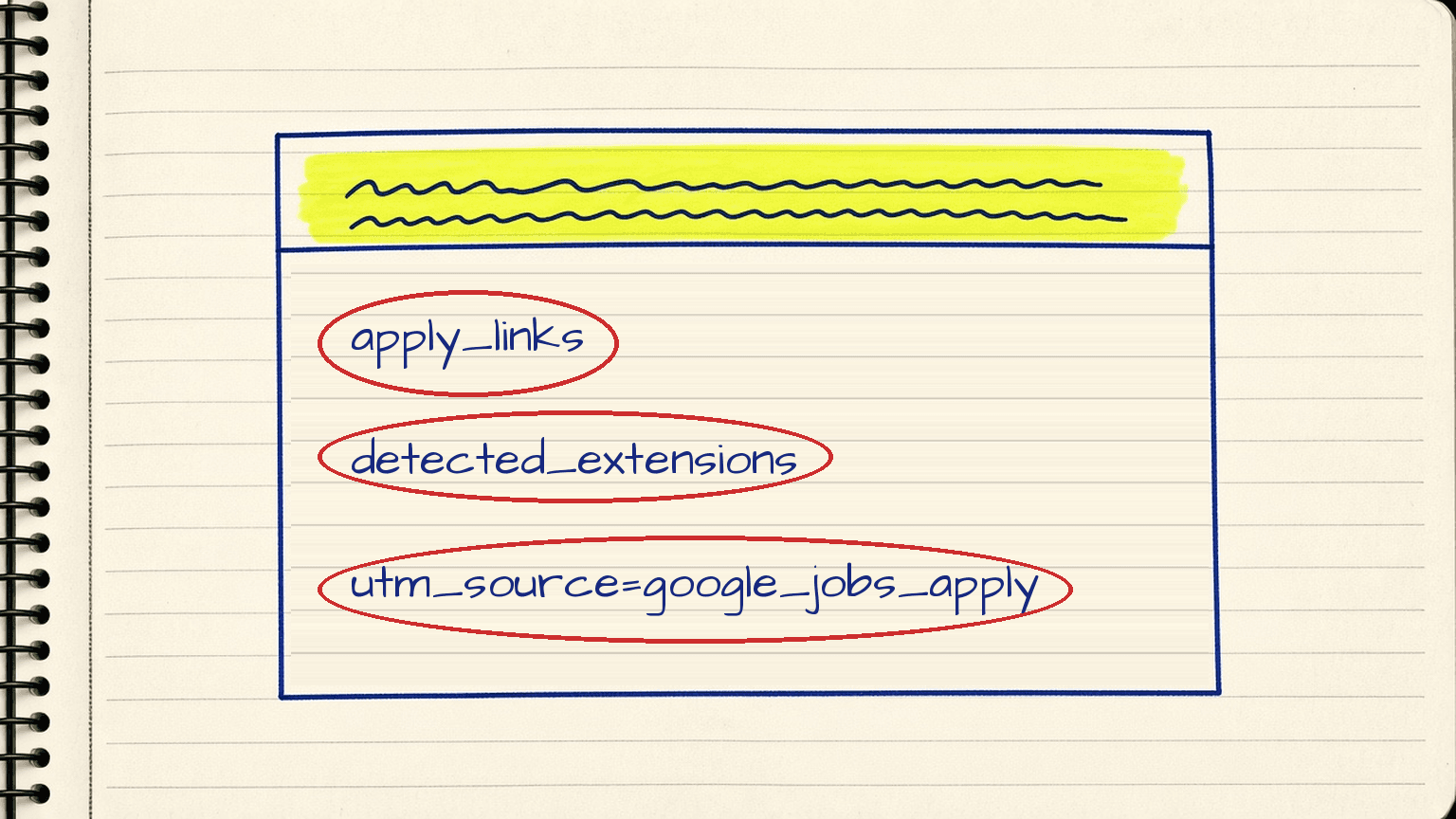
Each result carries detected_extensions, the extras Google pulls from a posting, such as when it was posted, the schedule and benefits. Each result also carries apply_links, the sites where a person can apply.
Results come a page at a time. That is pagination, and SearchApi passes a next_page_token to fetch the next page. Each page is one more search on your bill.
How to count Google Jobs traffic on your own site
Apply links in SearchApi’s Google Jobs sample carry the tag utm_source=google_jobs_apply. If you run a job board, filter your analytics by that tag. You see the number of applicants who reached you from Google Jobs with no API at all.
Rodrigo Rocco builds JobBoardSearch. He posted one job site’s figure on X on October 19, 2026:
“53.5% of clicks for this job site are coming from GfJ”
GfJ is Google for Jobs, the job results box in Google search.
What a job board pays to track 4,500 searches a month
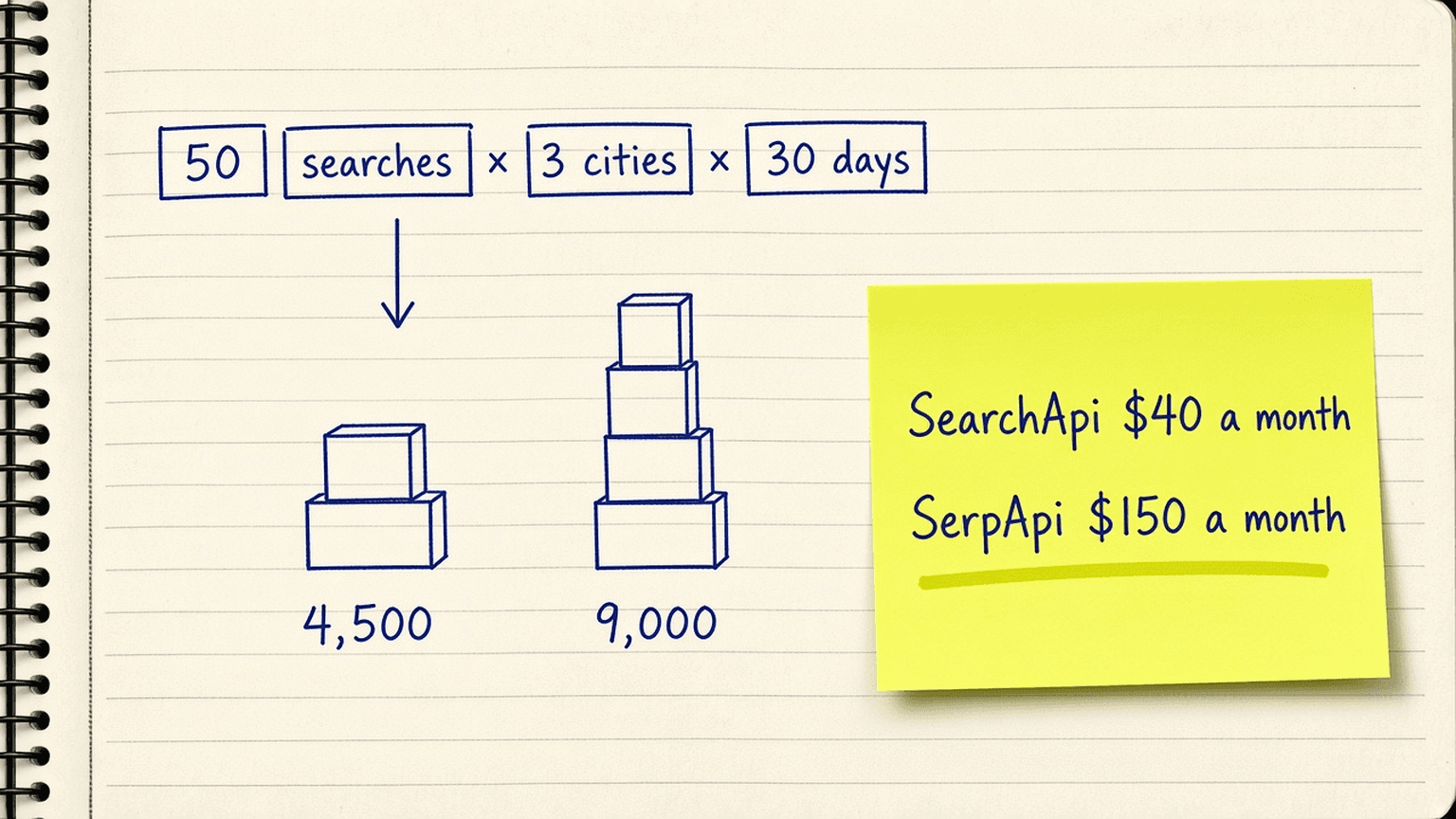
The math: on October 26, 2026 prices, a niche job board tracks 50 searches in 3 cities every day:
- 50 × 3 = 150 searches a day, × 30 days = 4,500 searches a month, first page only.
- SearchApi Developer covers 10,000 searches for $40 a month, billed monthly.
- SerpApi Developer covers 5,000 searches for $75 a month, billed month to month.
- With a second page on every search, the board runs 9,000 searches a month. SearchApi Developer still covers it at $40 a month billed monthly. SerpApi needs Production at $150 a month billed monthly for 15,000.
Both bill only for searches that succeed. SerpApi’s FAQ says an empty result set still counts as 1 search. SearchApi charges for searches that return a 200 status code, the web’s code for a request that worked.
Below 1,000 searches a month, SerpApi Starter at $25 a month billed monthly costs less than SearchApi Developer at $40 a month billed monthly. SerpApi’s 250 free searches renew each month.
When LinkedIn Jobs saves you pages
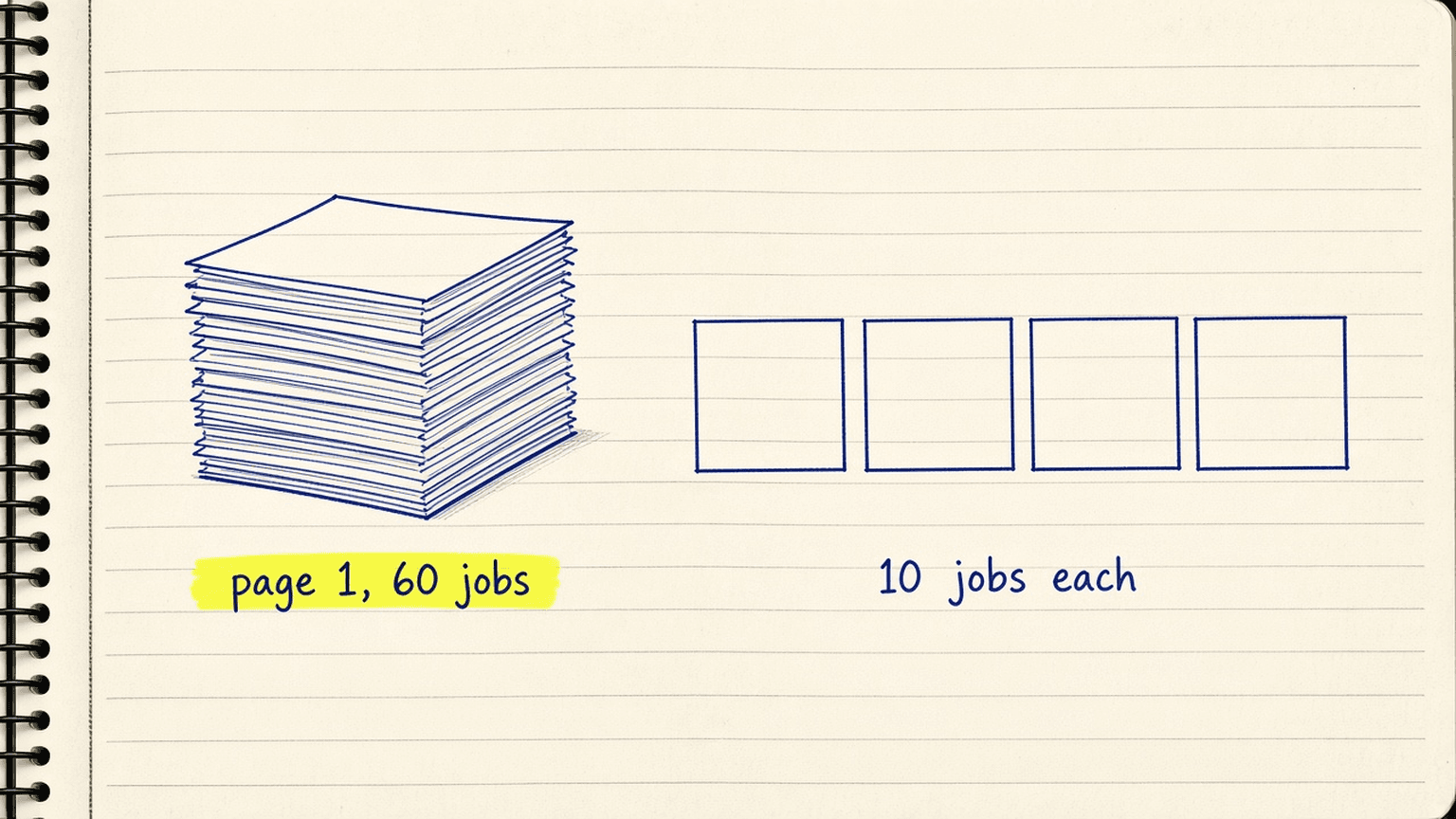
SearchApi also runs LinkedIn Jobs searches. Its docs say the first page returns up to 60 jobs and each later page up to 10, across pages 1 to 95.
The has_under_10_applicants filter keeps posts with under 10 applicants. For a list of fresh posts, one LinkedIn search can cover what takes several Google Jobs pages.
How to get your own jobs onto Google
Put JobPosting structured data on each job page. Google’s JobPosting guide was last updated September 8, 2026, so read the current version before you ship.
Google’s Indexing API asks Google to crawl a page soon after you publish it. Its quickstart, last updated October 16, 2026, says it “can only be used to crawl pages with either JobPosting or BroadcastEvent embedded in a VideoObject.”
Nandan Priyadarshi, a solo maker, posted on X on September 9, 2026:
“Hit this on a side job board last quarter. Schema lived on the homepage only, so Google for Jobs ignored every listing. Moved JobPosting onto each /jobs/[id] plus Indexing API on create. Crawl lag dropped from days to hours.”
Schema is another name for structured data. The fix in his post is markup on each job page.
What to do this week
Write down which road you are on.
If you need Google’s listings in code, run 20 searches on SerpApi’s Free plan to see the fields. Move to SearchApi once you pass 1,000 searches a month. If you want your jobs on Google, add JobPosting markup to one job page and test it with Google’s guide.
Next · SerpApi pricing prices every SerpApi plan · SerpApi alternatives ranks the wider field · DuckDuckGo API sorts three tools that share one name.
Sources · Google Cloud Talent Solution basics, updated October 22, 2026 · Google JobPosting guide, updated September 8, 2026 · Google Indexing API quickstart, updated October 16, 2026 · SearchApi Google Jobs docs, SearchApi LinkedIn Jobs docs and SearchApi pricing, checked October 26, 2026 · SerpApi pricing, checked October 26, 2026 · Rodrigo Rocco on X, October 19, 2026 · Nandan Priyadarshi on X, September 9, 2026.