

October 27, 2026
Website to markdown · Firecrawl starts free and runs to $44 for 10,000 pages a month, Jina Reader is free for one page
Run a whole site through Firecrawl, free up to 1,000 pages a month, $44 for 10,000 pages with Hobby plus pay as you go, or turn one page into markdown free with Jina Reader. See the math and which tool fits the job.
The short answer
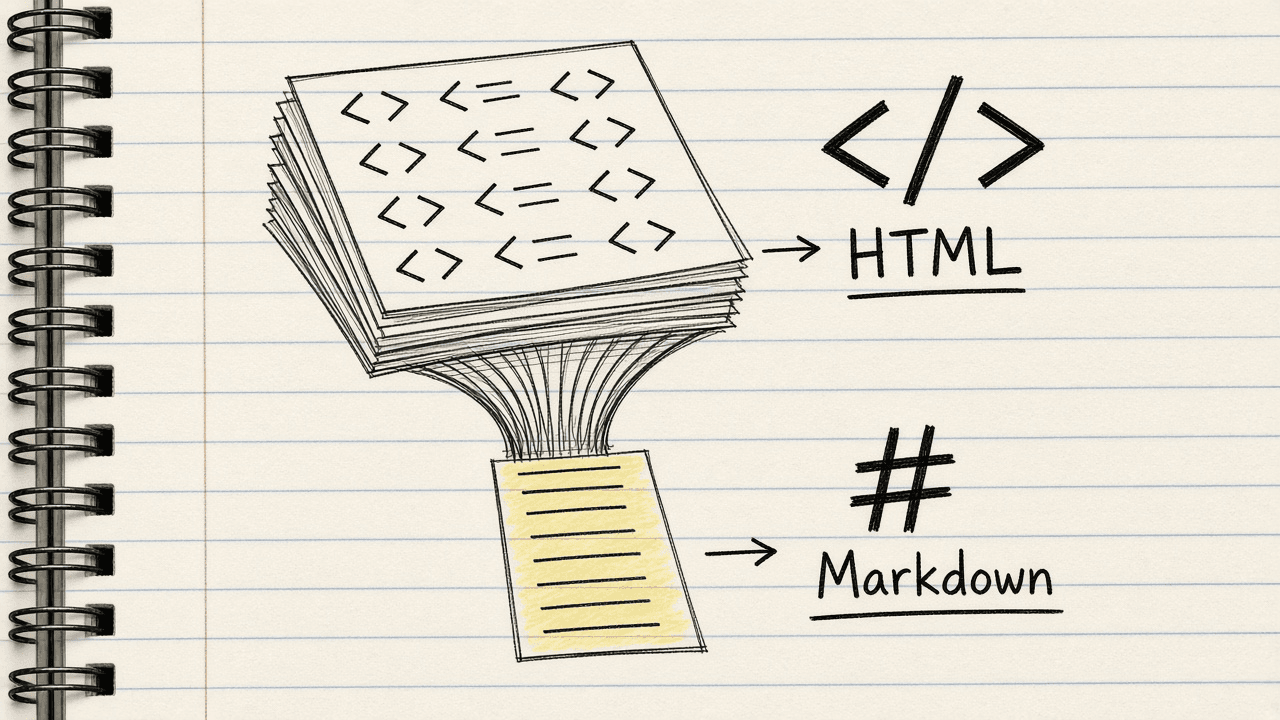
Markdown is plain text with simple symbols like # and * that both people and AI tools read easily. Turning a web page into markdown strips out the code behind it. A chatbot or search tool then reads plain words instead of clutter.
Search for “website to markdown” and the two tools actually built to do this at scale, Firecrawl and Jina Reader, do not show up anywhere in the first page of results. Small open source scripts, browser extensions and one video fill that space instead.
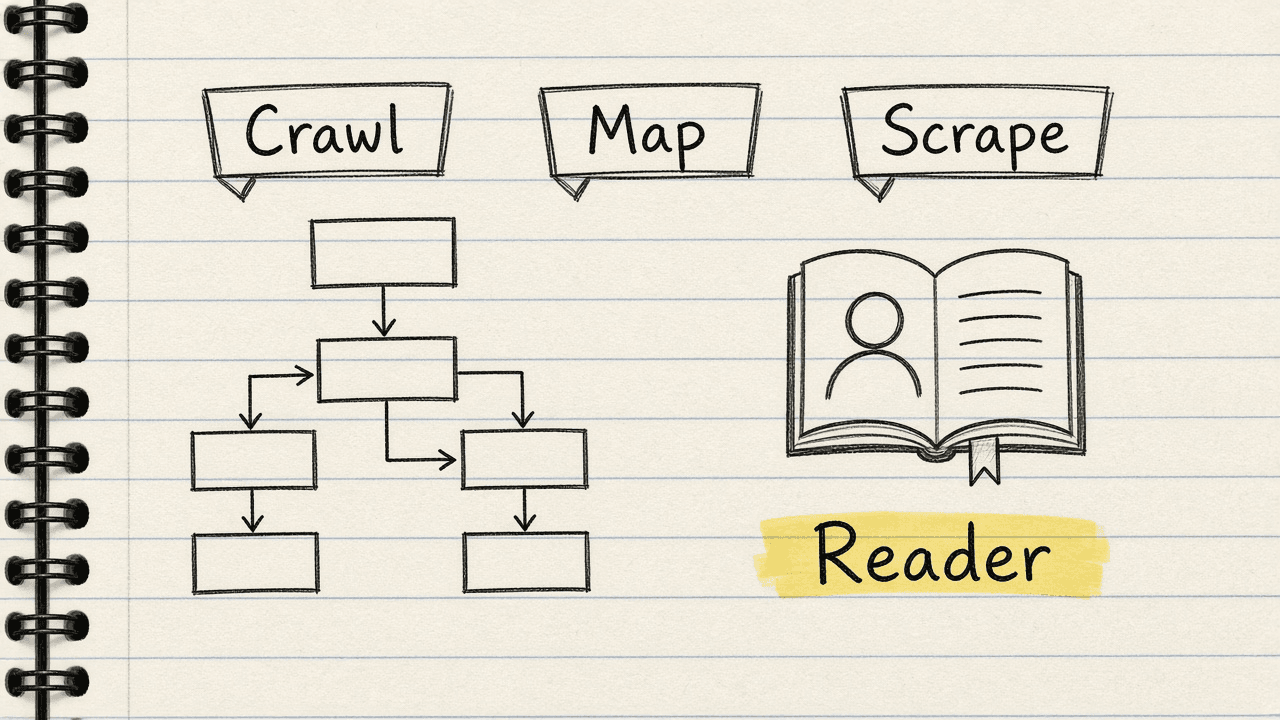
Pick Firecrawl for a whole site. It starts free at 1,000 pages a month, then climbs as volume grows, because it also crawls and maps a site instead of reading one page alone. Pick Jina Reader for one page at a time. It is free, with no monthly page cap, only a limit on the number of requests it accepts each minute.
Why bother converting at all
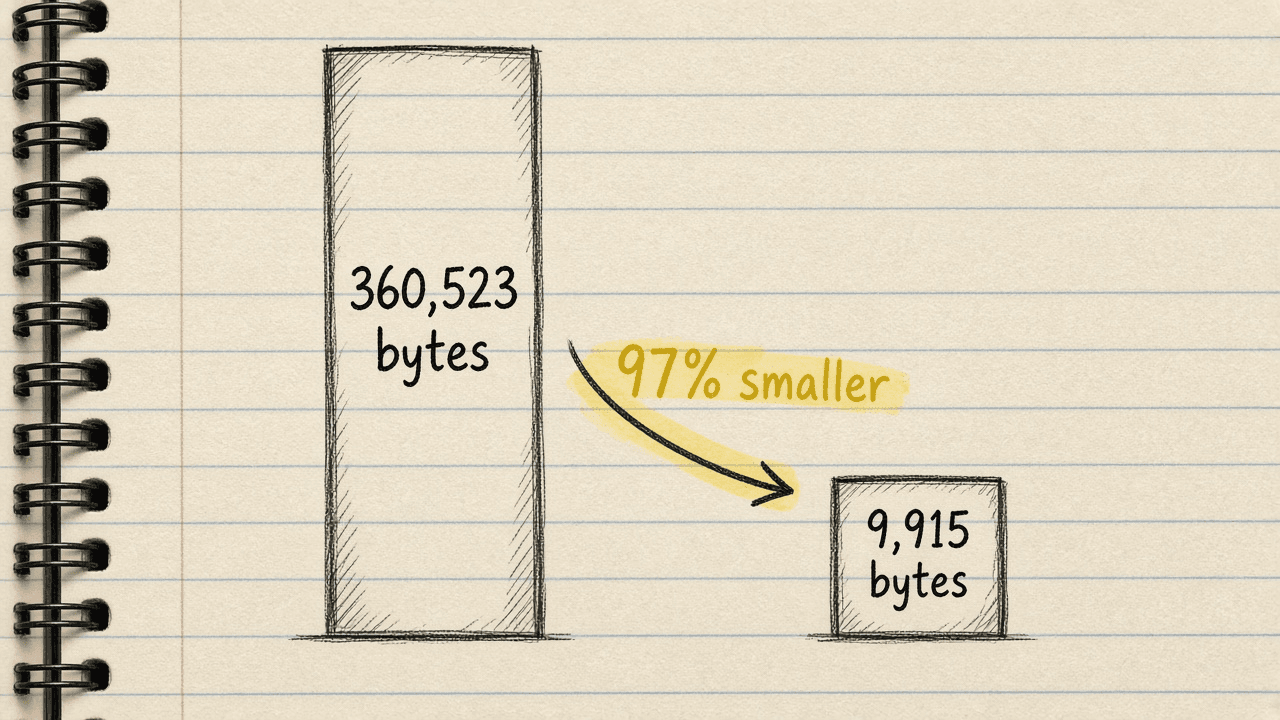
The point of doing this is size. HTML, the code that builds a web page, carries tags, scripts and menus a reader never sees. Markdown drops almost all of that. The words and headings stay behind.
On August 27, 2026, SyneRyder wrote on Hacker News, “I’ll give a concrete example… This HTML page is 360,523 bytes of raw HTML. After it has gone through my Markdown parser, it is just 9,915 bytes of plain text / Markdown, about a 97% reduction.”
That is the real reason to convert a page before feeding it to an AI tool: a markdown copy uses far fewer tokens, the units an AI model is billed and limited by, than the raw page would.
Conversion is not automatic cleanup, though. On September 28, 2026, sparrowidle wrote on Hacker News, “Piping through readability before rendering is what made mine usable, raw html to markdown on news sites is mostly nav junk.” A readability filter is a step that strips navigation, ads and sidebar clutter before conversion. It keeps boilerplate, the repeated menu and footer text on every page of a site, out of the final markdown.
What Firecrawl charges
Firecrawl’s Free plan costs nothing and includes 1,000 credits a month, a credit being the unit Firecrawl charges per page it processes. No card is required. Scrape, Crawl and Map each cost 1 credit per page. Crawl visits every linked page on a site automatically. Map lists a site’s pages and how they connect, without reading each one in full. Asking for the JSON format instead of plain markdown adds 4 credits a page, for 5 credits a page in total.
Paid plans run on the same credit system. Hobby costs $19 a month billed monthly, or $16 a month billed annually, for 5,000 credits. Standard costs $99 a month billed monthly, or $83 a month billed annually, for 100,000 credits. Growth costs $399 a month billed monthly, or $333 a month billed annually, for 500,000 credits. Scale costs $749 a month billed monthly, or $599 a month billed annually, for 1,000,000 credits. Enterprise is custom priced.
Every paid plan also allows pay as you go: buy more credits in $5 increments, one time per purchase, whenever a plan’s monthly credits run out. On Hobby, $5 one time buys 1,000 extra credits.
Firecrawl’s price list never prints the word markdown, though markdown is one of Firecrawl’s output formats. Firecrawl docs, October 27, 2026, say, “Extract content from any URL as markdown, HTML, or structured JSON.”
What Jina Reader charges
Jina Reader’s basic route is free: put r.jina.ai in front of any URL and it returns markdown. There is no card, no API key and no monthly page cap, only a rate limit, the number of requests a tool allows each minute. Without an API key, that limit is 20 requests a minute. A free API key raises it to 500 a minute, a premium API key to 5,000 a minute.
A separate search mode, feeding a question instead of a URL, costs a fixed 10,000 tokens per request every time, whatever the API key tier. Every new API key arrives with 10 million free tokens. Past that, tokens cost $50 one time for 1 billion tokens ($0.050 per 1 million tokens), or $500 one time for 11 billion tokens ($0.045 per 1 million tokens).
Repeating the same URL within 5 minutes returns a cached copy instead of a fresh fetch. A failed request is never charged tokens.
The math
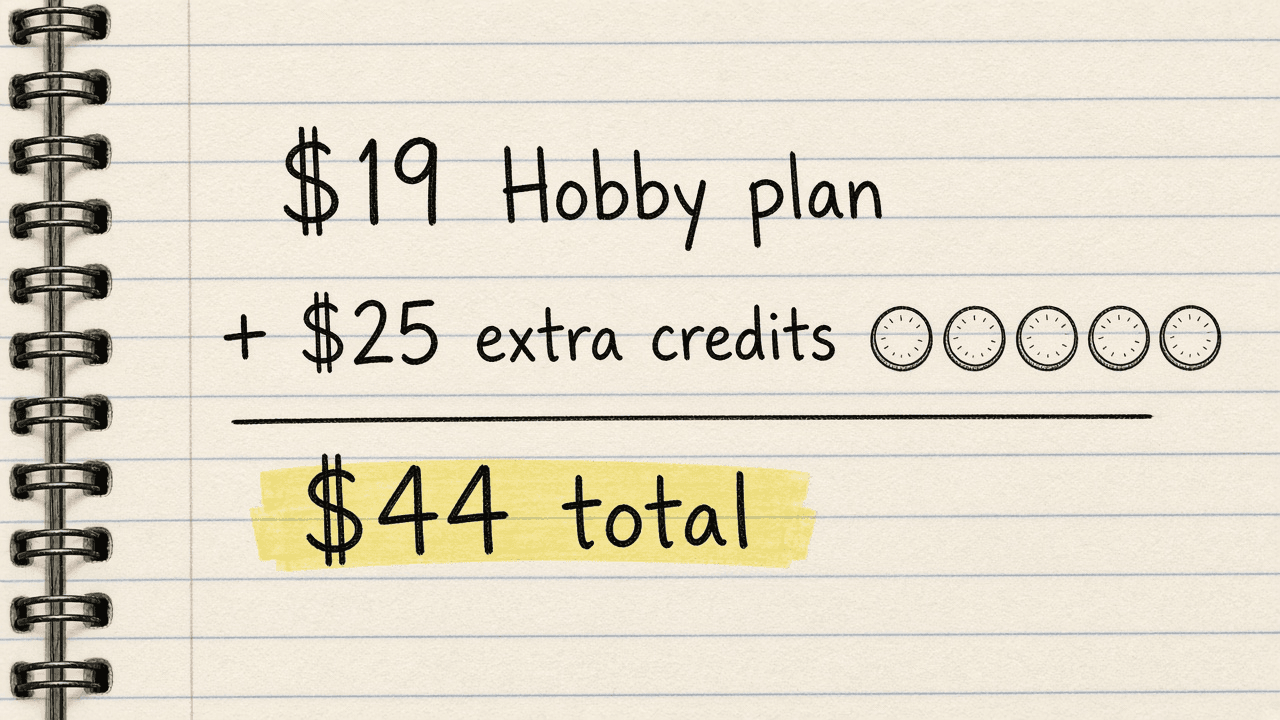
The math: converting 10,000 pages in a month splits across two Firecrawl charges. The Hobby plan costs $19 a month billed monthly and covers the first 5,000 pages, 1 credit each. The other 5,000 pages cost $5 for every 1,000 extra credits, bought one time through pay as you go: 5 × $5 = $25. $19 + $25 = $44 total for the month on Firecrawl’s Hobby plan billed monthly, less than jumping straight to the Standard plan’s $99 a month billed monthly for the same 10,000 pages.
A smaller job costs nothing on either tool. Converting 1,000 pages a month fits exactly inside Firecrawl’s Free plan, 1,000 credits at 1 credit a page, free. Jina Reader’s basic route is also free, with no monthly page cap at all, only the 20-requests-a-minute limit: 1,000 pages ÷ 20 a minute = 50 minutes of regular calling.
Firecrawl or Jina Reader
If the job is turning one URL into clean markdown, Jina Reader’s free route costs nothing and carries no monthly page cap, only a request rate limit. Firecrawl’s price buys more than a single page: crawling an entire site, mapping its structure, and extraction modes a single Reader call does not reach.
Pick by the shape of the job instead of the price tag. One page, no cost sensitivity: Jina Reader. A whole site, or a need for crawl and map: Firecrawl, starting free at 1,000 pages a month.
What to do next
Count the pages the job touches in a month. Under 1,000 and it is one site at a time, start with either tool for free. Past that, and the job needs a whole site mapped or crawled instead of read, move to Firecrawl’s paid plans and work out the credit cost before picking a tier. The Firecrawl pricing breakdown walks through every tier.
Sources · Firecrawl pricing, October 27, 2026 · Firecrawl docs, October 27, 2026 · Jina Reader, October 27, 2026
Quotes · SyneRyder on Hacker News, August 27, 2026 · sparrowidle on Hacker News, September 28, 2026