

October 28, 2026
YouTube search API pricing · free up to 100 calls a day, then a quota request
YouTube’s search.list call costs 1 quota unit and gets 100 free calls a day by default. See the math on going past that, and what SearchApi charges once a project needs more.
The short answer
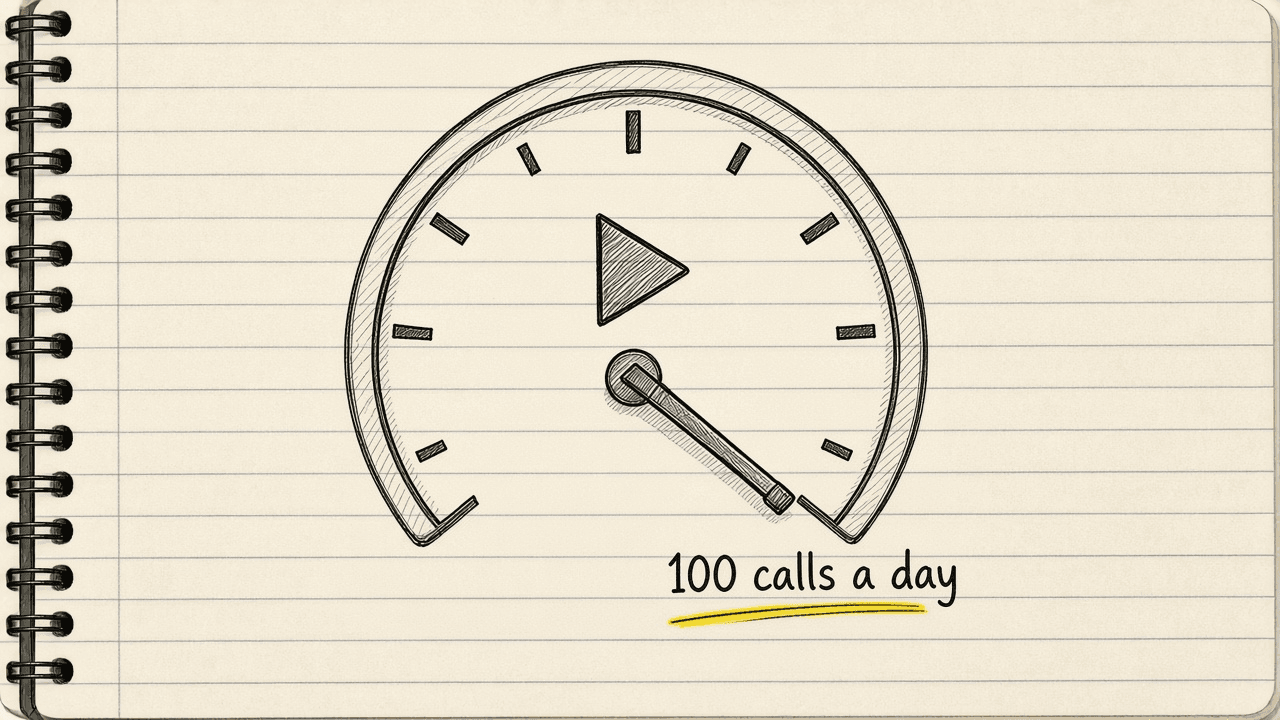
Pick the official YouTube Data API if a project runs under 100 search calls a day. Pick SearchApi if a project needs more than that, or needs ad data, shorts, and search suggestions in one response.
There is no price to shop for in this choice. The decision is the number of calls a project needs against a daily allowance Google sets on its own. The search.list call, the official endpoint that returns YouTube search results, costs 1 quota unit per call, a quota unit being the unit Google uses to measure how much of a project’s daily allowance has been used. A project’s default allocation holds 100 search.list calls a day in its own bucket, separate from a 10,000-unit pool that covers every other YouTube Data API call (YouTube Data API docs, October 28, 2026). An API key, a code that tells Google which project is making the call, is required and free to generate from the Google Cloud Console.
Nothing about search.list carries a price tag inside that free allocation. The only route past 100 calls a day is Google’s own quota-increase request form instead of a paid plan. SearchApi starts at $40 a month billed monthly for 10,000 searches once a project needs more.
What counts against the quota
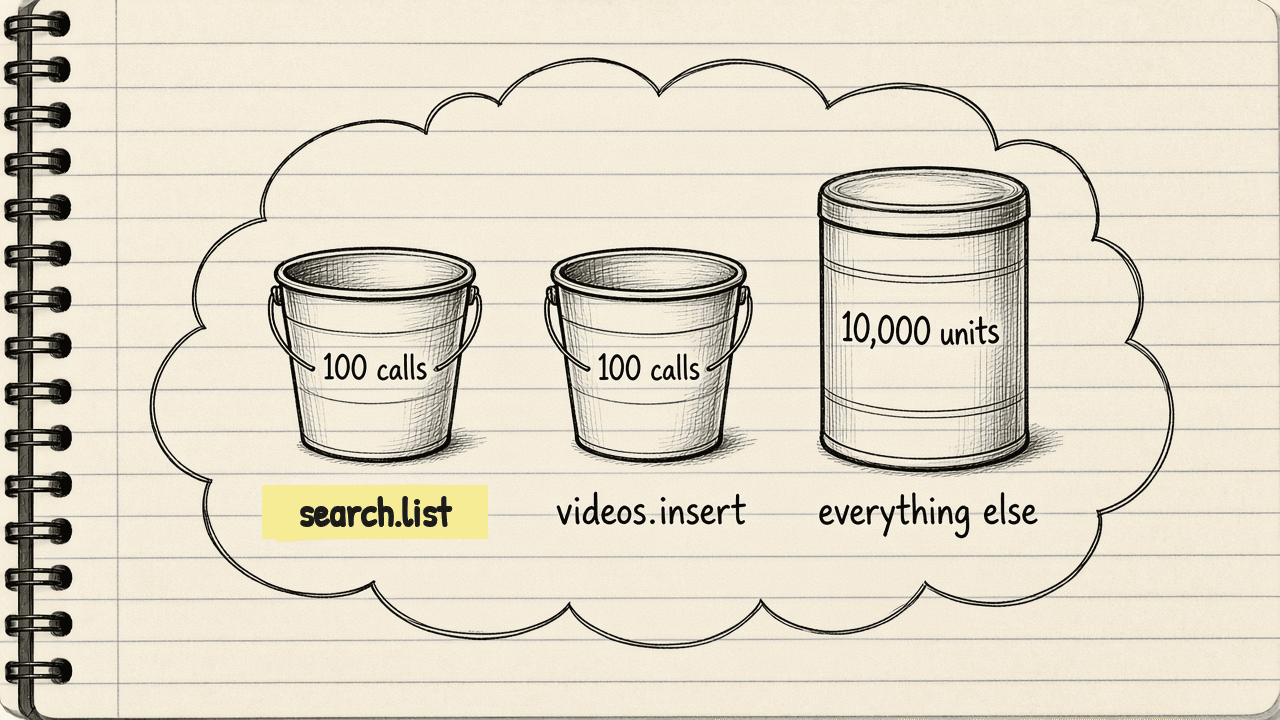
Google splits the YouTube Data API’s daily allowance into three separate buckets: 100 search.list calls, 100 videos.insert calls for uploading video, and 10,000 units a day shared by every other call, such as fetching a channel or a playlist (YouTube Data API docs, October 28, 2026). A rate limit, a cap on the number of calls a project can make in a set period, applies to each bucket on its own. Using up the 10,000-unit pool does not open room in the 100-call search bucket, and using up the search bucket does not touch the other two. Daily quotas reset at midnight Pacific Time, and a project can check real-time usage on the Quotas page in the Google Cloud console (YouTube Data API docs, October 28, 2026).
That split changes how a team should plan. A project heavy on channel lookups and light on search still hits a hard wall at 100 search calls a day, no matter how much of the 10,000-unit pool sits unused. A different Google API, covered in the Google Jobs API explainer, prices its own quota the same way: free up to a daily cap, then a request instead of a self-service paid tier.
The math
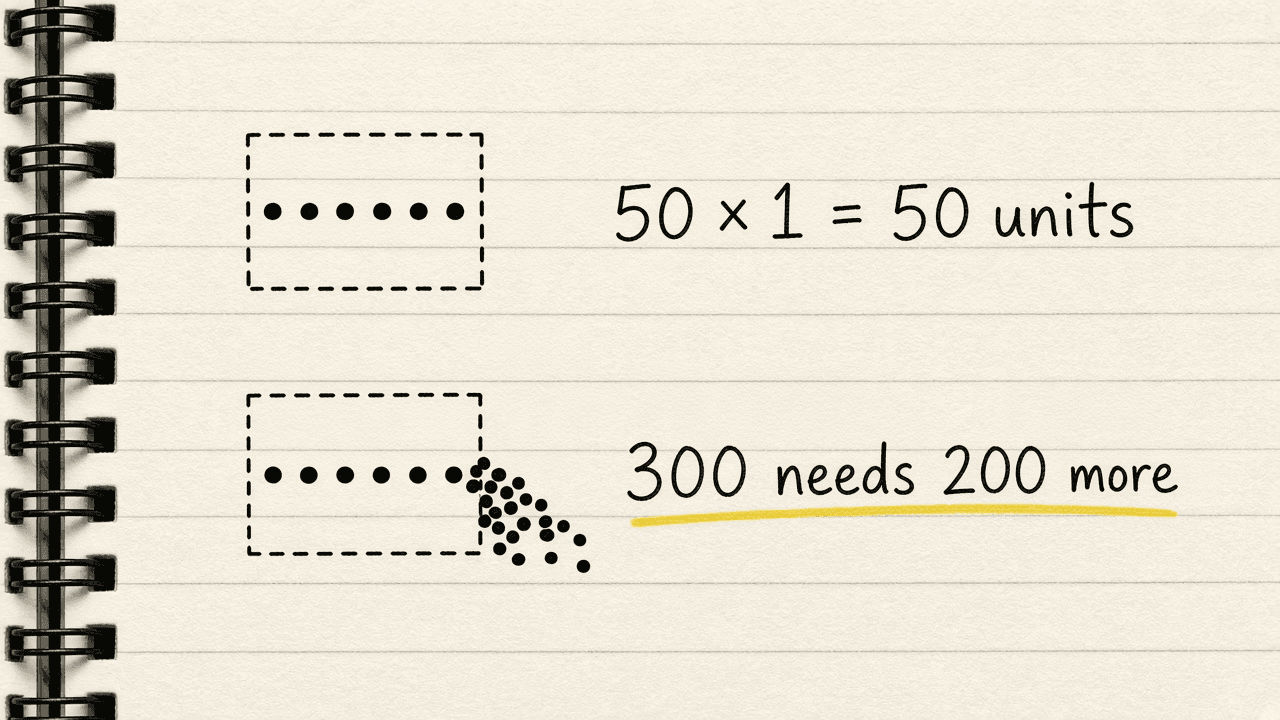
Fifty searches a day: 50 calls × 1 quota unit a call = 50 quota units. That uses half the 100-call search allocation, with 50 calls left over for the rest of the day, free of charge.
Three hundred searches a day: 300 calls × 1 quota unit a call = 300 quota units, but the search.list bucket only allows 100 calls a day. That is 200 calls over the free allocation, so two thirds of the volume has nowhere to go without a quota-increase request to Google, approved case by case instead of sold as a plan.
SearchApi’s Developer plan costs $40 a month billed monthly for 10,000 searches, then $4 per 1,000 searches after that (SearchApi pricing, October 28, 2026). At 300 searches a day, 300 × 33 = 9,900 searches, inside the 10,000 included. The 34th day pushes the running total to 300 × 34 = 10,200, which is 200 searches over the plan, billed at $4 per 1,000.
SearchApi’s own FAQ states, “you won’t be billed for failed requests. Only successful searches with a 200 status code incur charges” (SearchApi pricing, October 28, 2026). The official quota has no such carve-out: every call to search.list counts against the 100-call allocation whether or not it returns a useful result.
When SearchApi is the better buy
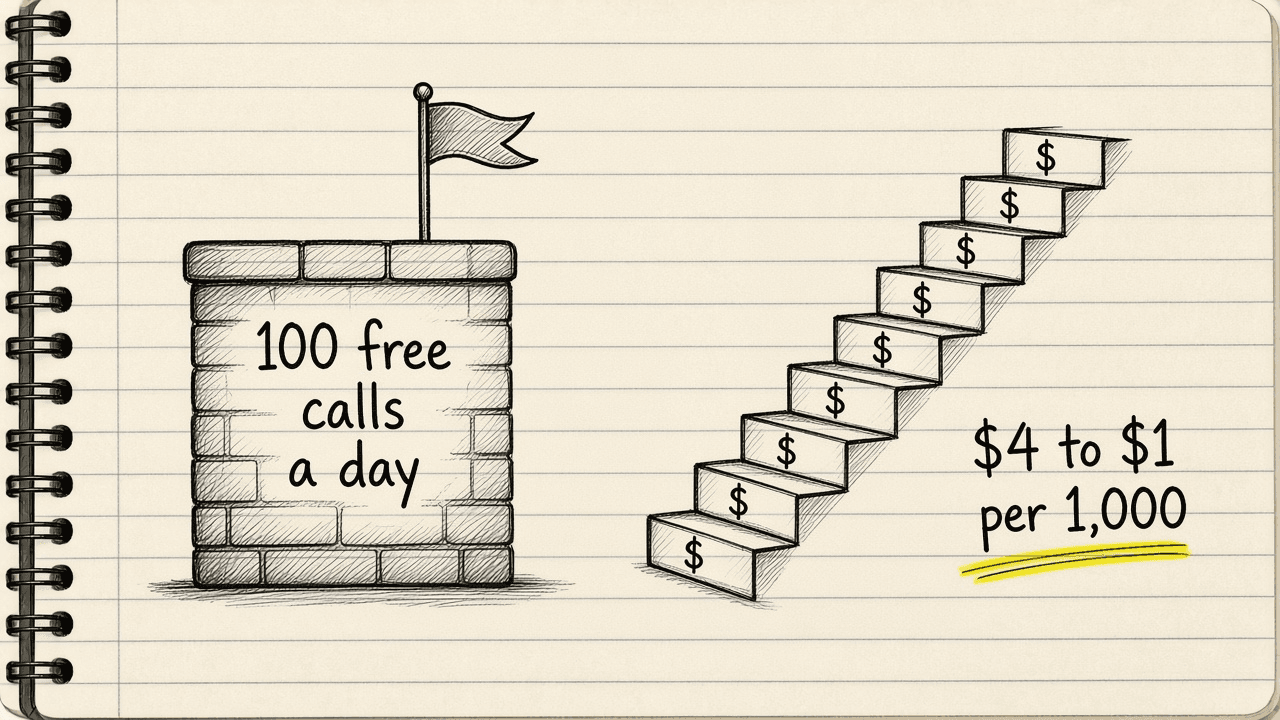
Metered pricing, a price that rises with the number of calls a project makes, is how SearchApi charges past its included search count. The Developer plan is $40 a month billed monthly for 10,000 searches at $4 per 1,000 after. Bigger plans include more searches and charge less per 1,000 after, and the Production plan adds team management and a legal-protection guarantee (SearchApi pricing, October 28, 2026). SearchApi’s own FAQ also caps hourly use at up to 20% of a plan’s credits each hour, so a 10,000-search Developer plan cannot be spent in one afternoon (SearchApi pricing, October 28, 2026).
SearchApi’s dedicated YouTube endpoint returns ads, videos, shorts, search suggestions, channels, and playlists in one call (SearchApi YouTube Search API docs, October 28, 2026). The official search.list call returns only video, channel, and playlist results, with no ads and no shorts field in the same response. SearchApi’s price list does not show a separate per-call rate for the YouTube engine, so a call through it bills at the same per-1,000-searches rate as every other engine on the plan.
A project that only needs search.list’s plain video results, under 100 a day, has no reason to pay for any of this. A project that needs ad data, shorts, or search suggestions alongside the results, or that runs past 100 searches a day, is the one SearchApi fits.
What to do next
Count the number of searches a project runs in a day. Under 100, enable the YouTube Data API, generate a free API key from the Google Cloud Console, and call search.list directly. Past 100, or if the project needs ad data, shorts, or search suggestions in the same response, start on SearchApi’s Developer plan.
Sources · YouTube Data API docs, October 28, 2026 · YouTube Data API docs, October 28, 2026 · SearchApi pricing, October 28, 2026 · SearchApi YouTube Search API docs, October 28, 2026