

October 28, 2026
Martech stack, GTM stack, sales stack · three different shopping lists
Martech stack, GTM stack and sales stack get said like they are one thing. They are not. See what sits in each one, what a starter sales stack costs, and the math behind it.
The short answer
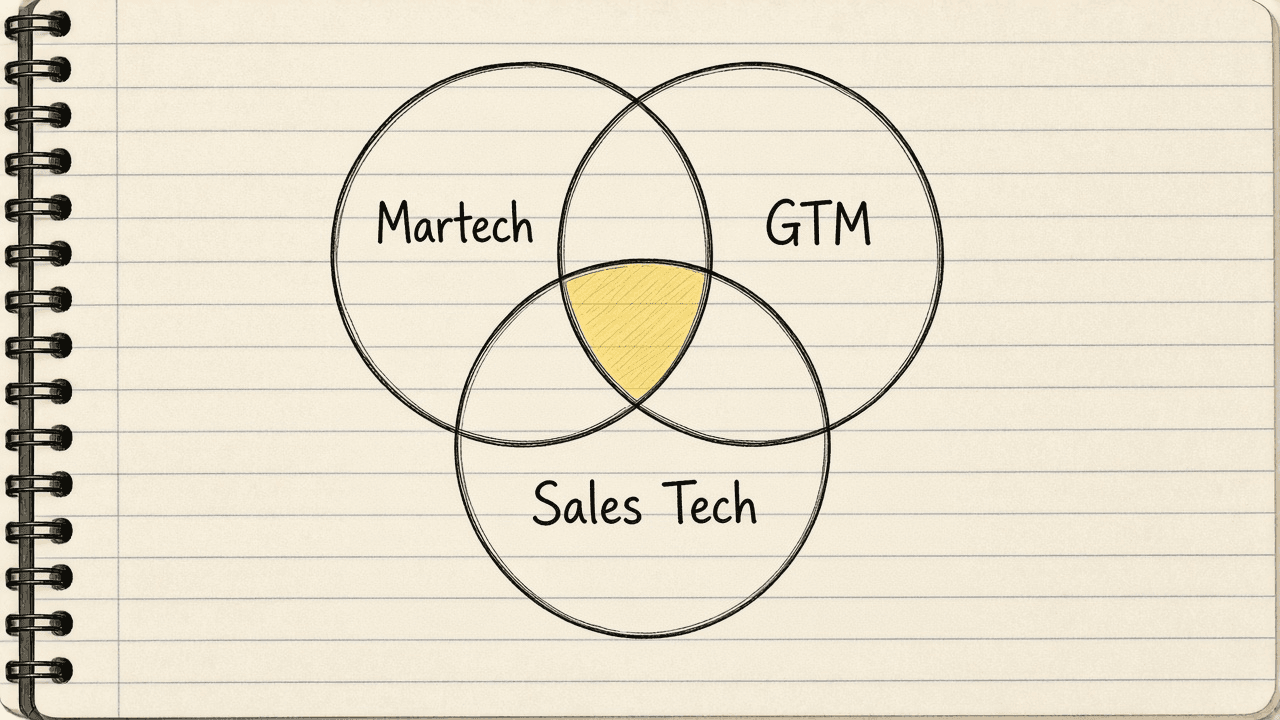
Pick the small sales tech stack starter, AI Ark, Smartlead and InboxKit, if a small team needs contacts, sending and mailboxes. Pick the larger stack, AI Ark, Smartlead’s bigger plan and Premium Inboxes, if a 10-person team is sending at real volume. People say “martech stack,” “GTM stack” and “sales stack” like they are one thing. They are not. The confusion happens because each word means software a team uses, just for a different team.
A stack, in this sense, is the group of tools a team buys and wires together to do one job. Each tool in a stack handles one layer of the work, a layer being one slice of the job, such as finding contacts or sending mail.
Martech, short for marketing technology, is the stack a marketing team runs. A sales tech stack is the stack a sales team runs: a tool that finds contacts, a tool that sends outbound email, and the mailboxes that mail goes out from. GTM, short for go-to-market, is the word some teams use for marketing and sales added together, since go-to-market work spans both.
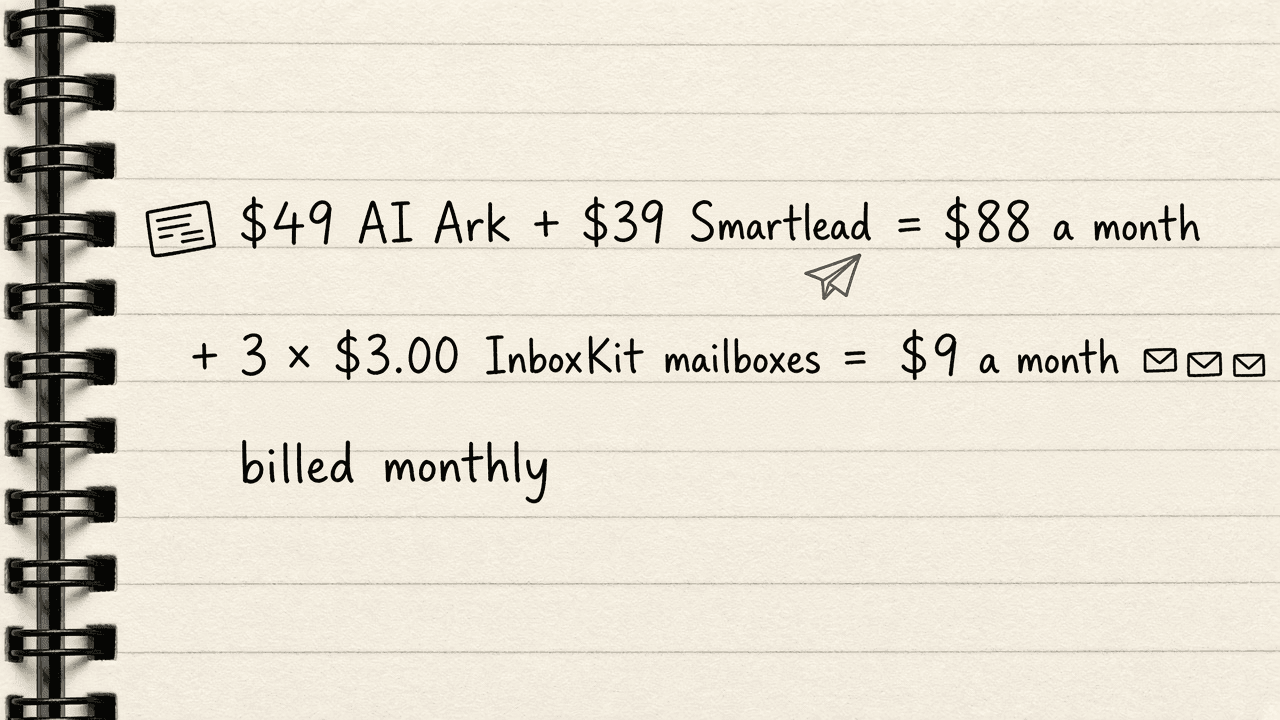
A small sales tech stack starter uses AI Ark for contacts at $49 a month billed monthly, Smartlead’s Base plan for sending at $39 a month billed monthly, and InboxKit for mailboxes at $3.00 a mailbox a month billed monthly. A larger one, built for a 10-person team sending at real volume, swaps in Smartlead’s Prime plan at $379 a month billed monthly and Premium Inboxes at $3.50 an inbox every 4 weeks. The math: 30 Premium Inboxes mailboxes cost 30 × $3.50 = $105 every 4 weeks.
What goes in a sales tech stack
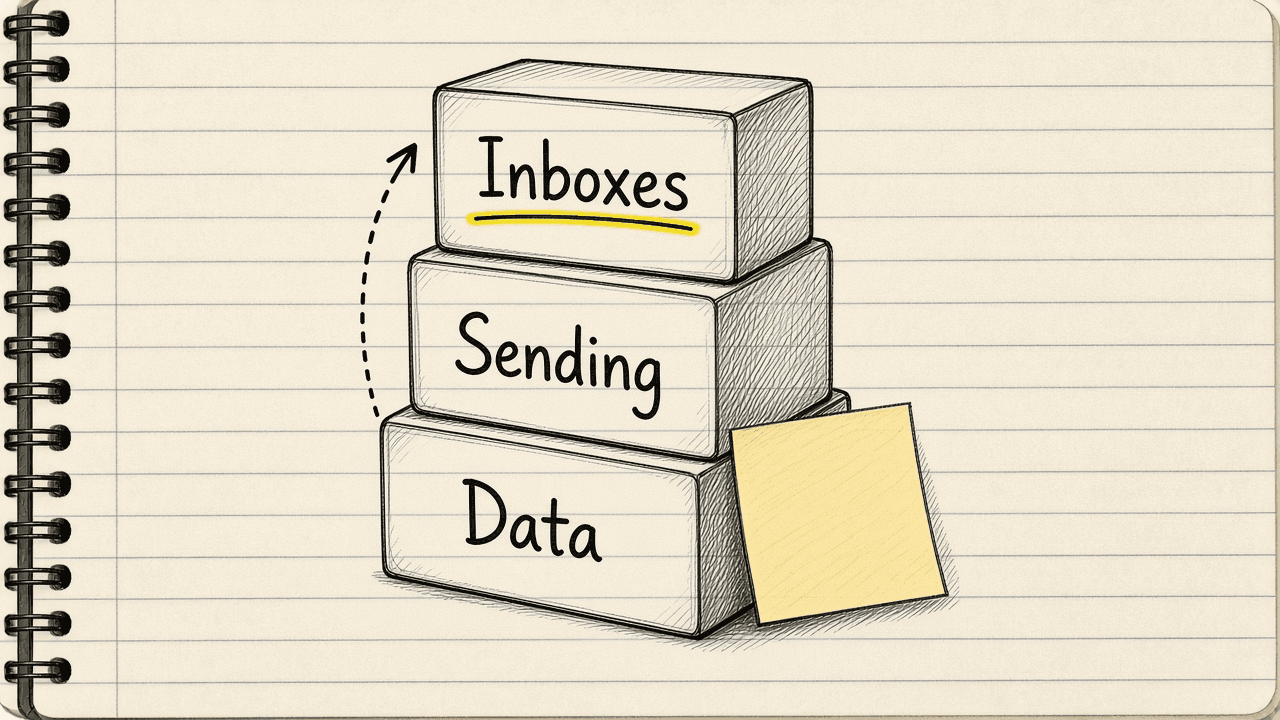
A sales tech stack stacks three layers on top of each other. Each layer depends on the one before it: sending needs contacts from the data layer, and sending needs inboxes to go out from.
The data layer finds contacts. AI Ark’s Scale on Demand plan costs $49 a month billed monthly for 5,000 credits a month, and each credit pays for one contact AI Ark returns.
The sending layer mails those contacts. Smartlead’s Base plan costs $39 a month billed monthly for 6,000 sends a month, and each send is one email Smartlead mails for you. Smartlead’s Prime plan costs $379 a month billed monthly for 500,000 sends a month.
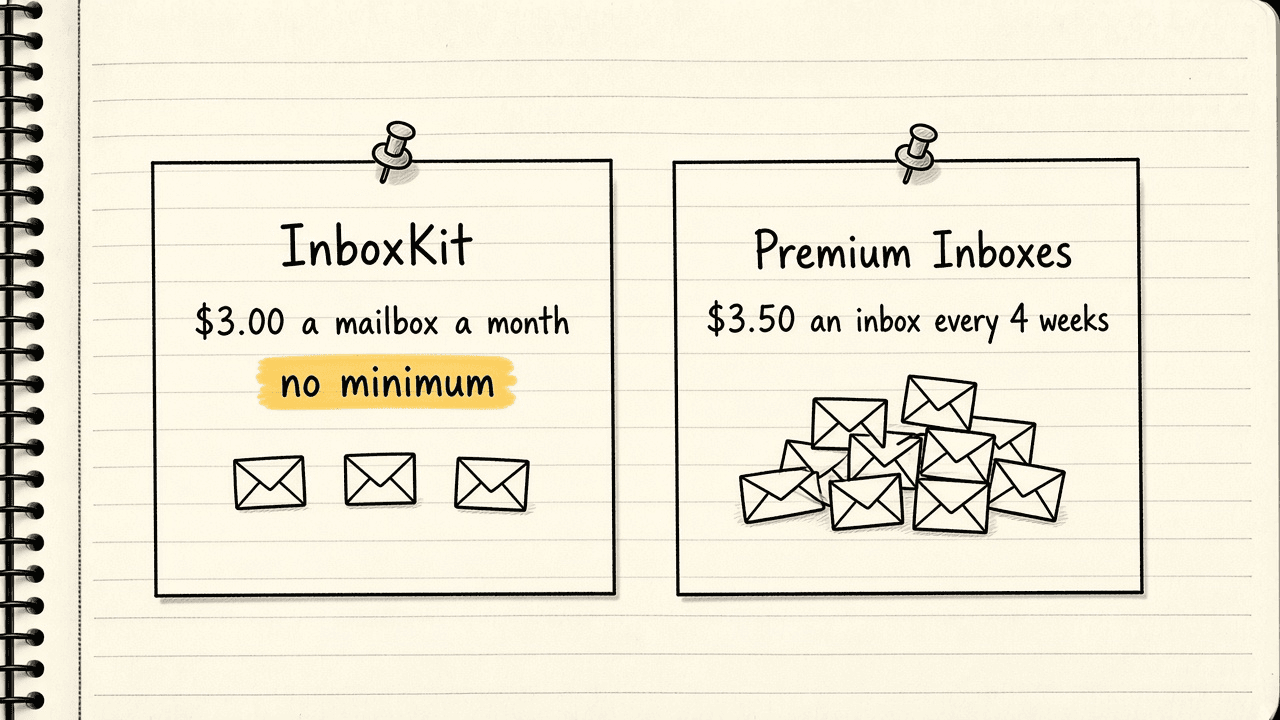
The inbox layer holds the mailboxes the sending layer mails from. A mailbox, also called an inbox, is one email account set up to send cold email, mail sent to people who never asked for it. InboxKit charges $3.00 per mailbox a month billed monthly, with no minimum order. Premium Inboxes charges $3.50 per inbox every 4 weeks on its Start Up band, for 1 to 249 inboxes.
What goes in a martech stack
A martech stack runs the marketing side instead: a newsletter tool to mail subscribers, a CRM, software that tracks contacts and deals as they move through a pipeline, and reporting to measure how a campaign did.
A starter martech stack leans on one newsletter tool. Kit’s Creator plan costs $39 a month billed monthly for 1,000 subscribers. beehiiv’s Lite plan costs $59 a month billed monthly for 1,000 subscribers. The math: $59 minus $39 = $20 a month more for beehiiv Lite at 1,000 subscribers.
Why GTM stack covers both at once
A martech stack and a sales tech stack share almost no vendor overlap. The tools a marketing team runs, a newsletter sender, a CRM, campaign reporting, barely touch the tools a sales team runs, a data finder, a sequencer, mailbox infrastructure. Two different shopping lists.
GTM stack gets used for both lists added together, since go-to-market work spans a marketing motion and a sales motion at once. The GTM tech stack guide walks through that combined stack layer by layer, and the GTM tools list ranks picks inside it. A team hiring for this kind of work sometimes calls the role a GTM engineer, covered in the GTM engineer stack guide.
The math
A 10-person outbound team sending at real volume needs the larger version of the sales tech stack.
Data: AI Ark Scale on Demand, $49 a month billed monthly. Sending: Smartlead Prime, $379 a month billed monthly, for 500,000 sends a month. Inboxes: Premium Inboxes Start Up, 30 inboxes × $3.50 every 4 weeks = $105 every 4 weeks.
The math: 30 × $3.50 = $105 every 4 weeks for the inboxes, on top of the two monthly bills above.
A smaller team starts on InboxKit instead: AI Ark at $49 a month billed monthly, Smartlead’s Base plan at $39 a month billed monthly, and InboxKit at $3.00 a mailbox a month billed monthly.
InboxKit or Premium Inboxes for the inbox layer
InboxKit fits a smaller sales tech stack. One flat rate, $3.00 per mailbox a month billed monthly or $2.50 per mailbox a month billed yearly, no minimum order.
Premium Inboxes fits a larger one. Its Start Up band costs $3.50 per inbox every 4 weeks for 1 to 249 inboxes.
Is a CRM part of martech or sales tech?
A CRM sits in both, but it gets bought for different reasons. A marketing team uses a CRM to score leads and time campaigns. A sales team uses the same kind of tool to track deals and follow-up dates. The CRM itself does not decide which stack it belongs to. The job it is bought to do does.
The same split applies to the word stack itself. Ask what job a tool does, data, sending, inboxes, CRM or campaigns, before asking which stack it sits in.
What to do next
Decide which stack actually fits the work. A marketing team reaching for a CRM and a newsletter tool needs a martech stack. A sales team that needs contacts, sending and mailboxes needs a sales tech stack. Start with the data layer, add sending, then size the inbox layer to the volume planned.
Sources · InboxKit pricing, October 28, 2026 · Premium Inboxes pricing, October 28, 2026 · Kit pricing, October 28, 2026 · beehiiv pricing, October 28, 2026