

October 27, 2026
Apollo.io review · two Apollo pages, two different ratings, two different database sizes
Apollo’s own price list and its own Chrome Web Store listing score Apollo differently and count its own database differently. See both numbers, a real data opt-out note, and when AI Ark fits better.
The short answer
Pick Apollo if you want its full outreach stack, the tools that find a contact and then send the email. Pick AI Ark if you only need contacts and emails, billed by the credit instead of by the seat. Apollo helps you find a contact’s email or phone number, then reach out to them.
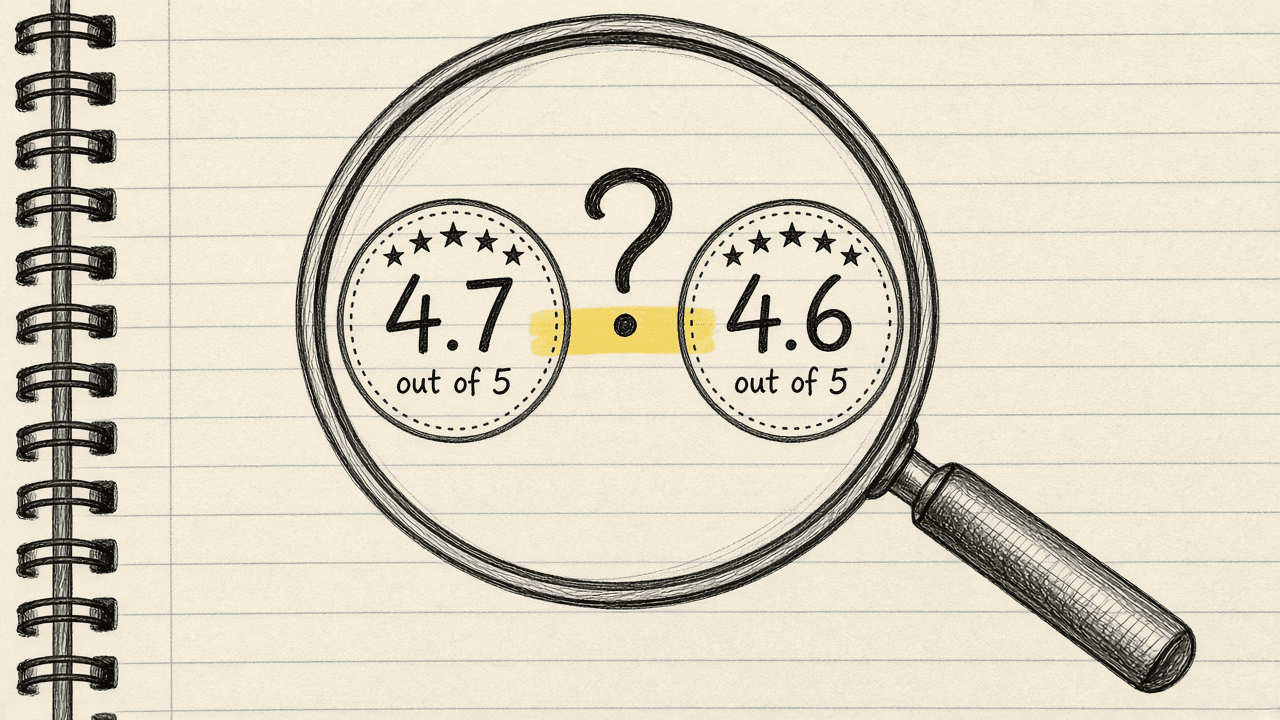
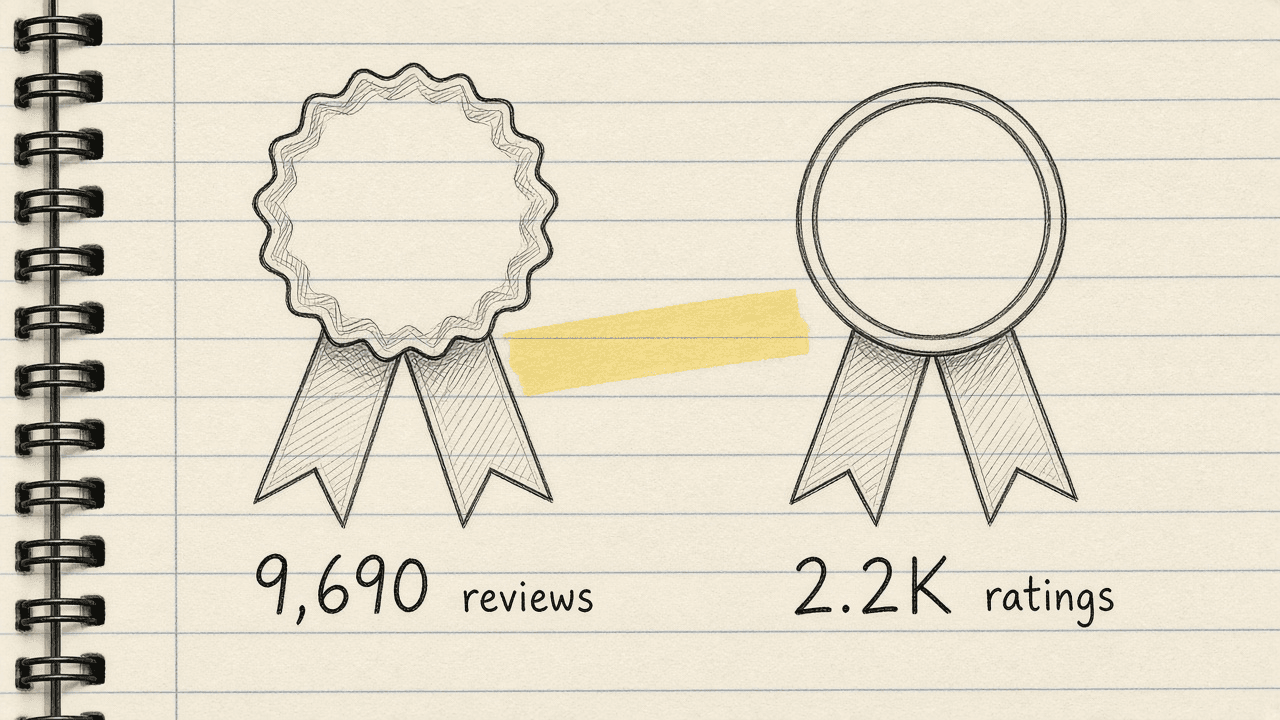
Other reviews skip a part worth knowing. Apollo’s own price list says 4.7 out of 5, based on 9,690 reviews. Apollo’s own Chrome Web Store listing, for its browser extension, says 4.6 out of 5, based on 2.2K ratings, with 1,000,000 users. Those are two scores from two different pages, and they measure two different things: the whole product against the extension alone.
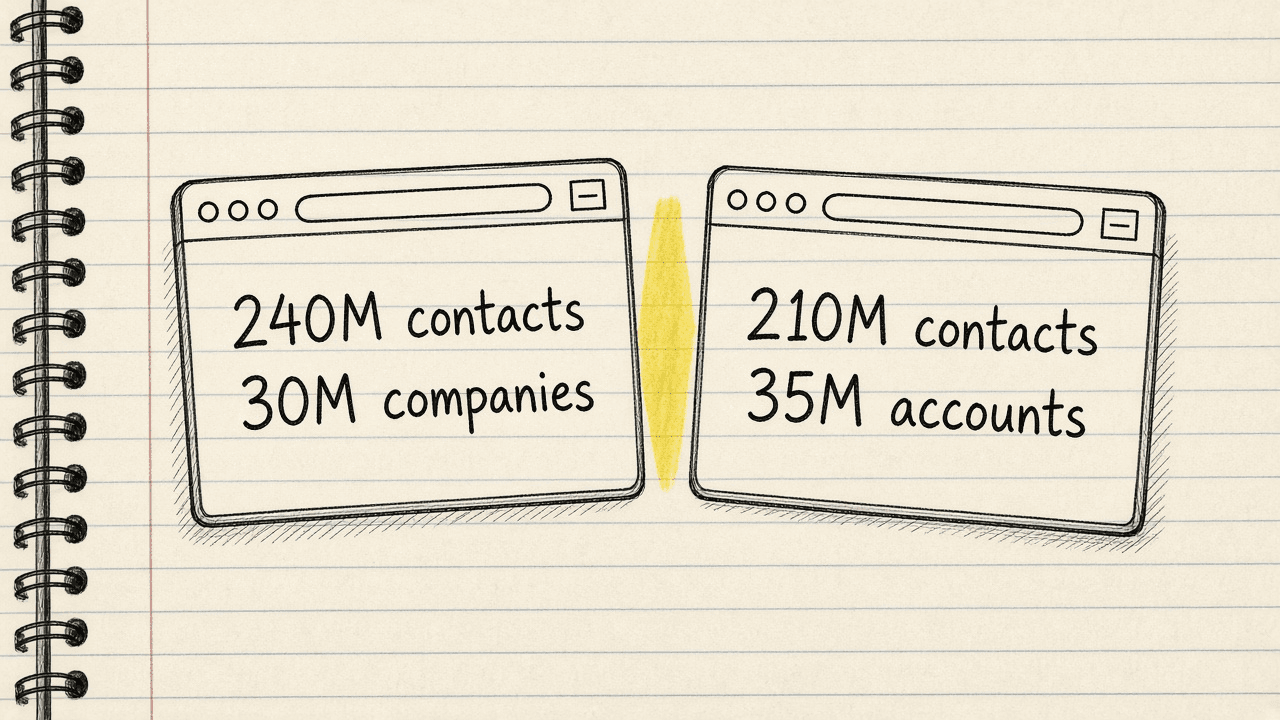
Apollo’s own pages also disagree on how big Apollo’s own database is, and the gap is wide.
Pick Apollo if you want its full outreach stack and don’t mind that its own marketing pages don’t agree on basic facts. Pick AI Ark, a contact database and enrichment tool, if you want the same basic job, finding contacts and their emails and mobile numbers, priced in credits, a unit you spend to find or verify one contact detail, instead of per seat.
Two Apollo pages, two Apollo ratings
Apollo’s price list carries a banner naming its own rating: 4.7 out of 5, based on 9,690 reviews. That number sits on the page where Apollo sells its plans.
The Chrome Web Store listing for the Apollo browser extension carries a different badge: 4.6 out of 5, from 2.2K ratings, with 1,000,000 users installed. The listing names ZenLeads Inc. as the developer.
Neither number is wrong. One rates the whole Apollo product. The other rates one piece of it, the browser extension. A reader comparing Apollo’s rating against another tool’s rating needs to know which Apollo number they’re holding.
How big is Apollo’s database
Apollo’s price list states its database as 240M contacts and 30M companies.
Apollo’s Chrome Web Store listing describes the same database with different numbers: 210M contacts and 35M accounts.
That’s a 30 million gap on contacts and a 5 million gap on companies, between two pages Apollo itself wrote and published. Both come straight from Apollo’s own words. A reader deciding whether Apollo’s database is big enough should know the number moves depending on which Apollo page answers.
What happens to your own data
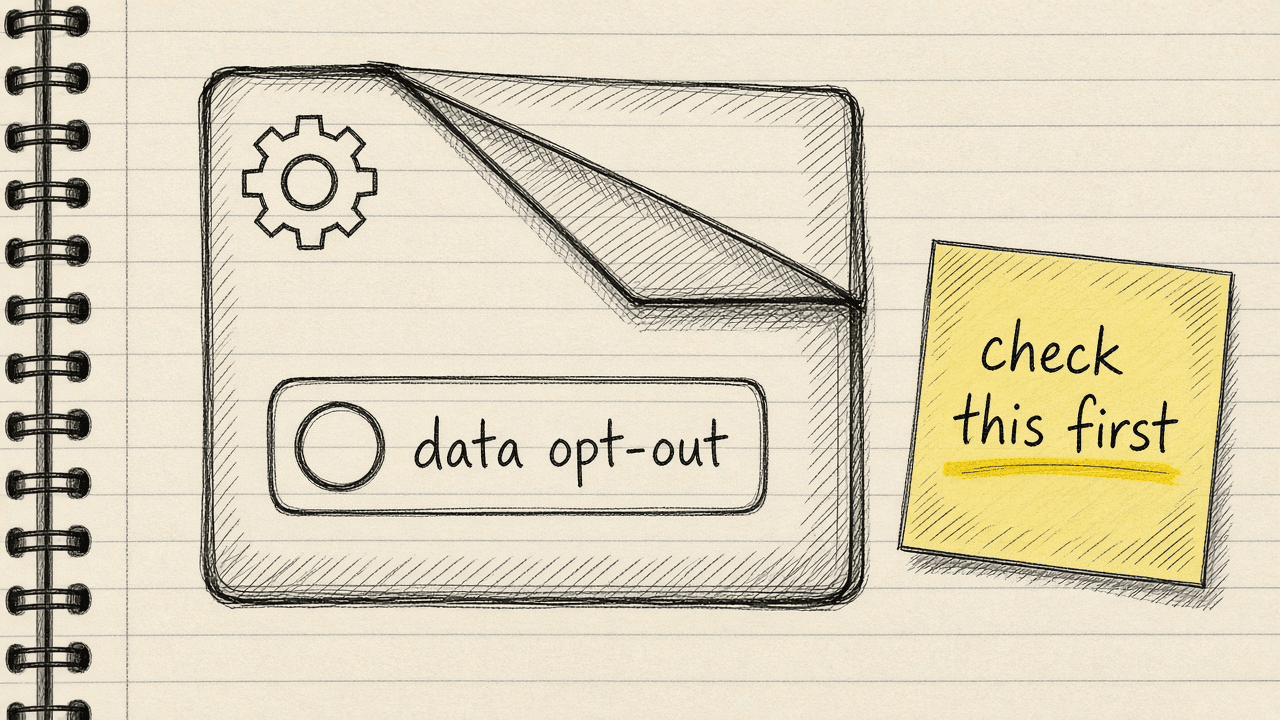
Apollo sells contact data. It also collects it from customers. On April 5, 2026, Hacker News commenter streblo wrote: “This is often times overlooked by Apollo customers themselves. You have to opt out of customer data sharing (and in doing so lose out on the value of the product).”
A data opt-out is a setting that stops your company’s contact data from feeding Apollo’s shared pool of contacts. In streblo’s telling, sharing stays on until you opt out, and opting out costs you some of what the product does. Check that setting before you connect your inbox or your CRM, the system that stores your customer records.
The reveal mechanic ties into this. An Apollo reveal, paying a credit to get a contact’s email, is the step that spends a credit. On March 14, 2026, Hacker News commenter qcarroll, who built a tool on top of Apollo’s API, the connection that lets another app pull Apollo’s data, described how that billing works from the inside: “We use Apollo.io’s API for contact data. The free people search uses their api_search endpoint (no credits consumed), and email reveals use their people/match endpoint.” Searching costs nothing. Revealing an email is the step that bills.
One account’s price check, with real caveats
On October 26, 2026, @LutzRuben50401 posted on X a price comparison across three data providers on the same broad query: AI Ark cost €0.0009 per record, DiscoLike €0.0032 per record, and Ocean.io €0.011 per record.
Read that as one account’s numbers, from one query, with no test date stated, priced in euros, and not matched to any vendor’s own price list. It is one person’s receipt. It is not a lab test.
The same account also wrote about dropping Apollo: “I stopped using Apollo in July. The pipeline didn’t notice.” That is one opinion from one account.
The math
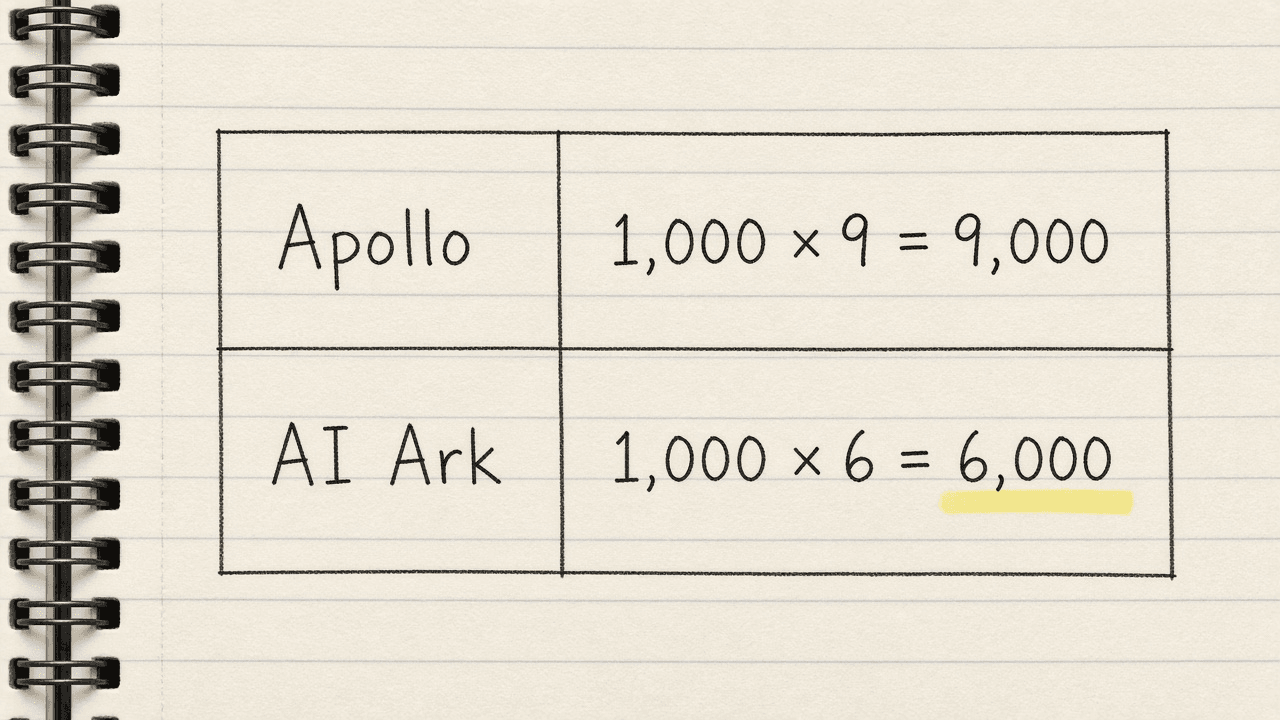
The math: take 1,000 contacts, each with a work email and a mobile number, a cell phone number.
On Apollo, an email costs 1 credit and a phone number costs 8 credits. 1 + 8 = 9 credits a contact. 1,000 × 9 = 9,000 credits. Apollo Basic costs $49 a seat a month billed yearly, so 12 × $49 = $588 a year for one seat, with 30,000 credits a year.
On AI Ark, a person export with a found email costs 1 credit, and a mobile number costs 5 credits. 1 + 5 = 6 credits a contact. 1,000 × 6 = 6,000 credits. AI Ark Scale on Demand costs $49 a month billed monthly for 5,000 credits a month, and AI Ark’s free plan costs $0 a month for 100 credits a month.
So the same 1,000 contacts take 9,000 Apollo credits or 6,000 AI Ark credits. Apollo bills by the seat, and AI Ark bills by the credit, so price your own list on both.
What to do next
Read Apollo’s price list and its Chrome Web Store listing yourself before trusting either number alone. If Apollo’s data-sharing setup bothers you, read AI Ark pricing and the direct AI Ark versus Apollo comparison. For the extension rating specifically, the Apollo Chrome extension page goes deeper. For how Apollo’s API actually bills credits, read the Apollo API explainer.
Sources · Apollo pricing, October 27, 2026 · Apollo Chrome Web Store listing, October 27, 2026 · AI Ark pricing, October 27, 2026 · @LutzRuben50401 on X, October 26, 2026
Quotes · streblo on Hacker News, April 5, 2026 · qcarroll on Hacker News, March 14, 2026