

October 26, 2026
Browserbase pricing 2026 · plans, browser hours, overage
Browserbase Free, Developer at $20 a month and Startup at $99 a month, compared on browser hours, concurrency, proxy data, overage and session caps.
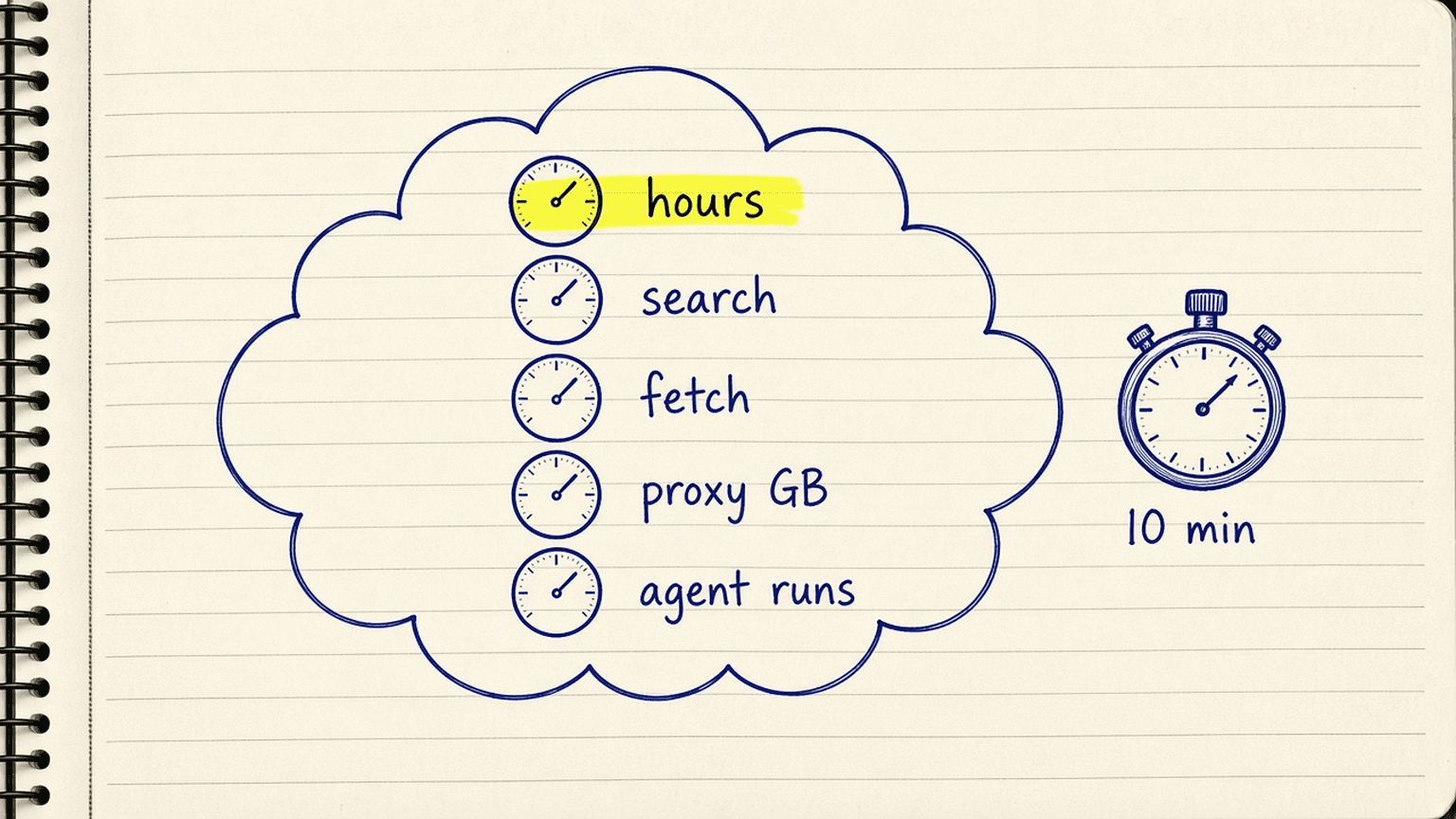
Browserbase rents you web browsers that run in the cloud, so your code or AI agent can open pages, click and log in. A browser hour is one browser running for one hour, and it is the main thing Browserbase bills for.
The short answer
Pick Browserbase Developer if you need a real browser in the cloud for about 100 hours a month. It is $20 a month billed monthly.
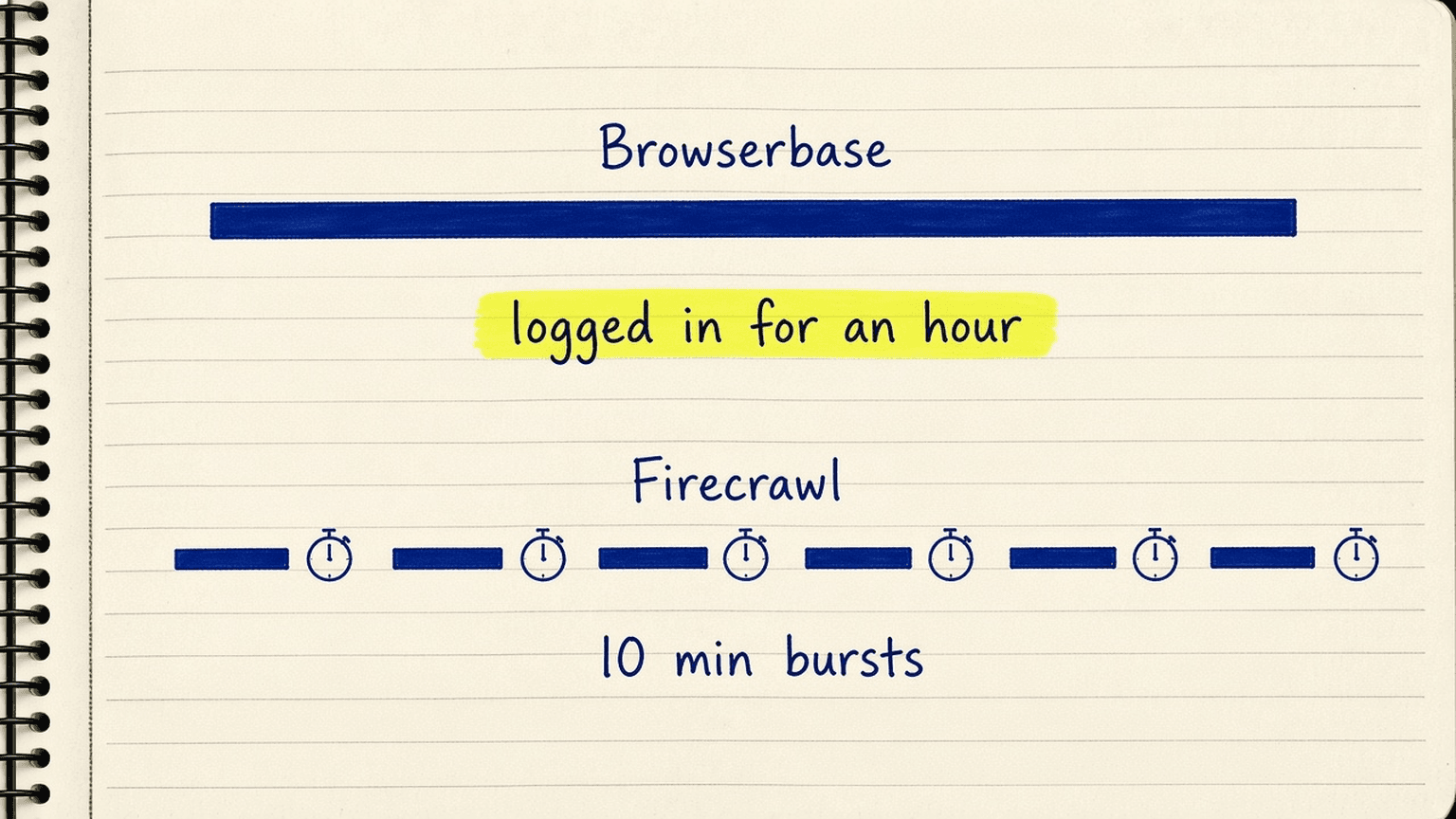
Pick Browserbase if your sessions run longer than 10 minutes. Logins that stay open, captcha flows and agents that work for an hour need a long session. Firecrawl’s Interact sessions end at 10 minutes.
Pick Firecrawl if your jobs are short reads that open a page, click and read. Firecrawl Standard is $83 a month billed yearly.
What each Browserbase plan includes
| Plan | Free | Developer | Startup |
|---|---|---|---|
| Price | $0 | $20 a month | $99 a month |
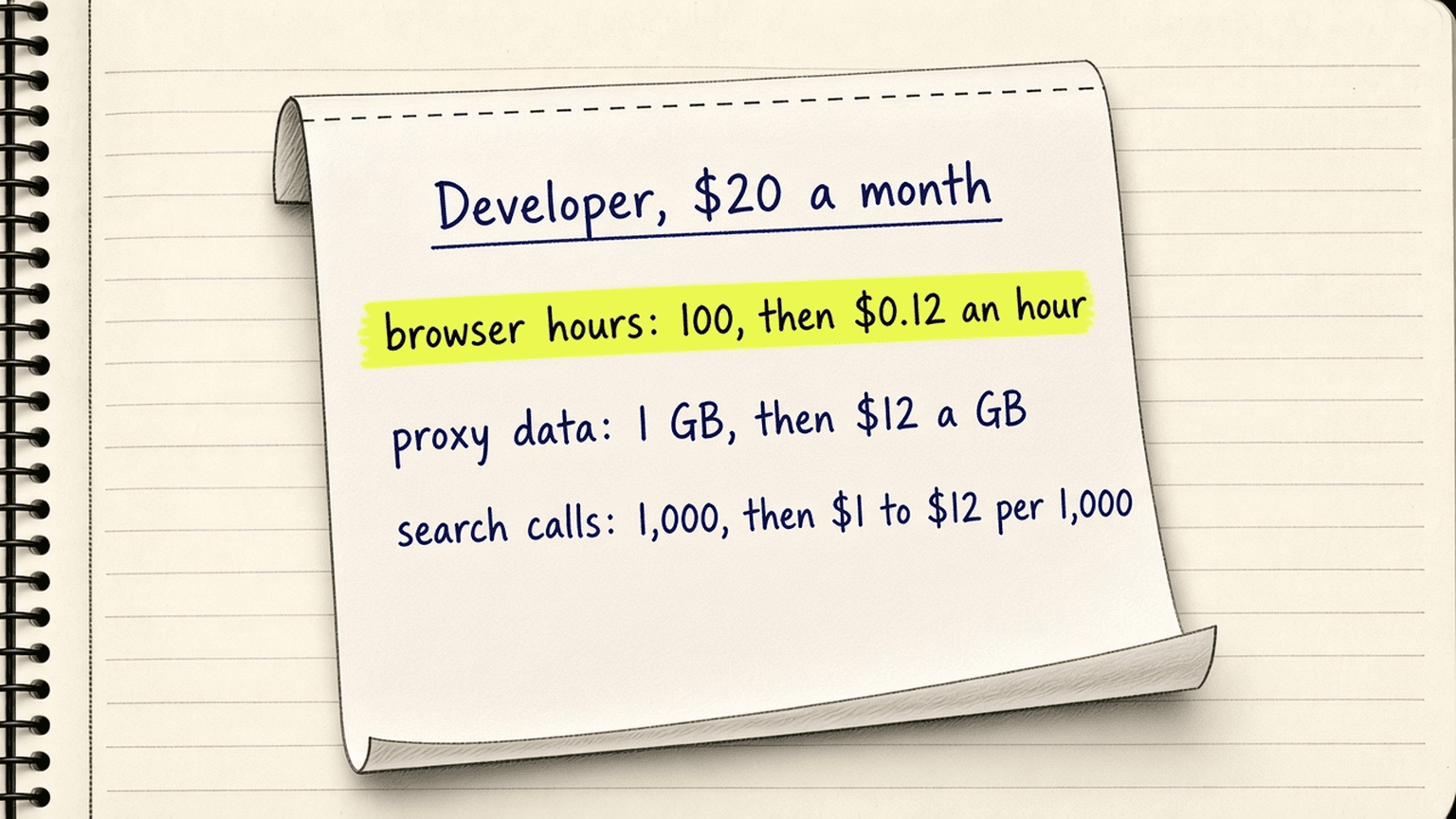
| Browser hours | 1 | 100, then $0.12 an hour | 500, then $0.10 an hour |
| Browsers at once | 3 | 25 | 100 |
| Proxy data | none listed | 1 GB, then $12 a GB | 5 GB, then $10 a GB |
| Longest session | 15 minutes | 6 hours | 6 hours |
| Search calls | 1,000 | 1,000 | 1,000 |
Past 1,000 search calls, the price depends on the search provider you pick, from $1 to $12 per 1,000.
A proxy is a middle server that sends your traffic from another address. Proxy data is the gigabytes that pass through it.
Scale has a custom price and starts at 250 browsers at once. Browserbase shows monthly prices only.
How long a session runs and how it is billed
A session is one browser kept open from start to finish. Free caps a session at 15 minutes. Developer and Startup cap it at 6 hours, and Scale goes past 6 hours.
Browserbase bills browser time by the minute, with a one-minute minimum per session. Proxy data bills by the MB, with a one-MB minimum.
Browserbase’s price list keeps session data 7 days on Free and 30 days on Developer and Startup.
Free plan, overage and canceling
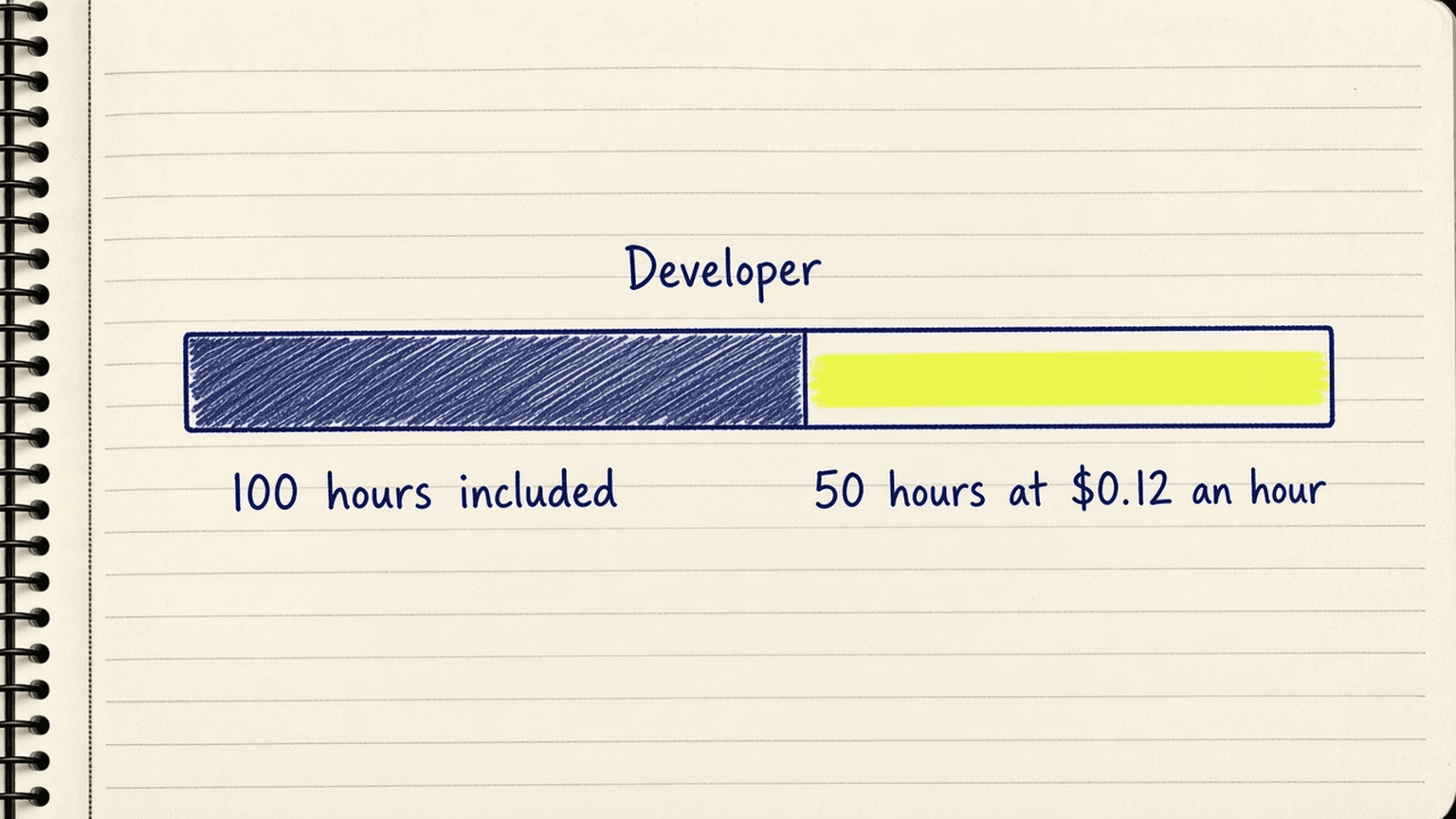
The Free plan is $0 with 1 browser hour and no card. Past the included hours, Developer pays $0.12 an hour and Startup $0.10 an hour.
The math: 150 browser hours a month on Developer is $20 a month billed monthly for the first 100 hours, plus 50 hours × $0.12 an hour = $6, or $26 a month.
To cancel or move to a smaller plan, go to Settings, then Usage & billing, then Change plan. Moving up to Scale goes through Browserbase’s sales team.
How Firecrawl bills a browser
Firecrawl is a scraping API with a browser tool called Interact. Firecrawl bills in credits, its unit of use. Its billing docs say Interact is “Charged per browser minute of session time, with a one-minute minimum.”
Firecrawl’s Interact page sets the limit: “Sessions expire automatically after 10 minutes of total time or 5 minutes of inactivity, whichever comes first.”
Add the other costs before you decide. Browserbase charges for proxy data and search calls past each plan’s included amount. Firecrawl charges 1 credit for each scrape on top of browser time.
How to turn your jobs into browser hours
Start from your jobs. A job is one task, such as open a product page, read the price and close.
Time one job by hand. If it takes 1 minute, then 6,000 jobs a month make 100 browser hours. If it takes 5 minutes, 6,000 jobs make 500 hours.
Then check the longest job. If any job runs past 10 minutes, it won’t finish inside one Firecrawl session, and Browserbase is the safer fit for that job.
When the 10-minute cap decides for you
Firecrawl’s 10-minute cap fits jobs that open a page, click and read. It doesn’t fit an agent that logs in and works for an hour.
Garrett Siegel, a developer, described how he splits the work on X on August 7, 2026:
“Firecrawl got me unstuck. Crawl4AI gave me a cleaner boundary: search finds pages, Crawl4AI reads known URLs, the browser handles visual checks.”
The same split works for cost. Send plain reads to a scraper, and save browser hours for the pages that need a real browser.
What to do this week
Time 10 of your browser jobs and write down the longest one.
If every job finishes in under 10 minutes and mostly reads pages, start on Firecrawl with its Free plan and time a real week of jobs. If any job runs longer, start on Browserbase Developer at $20 a month.
Next · Firecrawl pricing prices every Firecrawl plan · Apify vs Firecrawl compares two hosted scrapers.
Sources · Browserbase pricing, Browserbase plans docs, Browserbase plan changes and Browserbase long sessions docs, viewed November 4, 2026 · Firecrawl Interact, Firecrawl billing docs and Firecrawl pricing, viewed November 4, 2026 · Garrett Siegel on X, August 7, 2026.