

November 11, 2026
Firecrawl free tier · 1,000 credits, keyless use and limits
Visit FirecrawlFirecrawl’s free plan gives 1,000 credits a month with a free API key, and no-key use is capped per IP each day. Here is what each one covers.
The short answer
Firecrawl is an API that turns web pages into text that AI tools can read. An API is a way for your code to ask a service for data and get it back. An API key is the password your code sends so Firecrawl knows which account to charge.
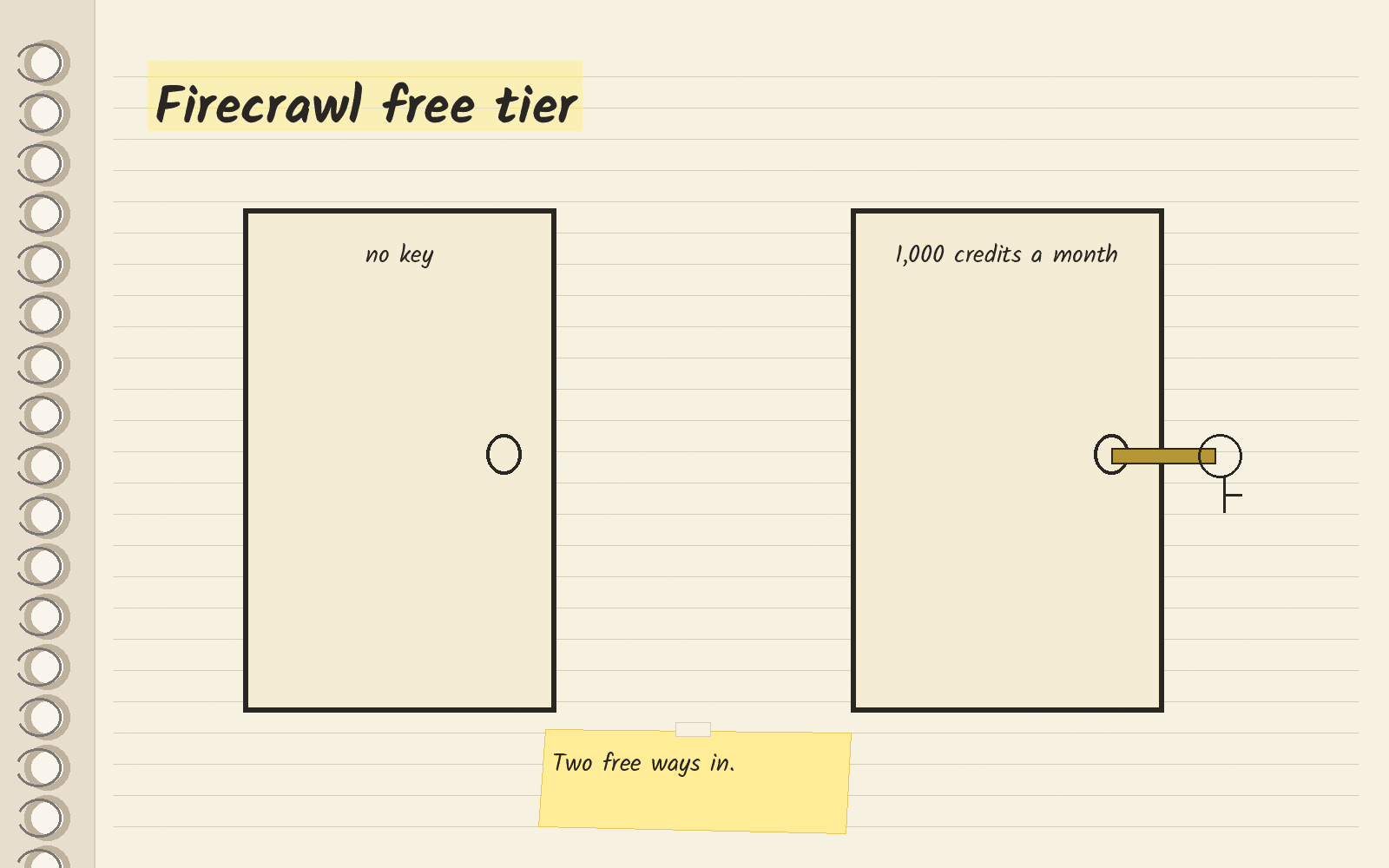
Firecrawl has two free ways in. Keyless use means calling Firecrawl with no API key at all. It is free with a daily cap per IP address, the internet address your requests come from. It cannot crawl, which means following links to fetch a whole site. The free plan starts when you sign up for a free API key. Firecrawl’s pricing gives that plan 1,000 credits a month with no card, which is 500 searches or 1,000 scraped pages. Unused credits do not carry over to the next month.
Pick keyless use to try a few scrapes or searches today. Pick the free API key if you need to crawl a site or want a fixed monthly allowance.
What works without an API key
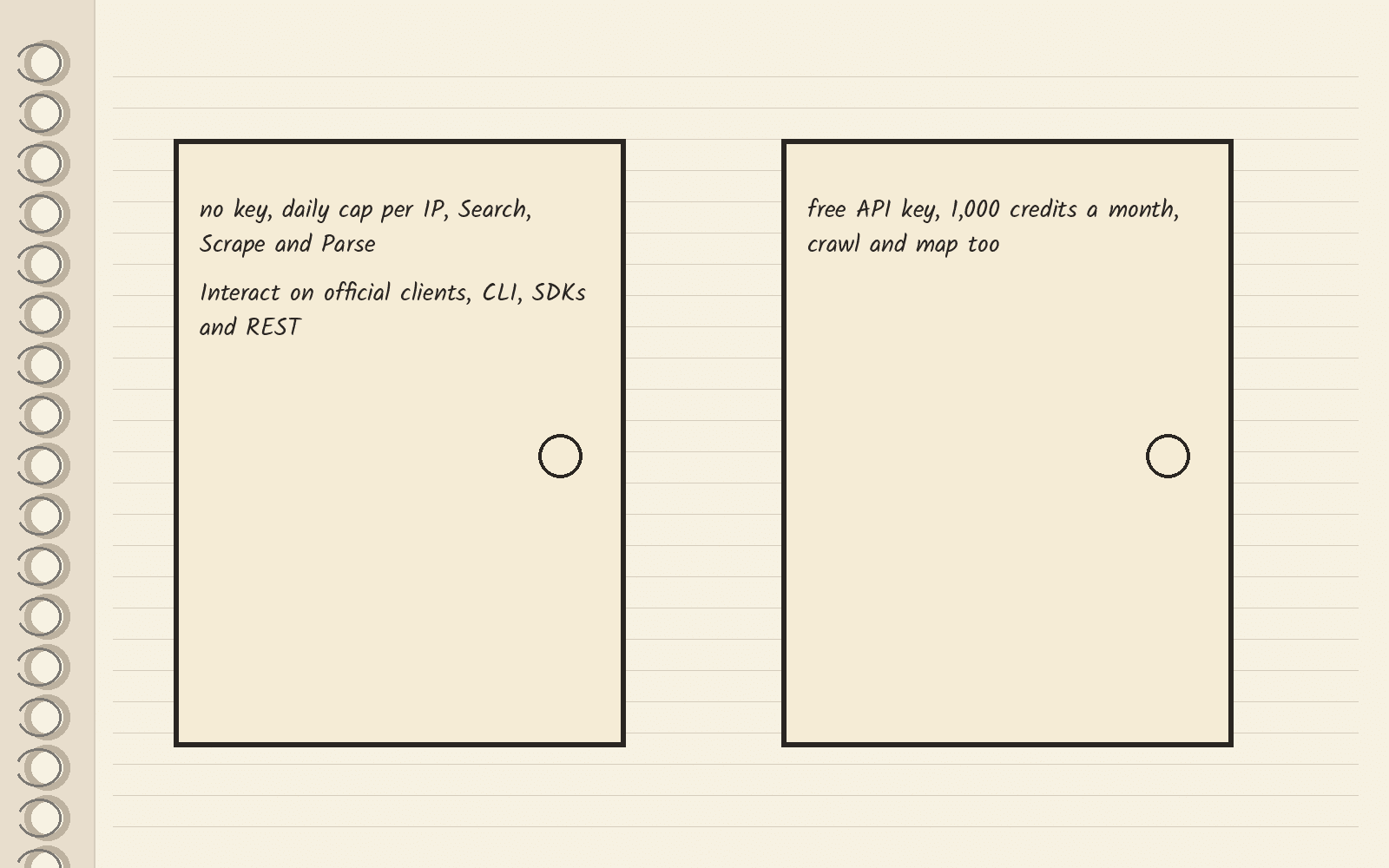
To scrape is to fetch one page, and to map is to list a site’s page addresses. Parse turns a document, such as a PDF, into clean text. Interact clicks buttons or fills in forms on a page you already fetched. MCP is a standard way for AI tools to call a service, and Firecrawl runs a hosted MCP server. Firecrawl’s rate limits page says that with no API key, its hosted MCP server gives you exactly Search, Scrape and Parse. For official Firecrawl clients, meaning its command-line tool (CLI), its code libraries (SDKs) and its REST API, keyless access also includes Interact. Crawl and map need a key.
Keyless use has two daily caps per IP address. One cap counts requests, and the other counts credits. Heavier calls use more credits, so they hit the credit cap sooner.
What the free API key gives you
An API credit is the unit Firecrawl charges in. Firecrawl’s billing docs say the free plan includes 1,000 credits a month and resets at the start of each monthly cycle. Rollover means unused credits carry into the next month, and the free plan does not have it.
Firecrawl’s rate limits page says the free plan runs 2 pages at the same time, with up to 50,000 jobs waiting in a queue. An endpoint is one kind of call, such as scrape or search, and every main endpoint works on the free plan, including crawl and map.
| Free plan calls | Limit per minute |
|---|---|
| Scrape, map and search | 10 requests |
| Crawl | 2 requests |
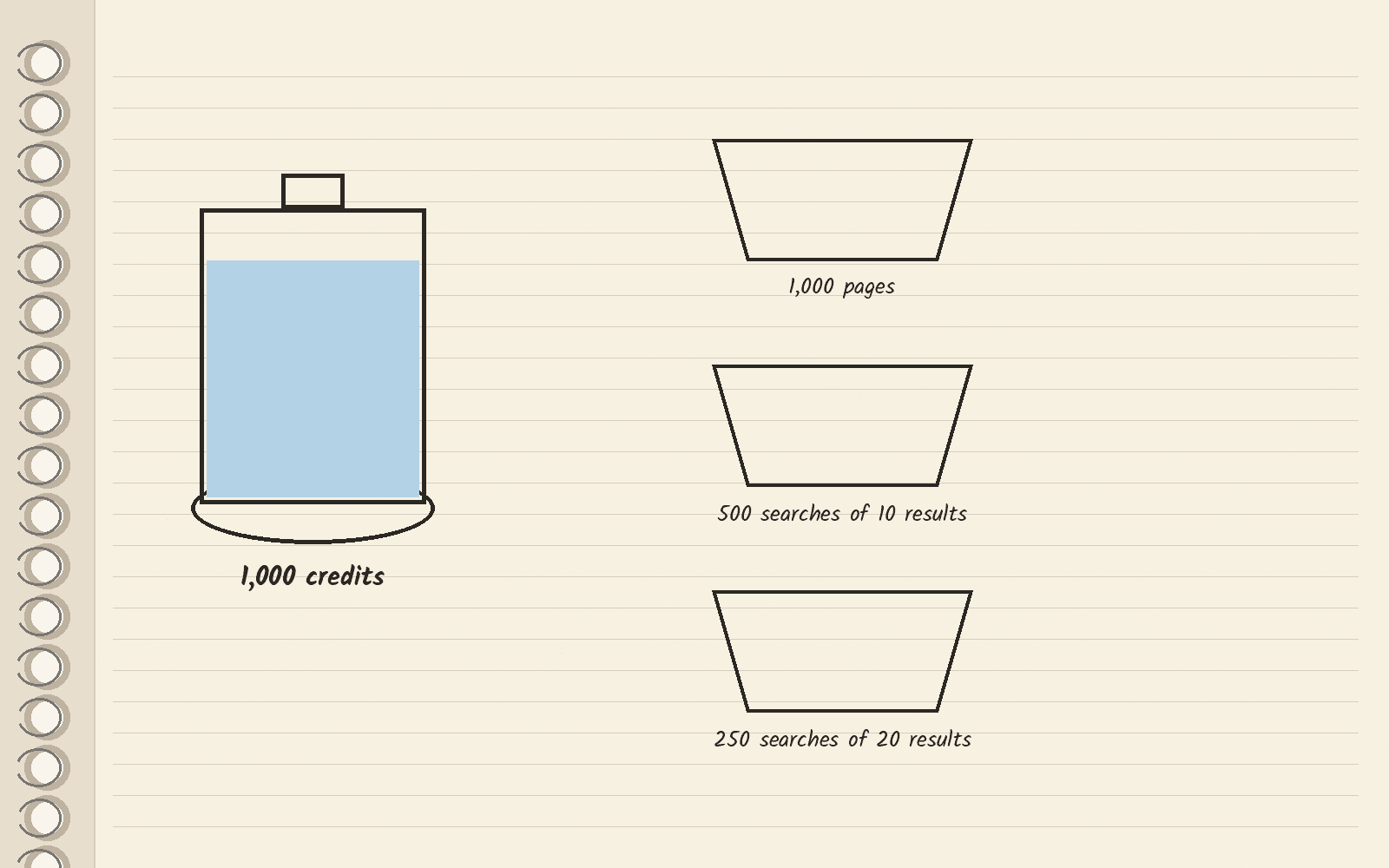
1,000 credits are 500 searches at most
A scrape costs 1 credit per page. A search costs 2 credits for every 10 results.
The math: 1,000 credits buy 1,000 scraped pages, or 500 searches of 10 results (1,000 ÷ 2). If each search asks for 20 results, it costs 4 credits, so 1,000 credits buy only 250 searches (1,000 ÷ 4). If you mix them, 200 searches of 10 results use 400 credits, which leaves 600 credits for 600 scraped pages.
A 402 and a 429 mean different things
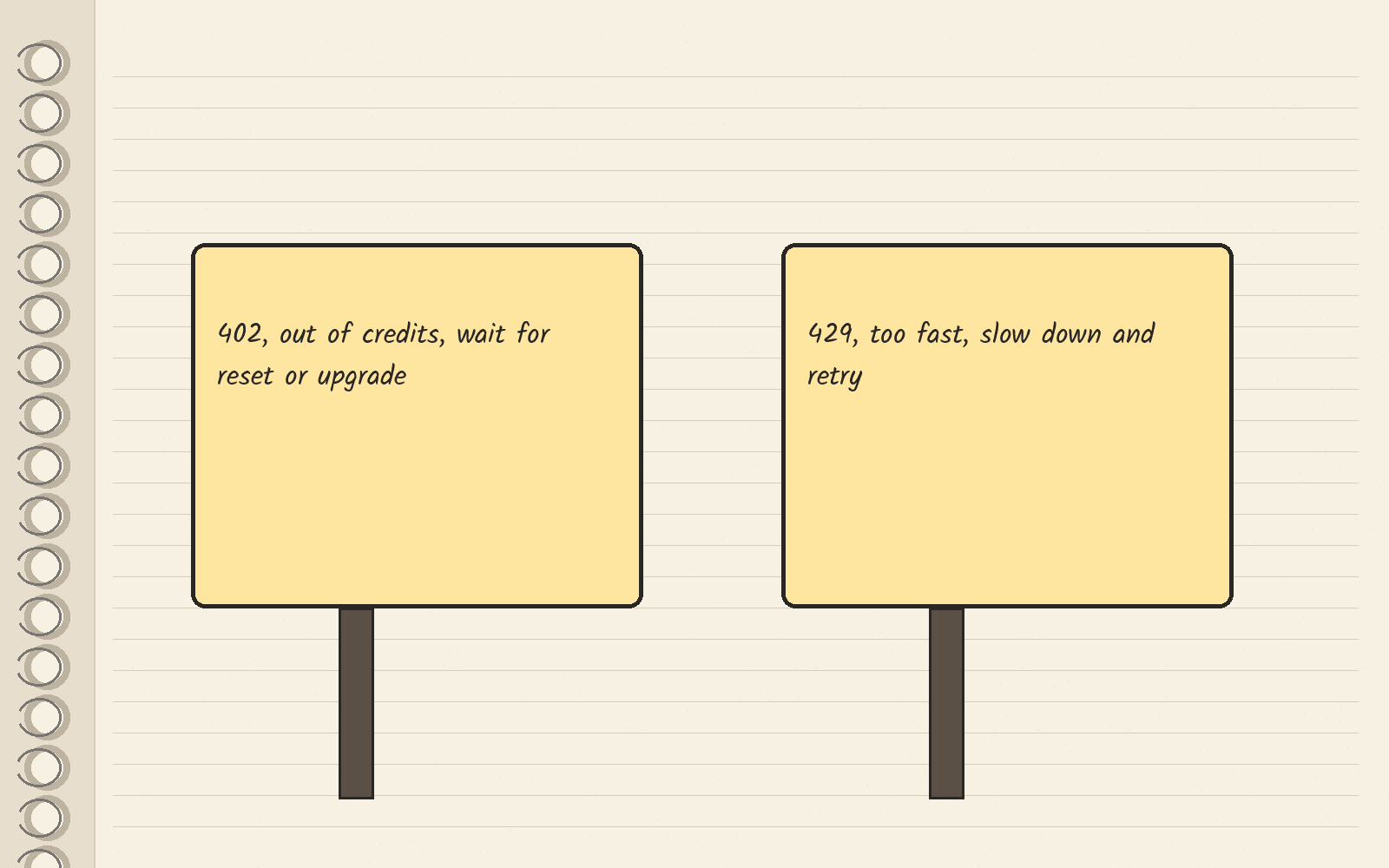
An HTTP status code is the number a server sends back to say what happened to a request. On Firecrawl, a 402 means you are out of credits. The free plan has no pay as you go, so Firecrawl’s billing docs say requests return 402 until the monthly reset.
A 429 means you sent too much, too fast. Firecrawl’s rate limits page says you get a 429 when you pass the per-minute limit or run more jobs at once than your plan allows. Keyless use also returns 429 when you hit either daily cap.
If you get a 402, wait for the reset or move to a paid plan. If you get a 429, slow down and retry.
Some failed pages still cost a credit
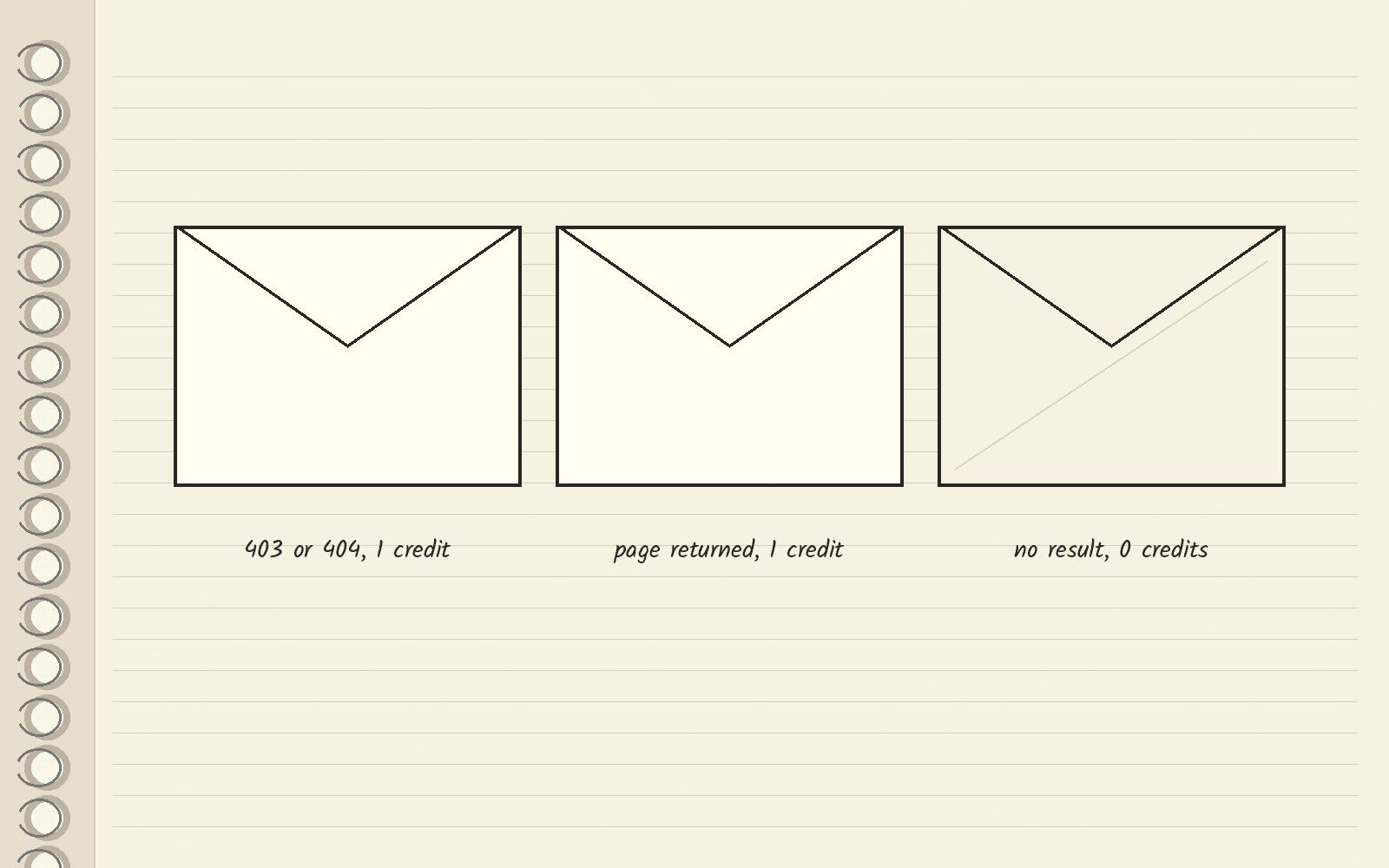
Firecrawl’s billing docs say the charge depends on whether Firecrawl returned a page to you. A page that comes back with a 403 or 404 error still costs 1 credit, because Firecrawl returns that page. A scrape that returns nothing, such as a site that never answers, costs 0 credits.
If the same addresses keep coming back as 403 or 404, remove them from your list so they stop using credits.
When the free credits run out
Firecrawl’s Hobby plan is $19 a month billed monthly, or $16 a month billed yearly, for 5,000 credits. Paid plans can add credits in $5 steps when you run out. The Firecrawl pricing guide covers the paid plans in detail.
What to do this week
Run five scrapes with no key to see the output. If you need to crawl a site or want a monthly allowance, sign up for a free API key to get the 1,000 credits. The button below opens Firecrawl’s homepage.
Next · Firecrawl review covers the tool as a whole · Firecrawl MCP shows how to use it from an AI tool · Firecrawl vs Crawl4AI compares a self-hosted option.
Sources · Firecrawl pricing, viewed November 11, 2026 · Firecrawl billing docs, viewed November 11, 2026 · Firecrawl rate limits, viewed November 11, 2026