

November 9, 2026
Oxylabs pricing · one monthly balance for every product
Visit Bright DataOxylabs sells one monthly plan that pays for all its products, and unused credit expires each cycle. Here is the math, and when Bright Data fits.
The short answer
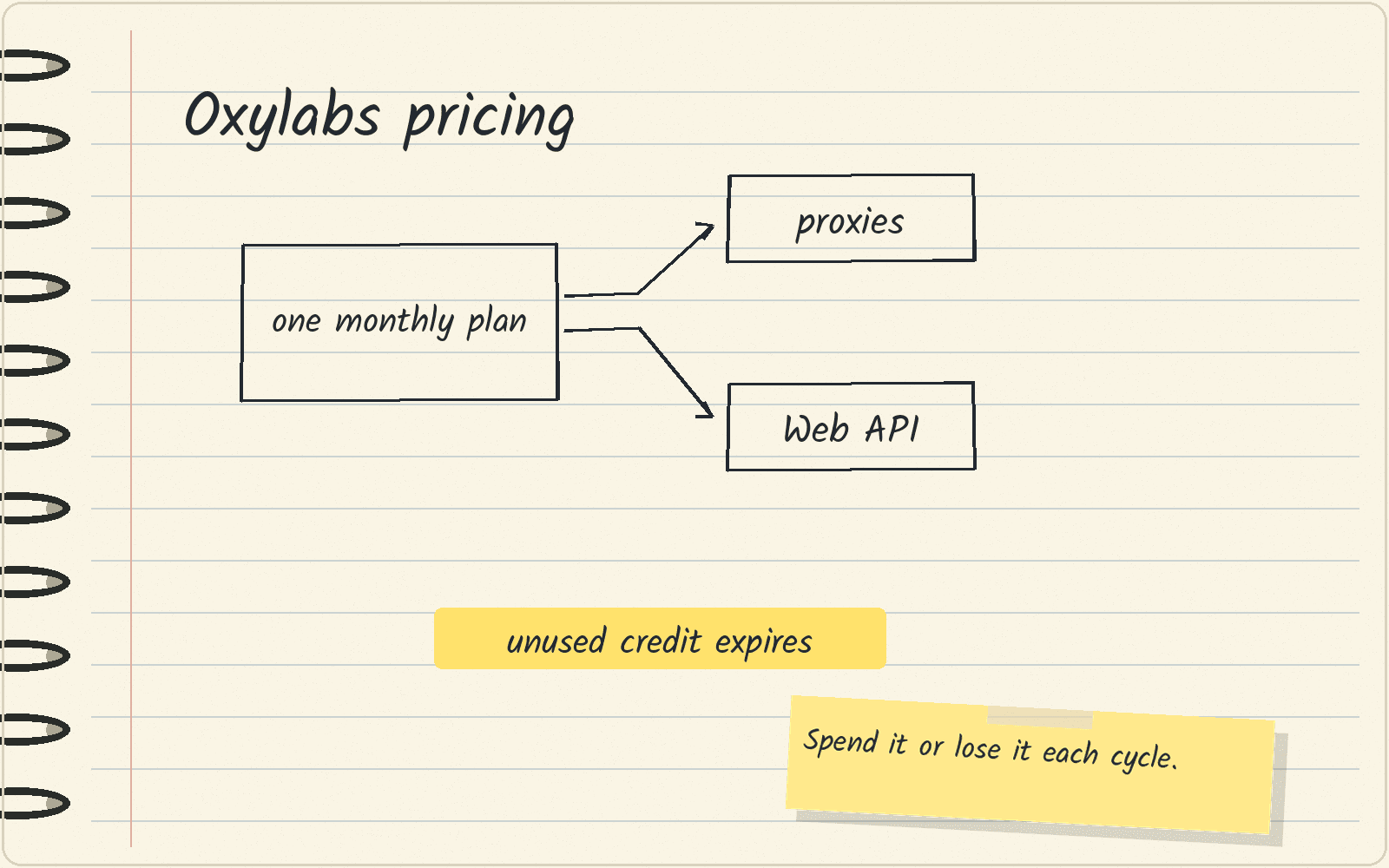
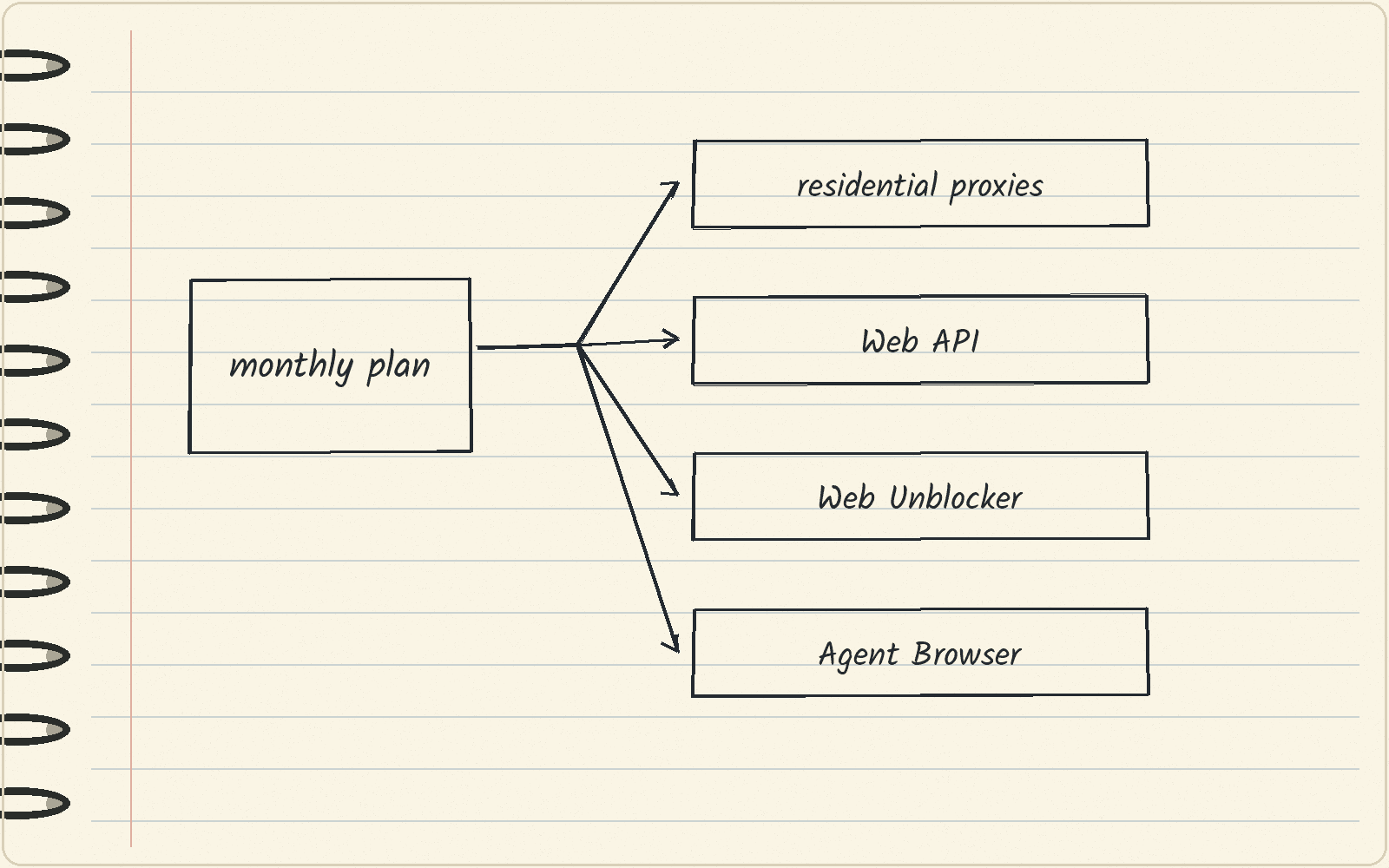
Oxylabs sells one monthly plan, and the plan money goes into a single balance that pays for all its self-service products. That covers proxies, which send your requests through other internet addresses, and its Web API for search and scraping. It also covers Web Unblocker, the Oxylabs tool that gets your requests past sites that block automated visits, and its Agent Browser. Oxylabs’ billing guide says unused credit expires at the end of each billing cycle.
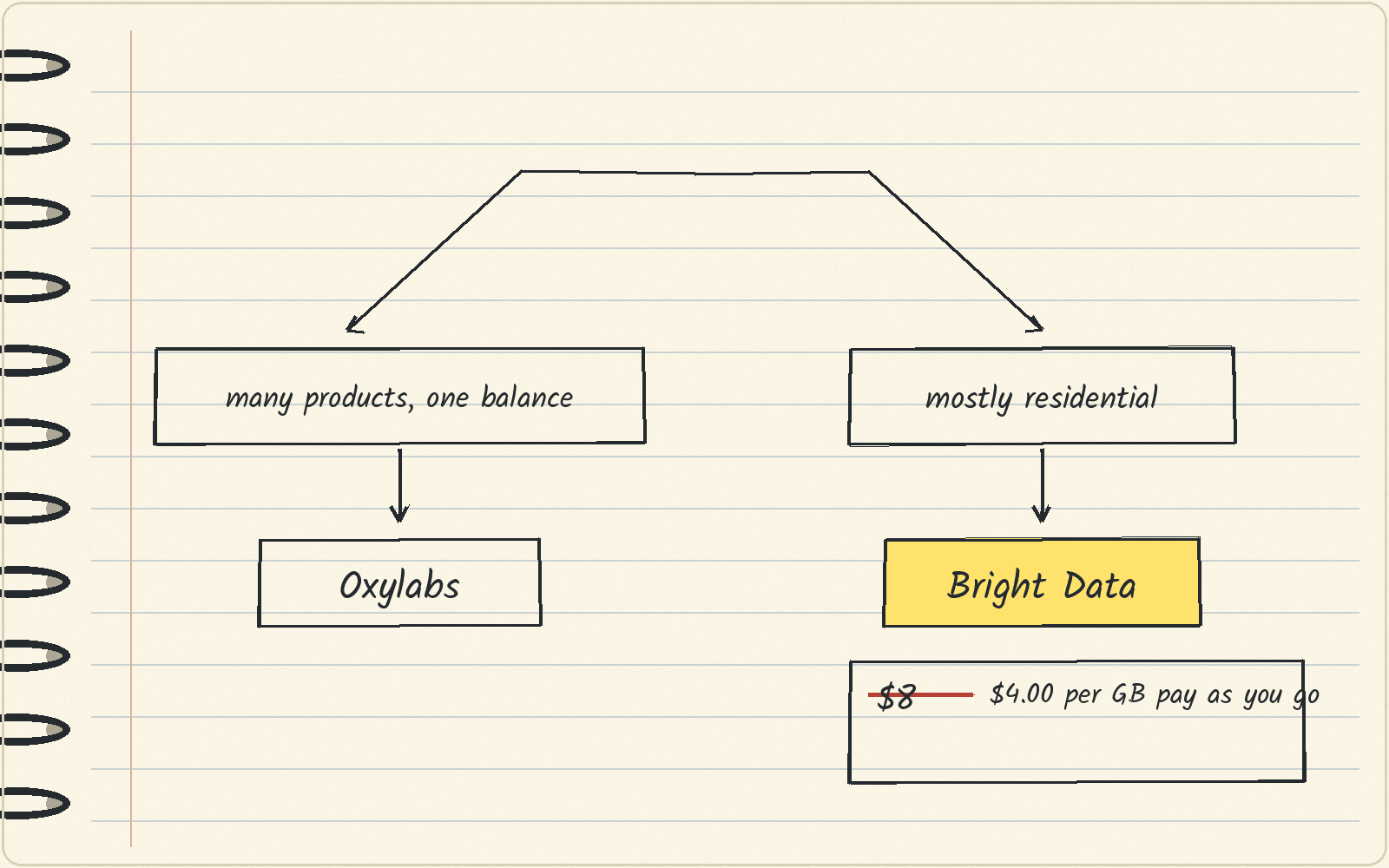
Pick Oxylabs if you will spend the whole plan every month across those products. Pick Bright Data if you mainly need residential proxies and want to pay as you go. Its pricing shows pay-as-you-go residential traffic at a discounted $4.00 per GB, with $8 crossed out.
A residential proxy sends your requests through real home internet connections, so websites see an ordinary visitor. A GB is a gigabyte of bandwidth, the amount of data your requests send and receive.
One balance pays for every product
A shared subscription means you do not buy a separate plan for each product. Oxylabs’ plans are Starter at $15 a month, Basic at $100 and Flexible at $500, with Enterprise plans from $2,500 a month. VAT may apply on top. Each month the full plan amount is charged and added to your balance.
Each product then takes money out of that balance at its own rate. The price list starts residential proxies at $6 per GB, and searches through the Web API cost $1 per 1,000. Web Unblocker is priced per GB too. So the plan price tells you how much you will pay. It does not tell you how much of any one product you will get.
Unused credit expires at the end of each cycle
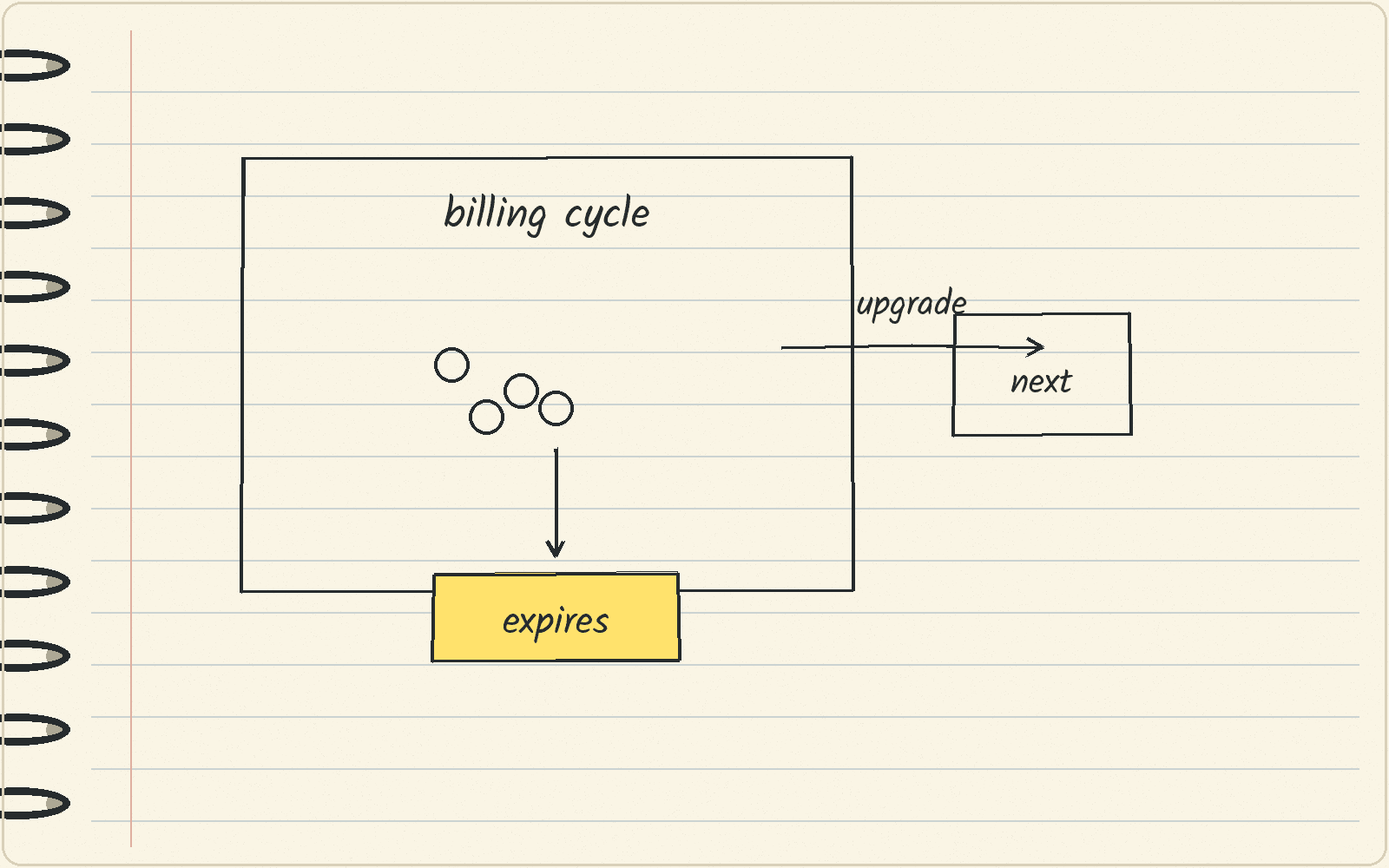
The billing guide says unused credit does not carry over on its own. The one exception is an upgrade: when you move to a bigger plan, the current cycle ends that day and the unused credit moves into the new cycle. A top-up is a one-time payment added to your balance, and it expires at the end of the current cycle too, unless you upgrade before the cycle ends.
The billing guide gives new accounts $5 of welcome credit to try any product. It stays valid while you are on the free plan. Once you start a paid plan, any unused welcome credit carries into the first billing cycle only.
What the Basic plan buys
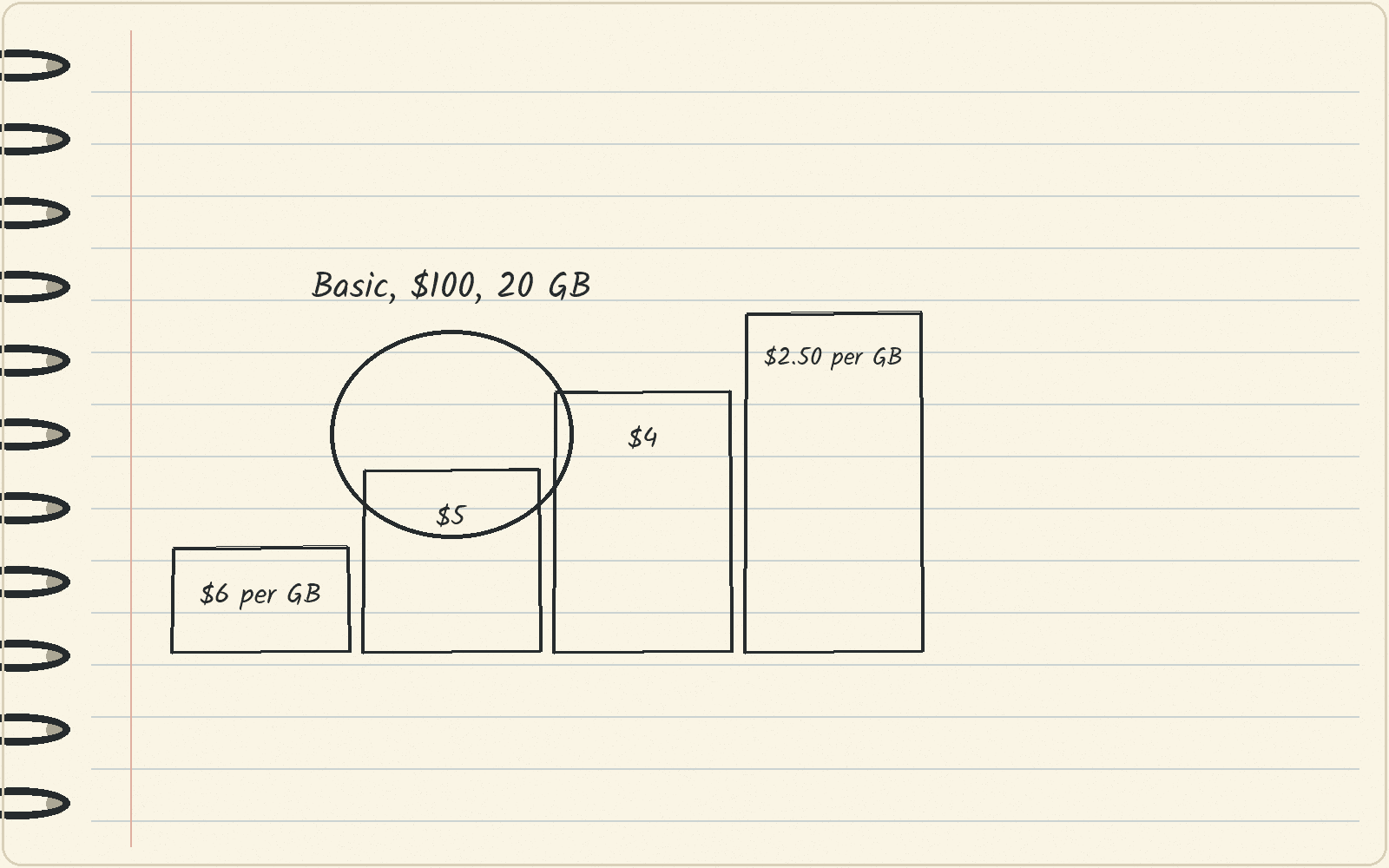
The math: the Basic plan is $100 a month. At its residential rate of $5 per GB, $100 ÷ $5 = 20 GB of residential traffic, the same 20 GB Oxylabs lists for that plan. If the same $100 went to Web API searches at $1 per 1,000, it would buy 100 × 1,000 = 100,000 searches. Every dollar you spend on one product is a dollar you cannot spend on the other.
The residential rate drops as plans get bigger. The residential pricing runs from $6 per GB on the smallest plans to $2.50 per GB at 1,000 GB and above. Oxylabs bills residential traffic for both the request and the response, whatever HTTP status code comes back. So a blocked or failed request still uses bandwidth from your balance.
When Bright Data fits better
Bright Data sells residential proxies, datacenter proxies and ISP proxies. A datacenter proxy is an address that belongs to a server company. An ISP proxy is a fixed home-style address that runs from a data center. Bright Data’s pricing shows residential proxies at 50% off. Pay as you go is $4.00 per GB with $8 crossed out. A lower rate of $2.50 per GB, with $5 crossed out, applies only on the $1,999-a-month residential plan. The page lists datacenter proxies from $0.90 per IP address and ISP proxies from $1.30 per IP address.
Both residential rates are discounts shown on the page, so check them on the day you buy. The Bright Data pricing guide covers its plans in detail.
What to do this week
Write down how many GB of residential traffic and how many searches you used last month. Price that usage on the Oxylabs plan that covers it, and remember that leftover credit expires. Then price the residential part on Bright Data’s pay-as-you-go rate shown that day.
Next · Bright Data alternatives compares other providers · Residential proxies ranks home-address proxies · Datacenter proxies ranks server-address proxies.
Sources · Oxylabs pricing, viewed November 9, 2026 · Oxylabs residential proxy pricing, viewed November 9, 2026 · Oxylabs pricing and billing guide, viewed November 9, 2026 · Bright Data pricing, viewed November 9, 2026
Related
- Serper pricing · prepaid credit packs vs a monthly plan
- Google Images API · image results with their source page
- Proxies for web scraping · which type to use and when
- Firecrawl alternatives · self-host, search or blocked pages
- Bright Data
- Best AI web scrapers · Firecrawl for clean page text, Bright Data for sites that block scrapers
- Best datacenter proxies · Bright Data for the largest pool, Decodo for the cheapest rate at volume